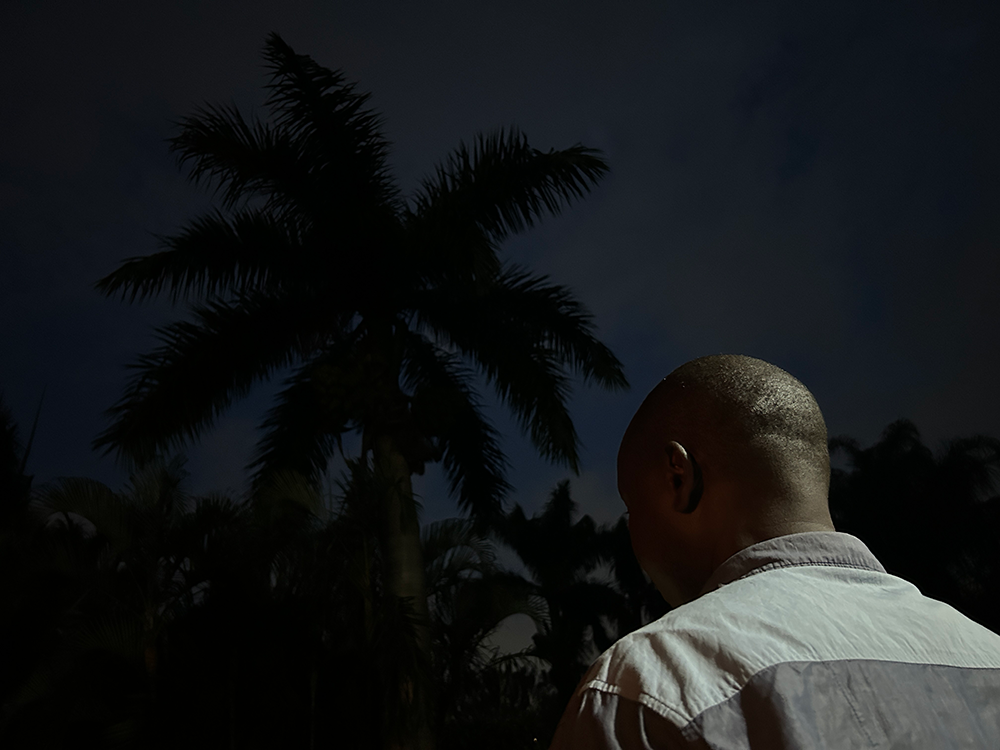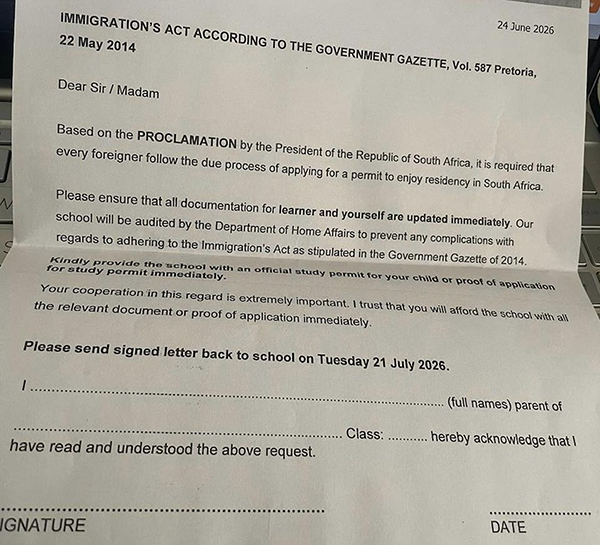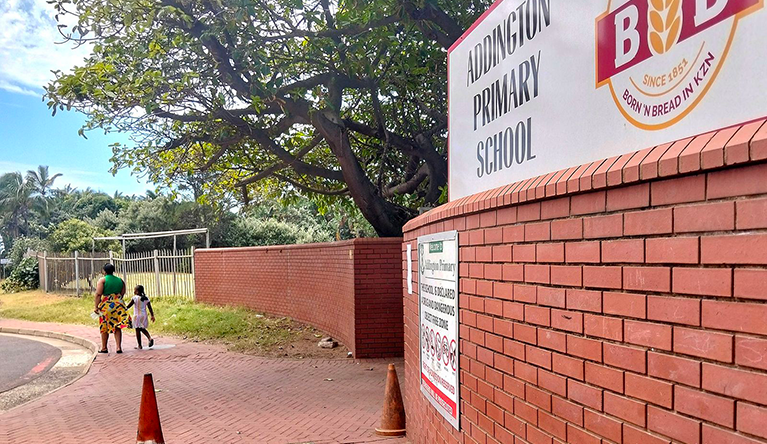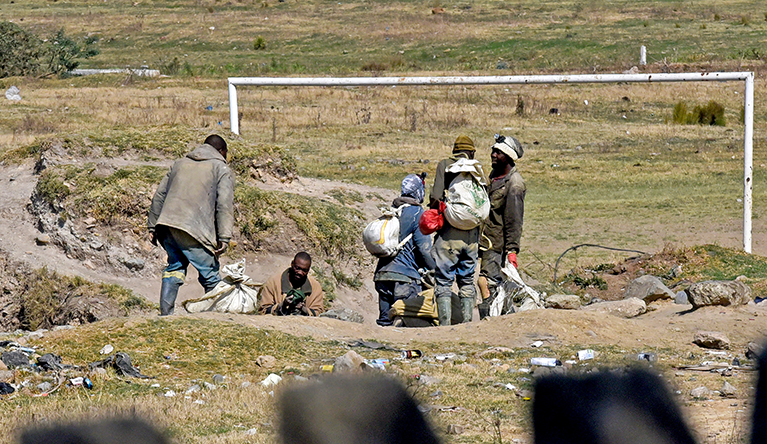
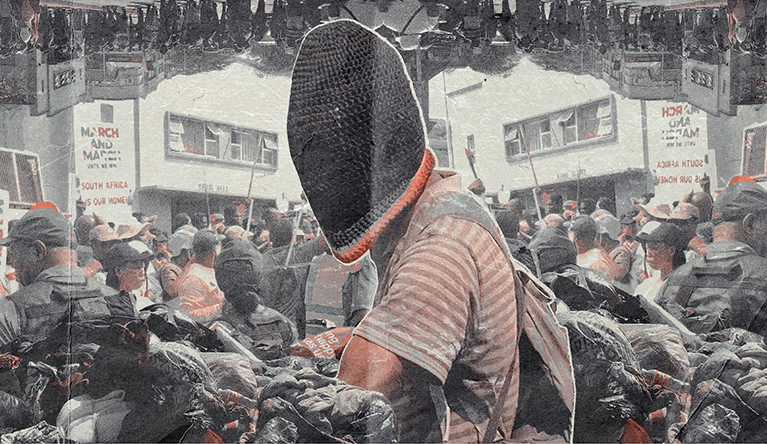
March and March supporters demonstrate in Johannesburg on 30 June 2026. (Photo: Ihsaan Haffejee, GroundUp)
In the weeks since March and March announced a 30 June deadline for undocumented migrants to leave South Africa, tens of thousands of foreign nationals have self-deported from the country. By early September, 129,000 Zimbabweans had voluntarily repatriated, according to Chronicle, a state-owned newspaper. By early August, Malawian news media reported that more than 56,000 migrants had returned to that country.
Around the same time, the South African Police Service (SAPS) reported to Parliament that it had arrested, detained and, in some cases, deported thousands of others.
Still, many foreign nationals – documented and undocumented – have opted to stay and weather an increasingly insecure future in South Africa.
XenoBarometer is a new reporting project that will be published weekly. It seeks to track the anti-immigrant movement, and its impact on politics and migrant communities in the country.
For this first edition, Viewfinder spoke to 13 activists and community leaders representing some of those who have remained. We asked them all the same question: how has life changed for you and your community since 30 June?
Their responses were wide-ranging. But, almost all of them reported a growing sense of insecurity and fear, coupled with shrinking access to services and opportunities to make a living.
In Johannesburg, Claude Kayitare, of the Southern Africa Network for Immigrants and Refugees (SANIR), said that immigrants were still being stopped on the streets of Marshalltown and asked for documents from citizens who associate with the anti-immigrant movement. Sometimes, vigilantes were also extorting these immigrants for money, he said.
In Durban, Gaby Bikombo, of the organisation Refugee Social Services, said documented immigrants driven from informal trading sites remained unable to return to work. Bikombo said immigrants were still being refused access to public healthcare facilities, which had been happening since June last year.
Olorunfemi Adeleke, of the Nigerian community in Tshwane, said many migrants were keeping a low profile because they feared attracting the attention of authorities.
Crispin Kassarombo, of Voice of Africans for Change (VAC) in Bellville, said many had lost jobs and businesses, leaving some struggling to afford rent and basic living costs.
Perhaps the most striking feature of these interviews, however, were accounts of government departments taking actions that appeared to align with, and in some cases advance, the anti-immigrant movement’s agenda. Three cases in particular stood out.
Home Affairs accused of freezing migrants’ bank accounts
Asylum seekers who decide to voluntarily repatriate to their countries of origin cannot simply exit across South Africa’s land borders. The Border Management Authority (BMA) is likely to refuse exit to any asylum seekers who do not first “cancel their application for protection”.
Cancelling one’s asylum application requires presenting at the Department of Home Affairs, and obtaining paperwork to be presented to the authority to ensure passage.
But, according to Isaiaha Mombilo from the Congolese Civil Society of South Africa, some asylum seekers who have attempted to follow this requirement have found their bank accounts suddenly frozen – leaving them unable to access the money needed for their repatriation.
The Department of Home Affairs’ offices in Cape Town (Photo: Ashraf Hendricks, GroundUp)
Mombilo claimed that the Department of Home Affairs was responsible for freezing these asylum seekers’ bank accounts. He said that banks had told affected people that they needed permission from Home Affairs for the accounts to be reopened.
“Some people are still here but cannot access their money, while some people have traveled home without their money. This has only increased the suffering and number of people that need social assistance,” Mombilo said during an interview.
Lumumba Chia, of the South African Refugee-Led Network (SARLN), said he had also received reports of bank accounts being frozen when people’s asylum permits expired.
“People are afraid. Some want to return home, but their money is frozen,” said Chia.
Viewfinder reached out to the Department of Home Affairs for comment. Spokesperson David Hlabane acknowledged the queries and said the department was working on a response. None was forthcoming by the time of publication.
Court win for migrant shopkeepers
On 17 August, the KwaZulu-Natal Division of the High Court in Pietermaritzburg ordered Alfred Duma mayor Zama Sibisi to unlock migrant-owned businesses which were physically shuttered with padlocks during what the municipality had billed as bylaw enforcement operations in June. Alfred Duma Municipality includes the town of uMnambithi, formerly known as Ladysmith, KwaZulu-Natal.
The shopkeepers who took the mayor to court argued that they were documented and legally allowed to operate businesses in South Africa.
Despite having publicly joined March and March protests in the town, Sibisi had said that he was not “victimising” anyone and that the operation was about maintaining “proper standards, especially when it comes to public health and safety.”
Alfred Duma mayor Zama Sibisi at a March and March demonstration in uMnambithi, KwaZulu-Natal, on 2 June 2026. (Photo: Ladysmith Herald)
But, for the shopkeepers, the court’s reprieve was short-lived.
“After we got the court order, we tried to open our shops. They were only open for two days … (then) March and March came and closed down the whole town,” said a community leader representing Congolese, Ethiopian and Burundian shopkeepers.
He asked not to be named, fearing retaliation, owing to the volatile situation in Ladysmith where shops have been looted on several occasions too in recent weeks.
Winelands police detain migrants
The Western Cape Coalition Against Xenophobia reported that more than a hundred migrants in the Winelands area of the Western Cape have been arrested in sporadic raids and detained in overcrowded conditions since June 30.
The coalition alleged that the police have withheld critical information and documents to the detainees. The areas impacted include Robertson, Montagu, Bonnievale and McGregor.
“This is all being done on the pretext that these are undocumented people, despite the fact that many of them do have documents,” said the coalition, in a statement.
SAPS has rejected allegations of indiscriminate arrests and unlawful treatment of detainees.
“SAPS remains committed to ensuring that everyone in its custody is treated lawfully, fairly and with respect for their dignity and constitutional rights,” said Colonel André Traut, quoted in GroundUp which produced a report on the detentions.
This report has been produced by theSouthern Africa Accountability Journalism Project (SA | AJP), an initiative of theHenry Nxumalo Foundationworking withViewfinderand with the financial assistance of the European Union. It can under no circumstances be regarded as reflecting the position of the EU.

The drought-adapted succulent spekboom has long been trumpeted as the crown prince of South Africa’s nature-based carbon sink solutions.
The World Bank ensured its coronation with a $120 million outcome-based bond, structured and named in its honor.
According to Amazon, the tech giant’s commitment to buy carbon credits from the first developer to draw on the bond gave other financiers the confidence to back the industrial-scale project. Does this make the tech giant the power behind the throne of an emerging nature-based carbon credit sector?
Our investigation uncovers a sector dominated by international corporations whose investment promises are hard to scrutinize, in a cautionary tale of what happens when projects fail.
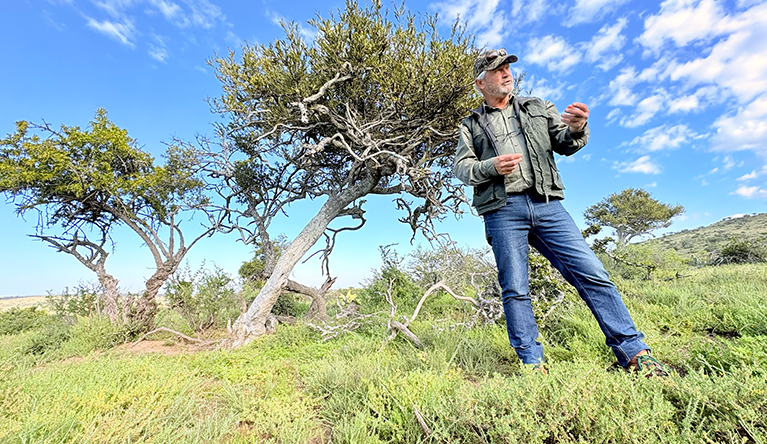
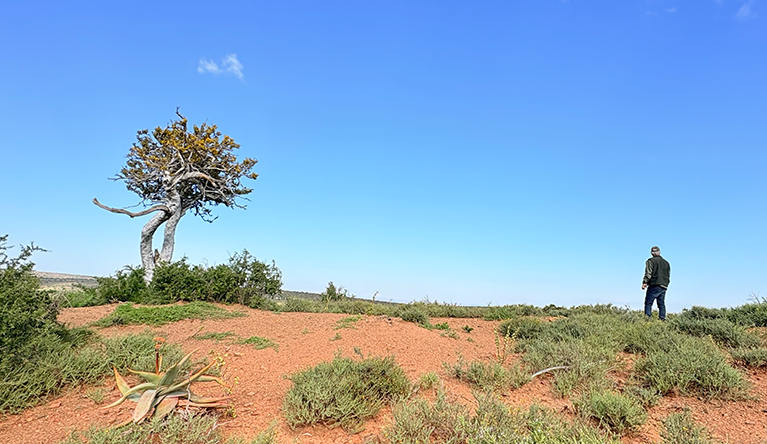
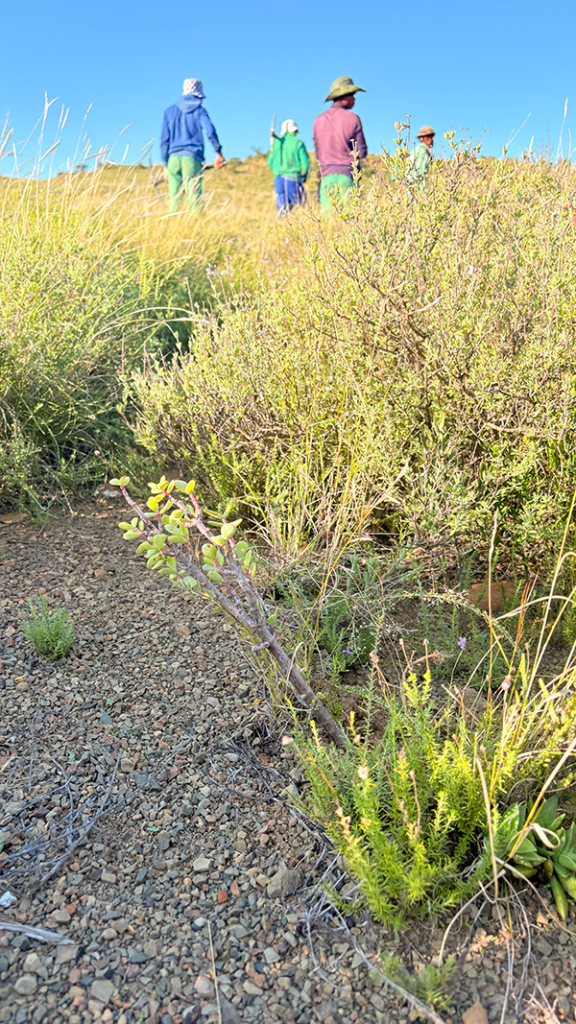
Browsed. Heavily browsed. Knackered. This farm camp is well on the knackered side of the degradation scale, threadbare after decades of heavy livestock pressure. But the single shrub at Nick Hamp-Adam’s feet may help change that. It just needs a second chance.
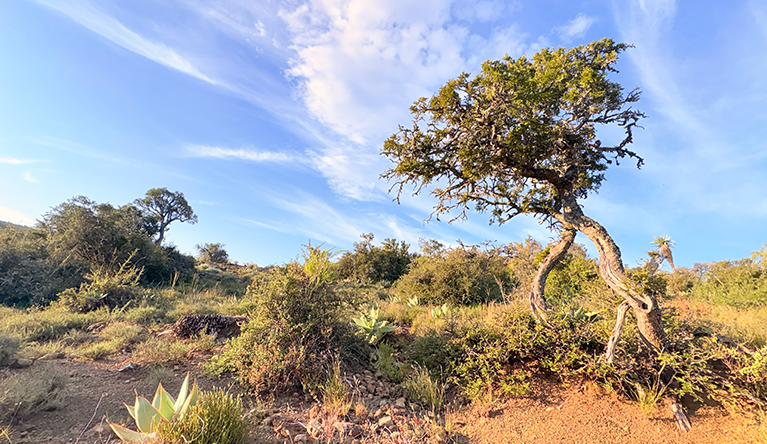
For generations, the Albany thicket biome in the Eastern Cape fueled a thriving economy of sheep and goat farming. Today, an area of 1.5 million hectares needs urgent ecosystem repair. Pic: Leonie Joubert
This young spekboom plant (Portulacaria afra) is more stocky shrub than rooted cutting. It’s had more time than usual in the nursery to bulk up ahead of being released into the wild. But for the moment, it’s stricken on its side, roots exposed.
Hamp-Adams, general manager for Return to Thicket, one of the smaller restoration projects in this nook of South Africa’s Eastern Cape province, is about to set things right. He sinks to his knees, finds a hand-sized stone and begins reopening the original planting hole.
“Kudu, most likely …”
His breath is metered by his efforts with the digging tool.
“… came through …”
Strike.
“… grabbed it …”
Strike.
“… probably wasn’t planted deep enough.”
Strike.
He’s gentle when he rights the plant, taking care as he tamps the soil around its roots. Tough plants, generally. Don’t need much coddling. Except during planting. Treat them like babies during planting.
This individual is one of thousands of cuttings of this drought-tolerant endemic succulent that are being popped into the ground across 2,100 hectares (5,200 acres) of exhausted farmland recently purchased by Return to Thicket. As the vegetation regrows, it’s expected to draw the equivalent of 10.3 metric tons of carbon dioxide from the atmosphere per hectare per year over the course of three decades. That’s the equivalent emissions from nearly four round-trip flights for a single person between London and New York.
But that’s not what makes this particular shrub noteworthy. This plant, and the countless others around the camp, were rescued from another thicket restoration project in the area, one that closed down a few years back when its international backer pulled out.
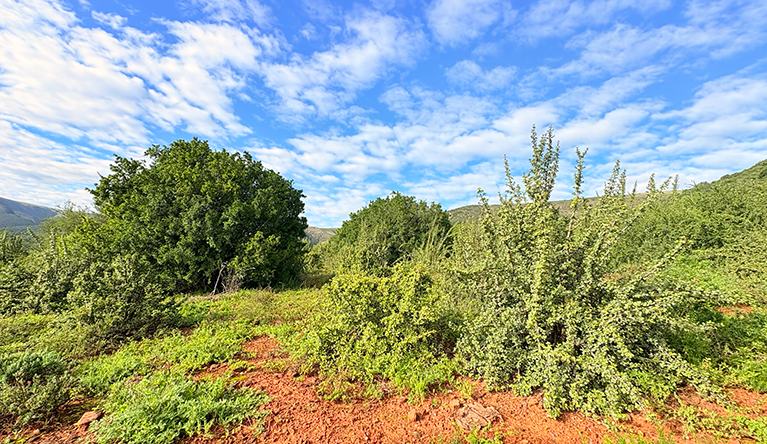
Pastures cut into the near-pristine Albany thicket outside Makhanda in Eastern Cape province show how extensive and dense the hedge-like plant community once was. Pic: Leonie Joubert
It’s a cautionary tale of what happens when developers, carbon market control bodies and financiers aren’t transparent in their operations or open to public scrutiny.
Examining this novel kind of industrial-scale development — ecosystem repair funded by carbon markets — has become particularly relevant now. The World Bank has created an outcome-based bond tailored specifically to help fund restoration projects working to repair Albany thicket, a small but important biome in South Africa where spekboom grows naturally and where its mass planting is expected to help heal degraded farmlands.
The thicket biome is a small plant community, covering only 1.71 million hectares (about 4.2 million acres) and making up just 2.4% of the country’s total footprint. Yet this niche bond recognizes the need for a fund that’s specifically structured to restore the 90% of the biome that’s partially or badly degraded. Where there once was impenetrable hedge-like thicket, many places have been reduced to near desert. The most likely way to repair the region is through the mass planting of spekboom and paying for the work through the carbon markets.
The World Bank created a pot of $120 million specifically for this. According to Amazon, the tech giant’s commitment to buy some of the carbon credits from the first project to benefit from the bond gave financiers enough confidence in the business model to come on board with additional funding.
The first project to draw on this purse expects its restoration work to bring around $500 million into a stagnant farming community over the next 40 years. This will come from just over half its operations, with more planned, and will flow in through wages, rental income, carbon credit revenue sharing with farmers, taxes, and small business development initiatives.
This investigation has examined the origins of spekboom-led restoration the science behind its potential promise (Part 1), and the possible pitfalls if projects don’t meet those expectations [link-part 2]. In this third and final part, we find an emerging nature-based carbon capture sector that has become dominated by international corporations whose investment promises are hard to scrutinize. Now, key questions remain around what happens when projects operate in an opaque accountability environment, and the possible fallout if projects fail.
Going bust
The trail of breadcrumbs between this former farm camp and what’s become known as the Lake Kariba scandal is sparse in the news coverage. But it’s there.
Concerns about the possibility of fraud in the nature-based carbon offsets sector had been surfacing for some time. But one particular case sent shockwaves through the industry in Southern Africa in 2023. The New Yorker magazine’s Heidi Blake broke the story of a forest conservation project in Zimbabwe, billed as one of the largest of its kind and spanning more than 700,000 hectares (1.7 million acres), that had grossly inflated the amount of atmospheric carbon pollution it claimed to have avoided through keeping trees standing in the Zambezi River Valley.
Studies of wild and cultivated spekboom, such as these at a research plot on the Return to Thicket farm, contribute to ecologists’ understanding of how much carbon dioxide these plants can draw from the atmosphere, and how fast. Pic: Leonie Joubert
The repercussions were felt as far south as here, close to where Hamp-Adams is doing his veld inspection. South Pole, which had been running a small spekboom restoration operation nearby, quietly shut it down following the Lake Kariba incident. In the wake of the closure, Hamp-Adams’ team rescued some of the orphaned spekboom.
The closure left an unknown number of people without jobs, and an unknown number of hectares abandoned in a state of disrepair. Were these lands browsed, heavily browsed, or knackered? It’s hard to know. South Pole, one of the most powerful global brokers in the industry, is tight-lipped.
When we asked for details on the project’s closure — how far along it was, how many jobs were lost or didn’t materialize, what the carbon-capture goals were — the company said merely that this was an early-stage pilot.
“As with many pilot initiatives, we periodically assess their commercial viability,” South Pole responded by email through a media consultant. “In this case we decided to close the project. We’re not able to offer further information at this time.”
Clear as mud
Spekboom has long been trumpeted as the crown prince of South Africa’s nature-based carbon cleanup solutions. The World Bank ensured its coronation recently with its newly minted $120 million outcome-based bond, structured and named in its honor. The listing of this novel financial instrument was made possible through Amazon’s backing, according to the tech giant, with the corporation agreeing to buy some of the carbon credits from the first developer to draw on the funds.
Does this make Amazon the power behind the throne in an emerging nature-based carbon credit sector?
Not in terms of the running of the restoration projects themselves, but in what sustainability scientist Henrik Österblom and colleagues at the Stockholm Resilience Centre at Sweden’s Stockholm University say is the emergence of a keystone actor from the corporate world that has an outsized influence on the system in which projects like this operate. The idea riffs off the concept of keystone species in nature, like termites in an African savanna, which are regarded as ecosystem engineers, so significant is their role in shaping the environment around them.
Here the concept applies to Amazon having disproportionate influence to shape a niche emerging nature-based carbon sink sector in a tiny corner of Africa where farmers need ecosystem repair as urgently as a burn victim needs lifesaving skin grafts.
Did Amazon’s door-to-door consumer goods delivery model find another commodity to trade with?
Amazon isn’t investing directly in this farming community, as has been misreported in places. It also isn’t buying these spekboom-generated carbon credits to offset its own emissions, either. The corporation is frank that its approach is to buy credits in order to sell these on to partners in its supply chain who need to offset their own emissions. Amazon has created a one-stop digital shop to handle the transactions: Its newly launched carbon credit exchange, the Sustainability Exchange, where its partners can buy “trusted” and “high-quality” carbon credits.
The corporation was vague on the details of how it will trade the credits on its exchange and would not reveal if it will pay market prices or benefit from a bulk-buy discount. Its media office said only that the price for these credits reflects their higher market value as a result of being of better quality.
Amazon said it doesn’t disclose the commercial terms of its agreements; however, the media office confirmed that the corporation will build a charge for administering the service into the selling price. This includes a “small margin to cover headcount, tech, registry fees, and other costs.” Amazon would not share details on the precise structure and pricing of these add-ons.
Intermediary traders and carbon market exchanges usually charge between 5% and 30% for administrative fees, according to Carbon Market Watch.
In its 2023 report, the nonprofit watchdog warned that without a line of sight on the costing structure of these fees, the public can’t adequately scrutinize the numbers. This lack of transparency makes it difficult to verify if fees are reasonable or if profit markups have been built in. Carbon Market Watch calls for greater transparency around pricing, markups and admin fees, and urges buyers to boycott intermediaries who don’t make this information public.
Big promises, closed books: The opaque new currency of carbon credits
The first spekboom restoration project to benefit from the World Bank bond is Singapore-based infrastructure developer Imperative Global Solutions Pte. Ltd., a company founded in 2022 that focuses on nature-based ecosystem restoration, funded through carbon markets.
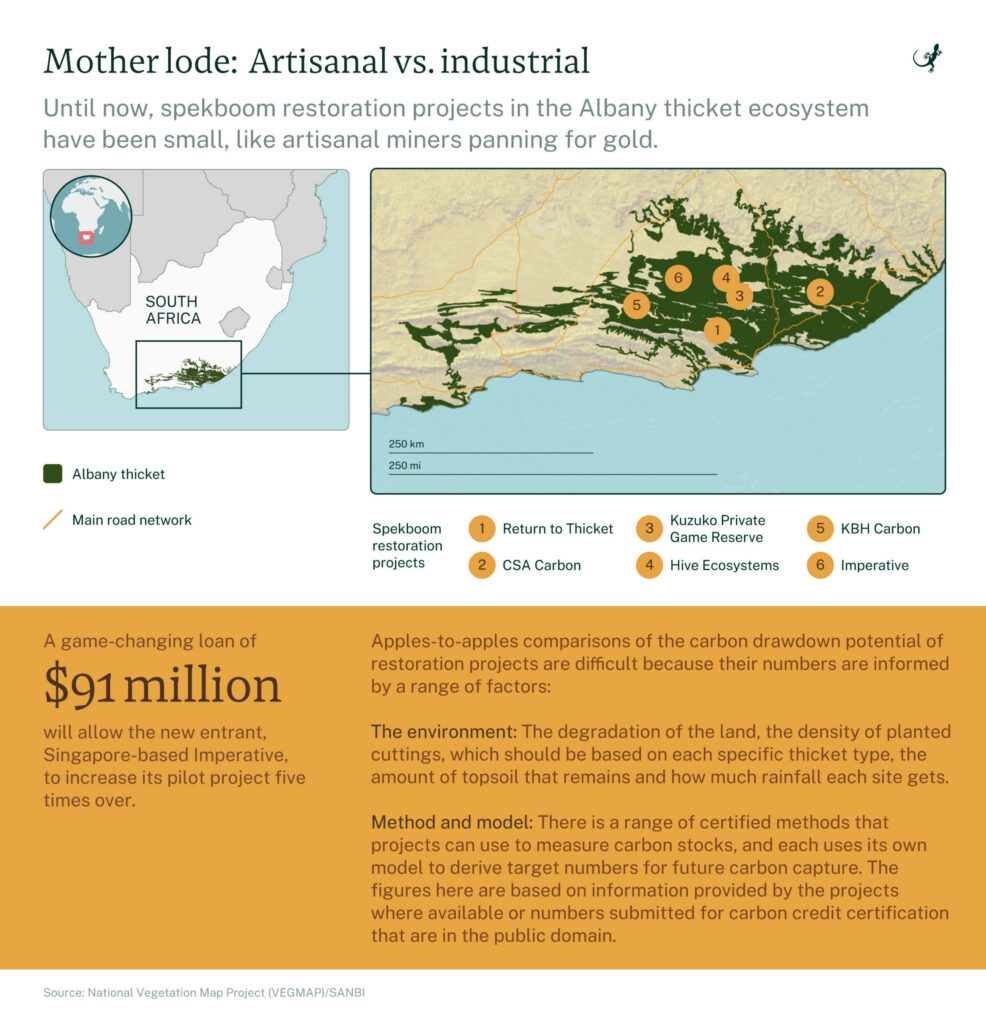
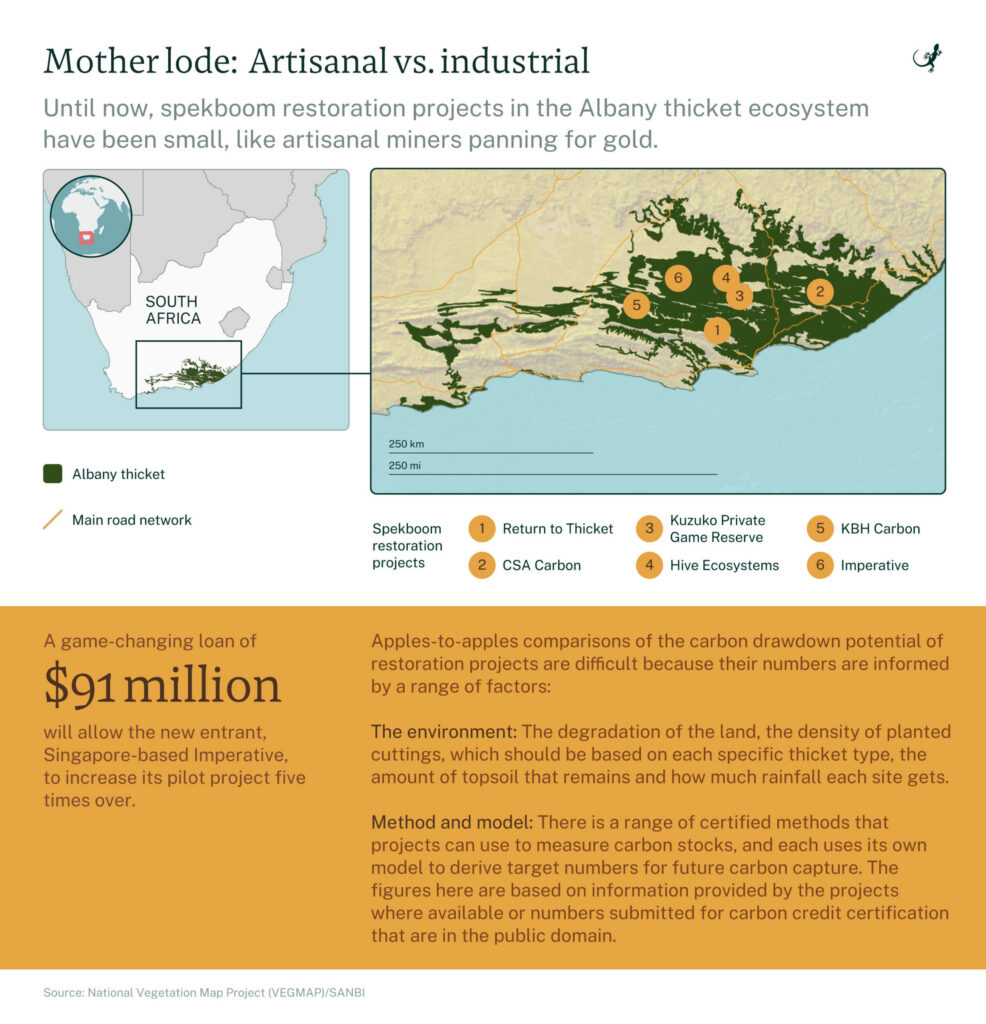
Spekboom restoration projects until now have been artisanal in scale, most of them under 5,500 hectares (about 14,000 acres).
Imperative’s arrival in 2024 changed that. Work kicked off in November that year with a 10,000-hectare (nearly 25,000-acre) pilot planting phase, which it completed in just over a year. The company then secured $91 million in loans, which accelerated its planting ambitions. The World Bank bond provided $25 million, and another $66 million came from a handful of other investors. The flush in money allows it to increase its first-phase operation five times, with another big expansion planned thereafter. Imperative plans to have a total of 100,000 hectares (about 247,000 acres) under spekboom by around 2030.
As these tough succulents grow, the company expects them to draw down 41.6 million metric tons of carbon dioxide equivalent (tCO2e) over the next 40 years. This will allow Imperative to earn the equivalent number of carbon credits, as one metric ton of CO2 removed from the atmosphere converts to one carbon credit. Amazon has agreed to buy some of the first crop to come from one half of the project: 1.95 million credits in all, which amounts to 9.4% of the 20.8 million carbon credits that this new 50,000-hectare (124,000-acre) planting is expected to produce over four decades.
Imperative anticipates $500 million reaching the community from the first 60,000 hectares (nearly 150,000 acres) over 40 years. How much of this materializes depends on how much atmospheric carbon the spekboom plantings draw from the atmosphere as they grow, the price of carbon credits over time, and the revenue sharing agreed between Imperative and the farmers it has partnered with. Imperative wouldn’t disclose the terms of the contracts with farmers, though, which stipulate the details of the revenue share. (Imperative’s business model differs from others in that it opts to rent land from farmers rather than buying. This allows the restoration work to reach more land and landowners to keep their properties.)
The method to calculate the carbon drawdown potential of a recovering thicket has been developing for over two decades. But it’s still a relatively young field, and it can only advance as fast as the early spekboom plantings grow. A project’s business model may forecast 10 tCO2e of drawdown per hectare per year. But project staff may only know in 10-15 years what the actual accumulation of carbon is in the soils and plants. If it’s only 5 or 7 tCO2e, the project will only earn the equivalent number of carbon credits.
“We only get paid for what we deliver,” says Scobie Mackay, Imperative’s CEO.
The market price of this novel currency is another factor.
Carbon credits from the first plantings should start to trickle in as soon as 2027 or 2028, according to Imperative. How much each credit is worth depends on its type and price fluctuations on the market. Nature-based carbon drawdown credits that come from forestry plantations involving monocrop tree planting are on the lower end of the range for the reforestation and revegetation category. These were selling for around $14 in 2025, according to the World Bank. Projects that provide biodiversity habitat repair alongside their climate benefits, like these spekboom projects, have higher values. Imperative’s Mackay references the data provider and analytics firm MSCI Carbon Markets on this, although he wouldn’t disclose the price category that applies to Imperative’s credits. MSCI told us that the most likely price point for these spekboom-generated credits is around $45.
Meanwhile, an industry insider who asked not to be named said that most local projects are working on a value of $20 to $25 a credit.
How much will Amazon pay for its 1.95 million carbon credits? How much of that will flow into the farming community in Albany thicket country, and over what period of time?
Neither Amazon nor Imperative would reveal the price they’ve settled on. But these credits, they say, will be high-value, bought at a fixed price and purchased during the first earning period, which Amazon gives as an open-ended “more than a decade.”
Based on this, and the range of prices for this category of credit, I estimate that Amazon’s bill for the 1.95 million carbon credits could be anything from $39 million at the lower range of $20 per credit, to $87.75 million if trading at $45 a credit.
The carbon credit returns reaching the community will ultimately depend on how much organic carbon shows up in the plant and soil samples measured over coming years, which depends on how well the next four or five years of plantings take root, as reported previously, and on the company’s profit-sharing agreements.
Keep it real
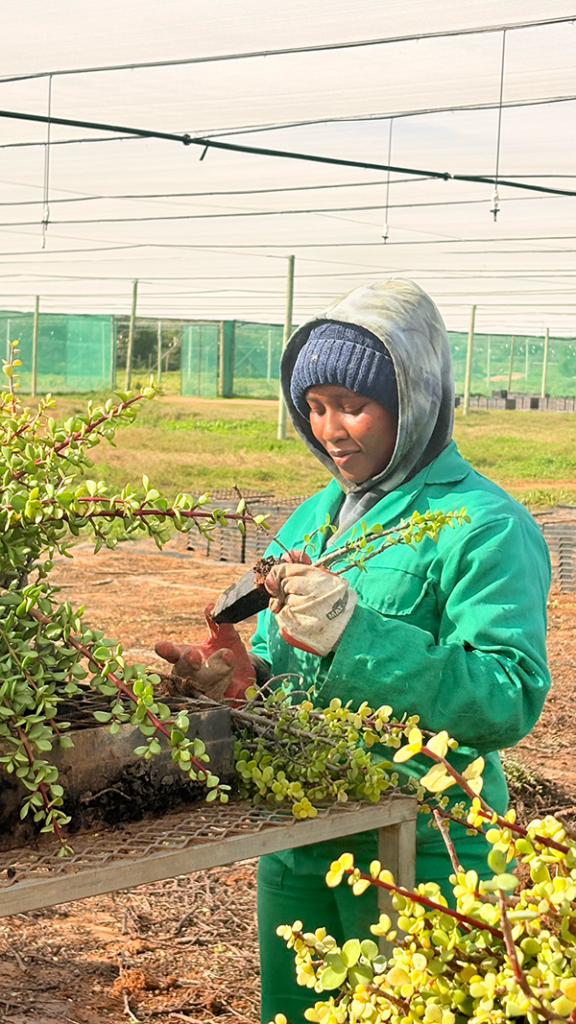
Sonia Latola smiles coyly when the attention turns to her on a warm winter’s afternoon as she knock-knock-knocks a 3-month-old spekboom cutting free from its rooting container beneath the domed shade cloth at the Hive Ecosystems nursery, less than an hour’s drive from some of Imperative’s farms. She and her colleague Elistine Fisant live in the area and are, for the time being, enjoying the flush of jobs that these planting projects bring. Every day, these two transfer thousands of cuttings into crates that get hauled up a precarious country road by tractor. There, a crew with pickaxes and hand trowels will place the young plants gently but speedily into the ground, cutting by cutting, laboriously and by hand.
Like Return to Thicket, Hive Ecosystems is a small but established spekboom restoration project in a sector that is now seeing a growth spurt as the World Bank and other financiers recognize the business model for funding ecosystem restoration in these exhausted farmlands.
Many of the people interviewed — farm laborers, businesspeople, landowners, and many others — say they don’t understand how this strange new currency of carbon credits works. They can’t fully grasp how invisible carbon dioxide translates into the tangible dollars and cents that are promised in recent press releases. They do hold onto the hope, though, that these new investments will bail out desperate farmers and put real cash in the pockets of people in a part of the world where jobs are scarce and the farming economy of yesteryear is on its knees.
For more than two centuries, South Africa’s big developers have mostly been in extractive sectors such as mining and related industries. The developers of tomorrow are viewing ecosystem repair as a new frontier, recognizing the business opportunities that will allow for the rehabilitation of the very natural infrastructure left damaged by extractive industries. That some prominent Global North financiers are seeing the business potential of investing in ecosystem repair in an area as tiny and niche as South Africa’s Albany thicket biome suggests that farming with a novel agricultural crop in the Global South — carbon — may indeed be the new gold rush, for better or for worse.
This is the third article in a three-part investigation of spekboom-led ecosystem restoration in South Africa. This is part of an award-winning collaboration between independent science writer Leonie Joubert, the Stellenbosch UniversitySchool for Climate Studies, and theHenry Nxumalo Foundationwhich supports investigative journalism in Africa. Read partsoneandtwo.
The number of cuttings this Hive Ecosystem team manages to plant in a day is dizzying. This project is halfway toward its original goal of planting spekboom across nearly 5,500 hectares (nearly 13,000 acres). Picture: Leonie Joubert
A unique approach to ecosystem restoration in South Africa — repairing exhausted farmlands through the mass planting of spekboom — is receiving global attention as one new entrant gets an injection of $91 million to dramatically increase its plantings.
This will contribute toward the goal of planting more than 300 million spekboom (Portulacaria afra) cuttings, funded by investors through global carbon markets.
Smaller restoration projects have blazed a trail until now, helping to improve planting and land management methods to get maximum plant survival, bush recovery and, ultimately, carbon credit returns.
Plant survival rates through the next five planting seasons will dictate how well farmlands recover in coming decades, whether they deliver on the carbon drawdown expectations, and whether investors get their returns. But our investigation finds that things may be getting off to a rocky start.
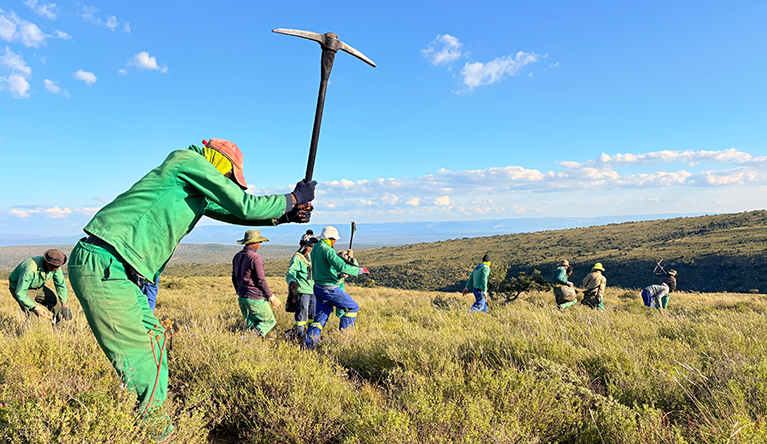
The team of diggers crisscrossing a hard-to-reach hill on a remote farm in South Africa’s Eastern Cape province shows how tough spekboom planting is. A row of men, each arcing a pickax over his head to his own rhythm, punctures a Morse code of holes into the earth. Behind him, a planter drops a rooted spekboom cutting into the hole, fills it, and tamps the soil gently with a trowel. Between them, a runner, his bag not unlike that of an old-school postman, ferries cuttings from the tractor that has labored up a treacherous country track from the nursery on a nearby farm.
They’ll get a few thousand plants into the ground today, give or take, but the team works so fast that the numbers blur after a while.
It’s grueling. But the men are upbeat. It’s work, many say, in a region where unemployment is high and the stagnant farming sector unlikely to change anytime soon.
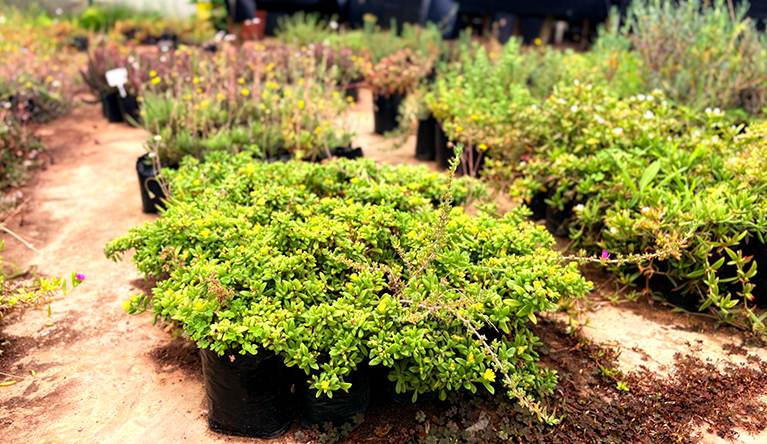
The planters are doing the first steps in helping repair the land on a farm owned by Hive Ecosystems, one of the more established outfits in a small but emerging restoration sector. Here, ecologists hope that mass planting with spekboom (Portulacaria afra) will be the first step in the recovery of what’s known as the Albany thicket ecosystem. Generations of heavy livestock rearing — mostly with mohair-producing goats — have reduced once-impenetrable hedge-like bush to something akin to desert across 1.5 million hectares (3.7 million acres) of farmland. Nothing much will grow here anymore. Except spekboom.
These projects are drawing on carbon markets to raise the capital needed to fund the wide-scale planting of this drought-hardy, easy-to-grow plant. Investors provide the funds now, with the promise of earnings from a new kind of agricultural crop down the line: atmospheric carbon banked away in the plants and soils, which translates into the currency of carbon credits.
The business case for this has been in development for roughly two decades. It is now so convincing that the World Bank recently listed an outcome-based bond tailored specifically to fund the work, with a pot of $120 million that’s available to developers in the spekboom sector. The first to draw on this loan is a new entrant: Singapore-based infrastructure developer Imperative Global Solutions Pte. Ltd., which specializes in ecosystem restoration at scale, and whose operations are taking what was artisanal and making it industrial in size and approach.
Where once there was impenetrable hedge-like Albany thicket, today many farms look like a desert. These farmlands need spekboom-led repair the way a burn victim needs lifesaving skin grafts. Picture: Leonie Joubert
Spekboom planting is now increasing at a pace and scale unlike anything tried before. What happens in the field over the next four or five years will determine how well the vegetation and, hopefully, the broader ecosystem recover over the coming decades. Planting success will dictate whether it delivers on the carbon capture expectations promised by developers, how this translates into carbon credits and, ultimately, whether investors get their returns.
This little corner of the country needs the restoration work the way a burn victim needs lifesaving skin grafts [TK Link to story 1]. Many of these farmlands are so exhausted that there may only be one agricultural crop left to grow here: carbon. If projects don’t make good on their promises, insiders worry that it will undermine investor confidence, scare off financiers, and be the death knell for a farming sector that’s already on life support.
Getting it right: How to plant a succulent, at scale
The Hive Ecosystems project is roughly halfway toward its goal of getting spekboom sprigs into 5,431 hectares (13,420 acres) on its properties near Jansenville, about an hour’s drive inland of the port city of Gqeberha. Managing director Japie Buckle would like to double that planting area if they can buy more land.
The thicketeers — that’s what some ecologists, researchers and project implementers call themselves — agree that planting spekboom isn’t rocket science. But doing so fast and at scale needs to be done carefully, and they’re sharing what they learn as they go.
Their field notes might sound like succulent wonks geeking out on gardening hacks. But their watchful attention to planting and post-planting teething issues — what works and what doesn’t, even months or years down the line — will be key to ensuring the survival of well over 300 million spekboom plants that will be put in the ground across all projects, cutting by cutting, laboriously and by hand, over the next four or so winter planting seasons.
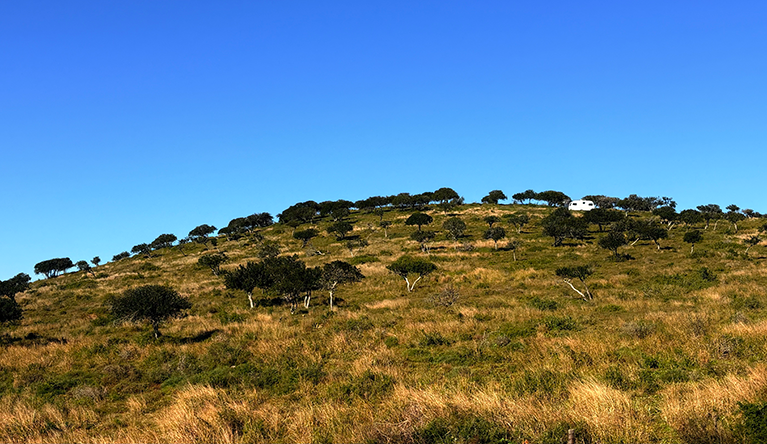
Intensive goat browsing creates what ecologists call a pseudo-savanna. This hill should be covered with impenetrable thicket. Instead, heavy browsing has opened it up, leaving sparse trees with artificial mushroom-shaped
“Spekboom is hardy. It’s evolved here,” says Nick Hamp-Adams, general manager of Return to Thicket, one of the smaller restoration projects that incorporates two exhausted former mohair goat farms. No need to coddle it in the nursery or too much after planting, he says, but be gentle when putting it in the ground and do immediate post-planting follow-up.
“How you plant matters,” Hamp-Adams adds, smiling. “Make sure your teams are handling them like babies.”
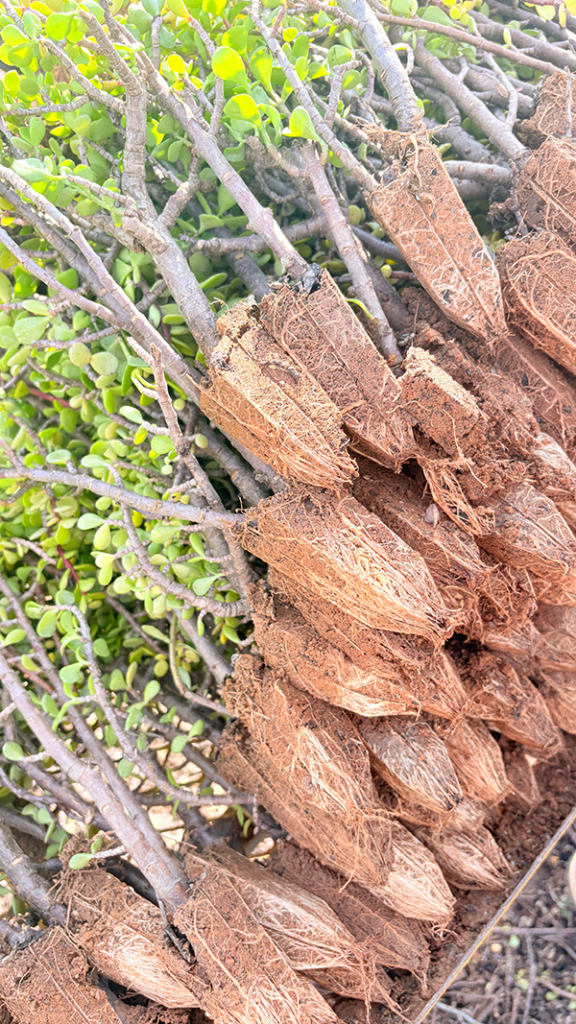
The process that most projects follow is simple: Harvest cuttings from wild-growing spekboom; give them roughly three or four months in the nursery to establish roots; and then plant them in a degraded spot. Most of the projects are deliberately low-tech and bare bones. They might work on an estimated cost-per-unit of 9-21 U.S. cents to get a cutting through the process.
Rooted cuttings take time and cost more to get veld-ready, but they establish better than unrooted ones, which don’t need much nursery time, according to Buckle, a seasoned restoration ecologist with decades of wetland rehabilitation under his belt. There’s a sweet spot where a cutting’s stem thickness and root size improve its odds, without spending too much time in the nursery.
Little tweaks at planting can improve a cutting’s chances, like propping a small rock at an angle to its base. This captures condensation, moistens the roots, and creates a gentle microclimate, says Jacquie Pastor, a consultant to a restoration project KBH Carbon, set up by its parent company, the mining conglomerate KBH Group, which has planted the first 1,000 hectares (about 2,500 acres) with the goal of eventually restoring 5,000 hectares (roughly 12,000 acres) of land.
The tradeoff: Slower planting speed, better survival.
Learning from the teething problems
“You need to calculate in some die-off,” Hamp-Adams says, scanning a section of one Return to Thicket farm where the sparse ground cover has sprigs of spekboom dotted about in every direction. It’s early winter, and the cuttings have had four months to settle in.
The Rhodes Restoration Research Group at Rhodes University in Makhanda, Eastern Cape province, hopes to get its nursery up and running again after work stalled due to government funding cuts. Researchers are exploring what a broader thicket restoration approach could be, in which species other than spekboom are introduced into planted areas. Image by Leonie Joubert for Mongabay.
There will always be some cuttings that don’t make it. Many of the smaller projects report relatively low mortality — between one and three cuttings dying for every 10 planted. But that figure can vary, depending on how the cuttings are planted and how the land is managed in the weeks and months that follow.
One pilot site at Kwandwe Private Game Reserve near the town of Makhanda — part of an ecotourism-focused collection of farms owned by C-SA Properties, whose restoration work is being done by CSA Carbon — had “super high mortality rates” along one edge of the plot, according to Kwandwe’s environment manager, Craig Sholto-Douglas. Six or seven out of 10 cuttings died. But toward the center of the plot, jackpot: Eight out of 10 made it.
Speaking at a thicket restoration forum in 2024, Sholto-Douglas put this down to the dance between predator and prey: Antelopes were lingering in a part of the site where they felt safe, so they browsed heavily here. But they moved quickly through the open area where they felt in danger, only nibbling the plants along the way.
Sholto-Douglas has been overseeing spekboom planting across 2,000 hectares (roughly 5,000 acres) of reclaimed farmlands around the edge of the reserve. This initiative is one that’s geared toward improving natural bush for wildlife and ecotourism, much like a similar project run at Kuzuko Private Game Reserve not far from here.
In spite of having a breather from heavy livestock pressure, parts of these farms still haven’t recovered on their own after 25 years, according to Sholto-Douglas. The spekboom plants should change that.
These real-life experiences are all critical data points for landowners who might one day want to reintroduce wildlife or livestock onto recovering lands. All have different histories, Sholto-Douglas says, all are in different states of disrepair. With only four years to learn from these teething problems, time is ticking for this emerging sector.
Going big
Most projects are artisanal in size, and planting is proceeding slowly. It’s taken Hive Ecosystems three years to achieve the first half of its planting goal with a crew of nearly 50 people in the nursery and out in the veld. Return to Thicket got its first 1,000 hectares planted in 14 months, with 10 people handling the nursery side and 10 planting.
The new entrant to the sector, Imperative, which has attracted World Bank funding and Amazon’s attention, has bigger ambitions. It aims to complete its goal of planting 100,000 hectares (about 247,000 acres) within the next four to five years. According to Tiaan Burger, Imperative’s spekboom restoration project manager, the operation will be able to plant 20,000 hectares (nearly 50,000 acres) per year once it’s running at full speed.
The company has also opted for a more technical approach to propagating its cuttings, using a trademarked specialist rooting method from Danish company Ellepot, which is said to shorten nursery time and protect against planting shock, according to the manufacturer.
Burger wouldn’t comment on Imperative’s cost per unit to get a cutting from harvesting to planting. And Ellepot’s South Africa office also wouldn’t disclose the cost per unit for the product that Imperative uses. However, based on industry information from others familiar with such calculations, Mongabay estimates that Imperative’s cost per unit is perhaps 50 U.S. cents per rooted cutting, roughly double what smaller operators budget for.
While the smaller projects’ plantings are ticking over slowly, Imperative arrived in the area in 2024 and had its first 10,000 hectares (25,000 acres) planted in just over a year. According to Burger, planting began in November 2025 on the second phase — the 50,000 hectares (nearly 124,000 acres) that have attracted a $91 million loan funded in part by the World Bank and derisked with Amazon’s buy-in. The goal, he says, is to complete all this planting — five times the size of phase one — within two years. With further planned expansion, Imperative calculates a total carbon drawdown of 41.6 million metric tons of carbon dioxide across its 100,000 hectares over 40 years, averaging out to 10.4 metric tons of carbon dioxide per hectare per year.
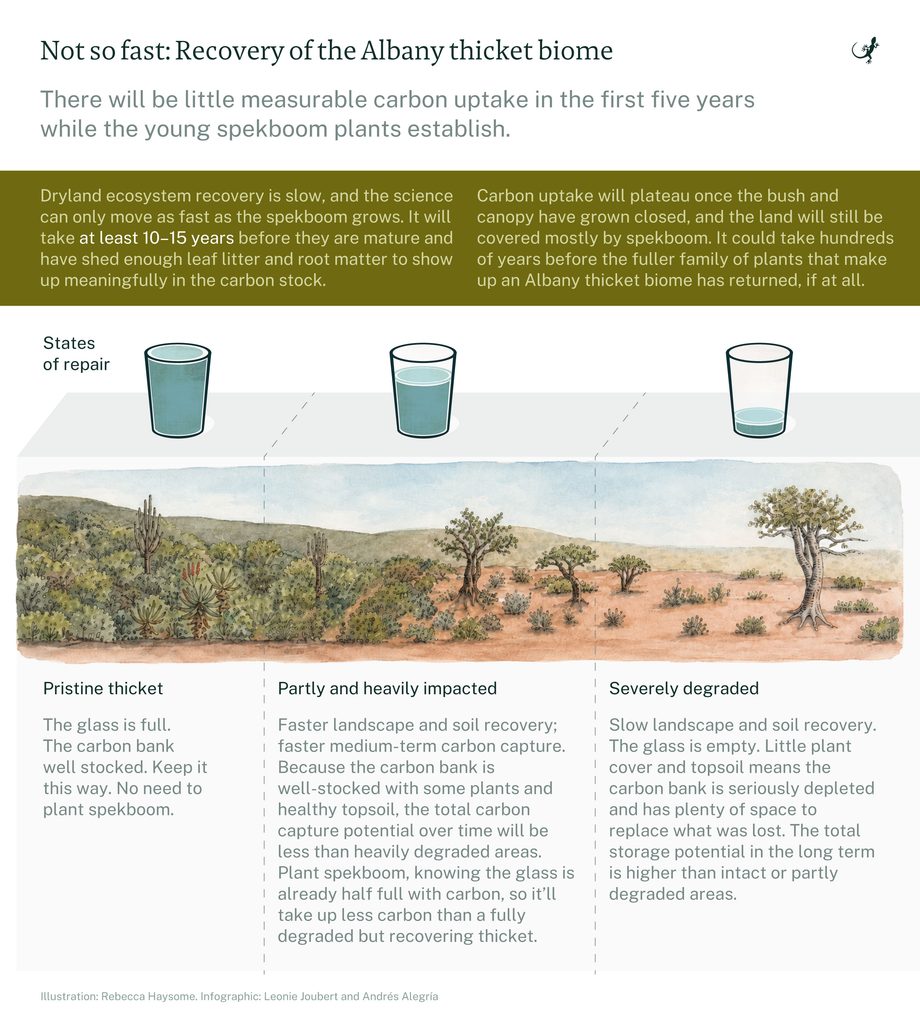
Projects are unlikely to see much carbon build-up in the total carbon stock — the plant matter and soils — in the first five or so years, because the young trees will need to establish. It will take roughly 10-15 years before they’re developed and shedding enough leaf litter and root matter to reflect significantly in soil and plant biomass samples. Carbon uptake will plateau once the canopy has grown closed, and spekboom will still be the predominant plant.
Whether the recovering lands show they’ve captured as much carbon as hoped for will depend on how well and how quickly the young cuttings establish.
How fast is too fast?
Questions have emerged about how successful Imperative’s first-phase plantings have been, though, whether it’s scaling up too fast and whether it’ll be able to meet its ultimate targets.
Mongabay has credible information from sources indicating that some of Imperative’s early plantings have experienced die-offs of as much as 80-90%. Burger wouldn’t comment on whether these figures are accurate. He did say, however, that investors had done their due diligence, including visits to first-phase plantings. Mongabay wasn’t able to establish which sites were visited, by whom or when. But Burger maintained that Imperative’s financiers wouldn’t have agreed to the loans if they didn’t have confidence in the company’s ability to deliver.
Imperative CEO Scobie Mackay also wouldn’t comment on mortality rates and said the developer was learning from its early planting experiences. Many parties working with Imperative, including its implementing partner, NatCarbon Africa, are tied into nondisclosure agreements — standard practice for commercial ventures of this scale, according to Mackay — which makes it difficult to independently verify information provided by Imperative representatives or its partners.
An environmental scientist with extensive experience in restoration work of this type in South Africa, but who asked not to be named because of their proximity to the sector, told Mongabay that such high mortality rates are possible — and not just for spekboom — if plants don’t get the right follow-up care and appropriate land management.
“Our experience on other projects in the region where such care is absent has shown that an 80% to 90% plant mortality rate is not uncommon,” they said. “One cannot just stick a sapling in the ground and hope it will survive.”
There are many things that can kill a sprig: a heat wave; a frosty snap; or unusually wet soils causing rot. Hungry animals, too.
The Kwandwe reserve team found a few unusual candidates taking advantage of some of their young spekboom.
One batch of plants had been in the ground for 18 months and, by all accounts, looked like they were surviving. But they weren’t thriving.
“All of them still upright. All of them rooted beautifully,” Sholto-Douglas says.
Post-planting inspection is essential to ensure that cuttings survive. Most projects anticipate that seven out of 10 cuttings will take. New entrant Imperative would not disclose what its planting survival rate is, but some reports suggest that the developer may be experiencing some teething problems. Image by Leonie Joubert for Mongabay.
Most restoration projects have low-cost, low-tech nursery operations where the spekboom cuttings can grow roots before being planted in the wild. Image by Leonie Joubert for Mongabay.
It turns out that, while the reserve’s management team had been able to keep the large browsing animals out of these recovering lands, they hadn’t accounted for the little ones, like Cape scrub hares (Lepus saxatilis) and gray duikers (Sylvicapra grimmia), a regular antelope to these parts.
Locals here say that spekboom is to goats what ice cream is to a toddler. But it seems that small wildlife feel the same way about these irresistible plants, another important data point for the sector as spekboom planting goes industrial scale.
This is the second article in a three-part investigation of spekboom-led ecosystem restoration in South Africa. It is part of an award-winning collaboration between independent science writer Leonie Joubert, theStellenbosch University School for Climate Studies, and theHenry Nxumalo Foundationwhich supports investigative journalism in Africa.Read partsoneandthree.
These two-decade-old planted spekboom bushes at Cambria on the edge of the Baviaanskloof UNESCO World Heritage Site show the characteristic skirting that creates a nursery environment around their base in which other plants and animals can live. Picture: Leonie Joubert.
After decades of livestock pressure, 1.5 million hectares (3.7 million acres) of farmland in South Africa’s Albany thicket biome need rehabilitation — the way a burn victim needs lifesaving skin grafts.
Carbon finance seems the most likely source of funding, kickstarting the process with the mass planting of an endemic drought-tolerant succulent called spekboom.
Until now, restoration projects have been artisanal, but that’s changed with a $91 million loan to a new entrant and tech giant Amazon throwing its hat into the ring.
A flush of new funding shows growing faith in a business model for ecosystem restoration, but there’s concern that if projects grow too fast and promise more carbon dioxide drawdown than the emerging science can account for, it could leave projects on shaky ground.
The spekboom is to goats what ice cream is to a toddler, say the locals in this little nook of South Africa’s Eastern Cape province. This explains why roughly 90% of the Albany thicket plant biome has been stripped by generations of livestock farming, mostly mohair-producing goats. Where there once was impenetrable bush, many farmlands now look like a desert.
This particular plot of cultivated spekboom (Portulacaria afra) — literally, bacon tree in Afrikaans — carries the weight of expectation, though.
The oldest spekboom bushes on the Krompoort farm show 50 years of growth behavior. Research has a long way to go before it can answer the sector’s most pressing question: How much atmospheric carbon can they draw down into the plants and soils? Picture: Leonie Joubert.
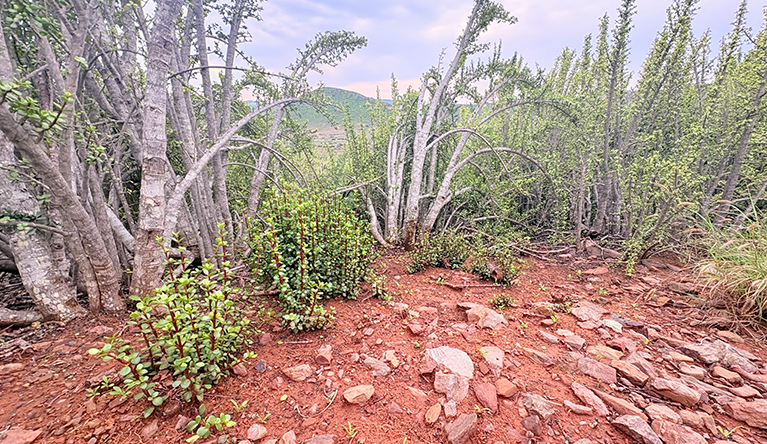
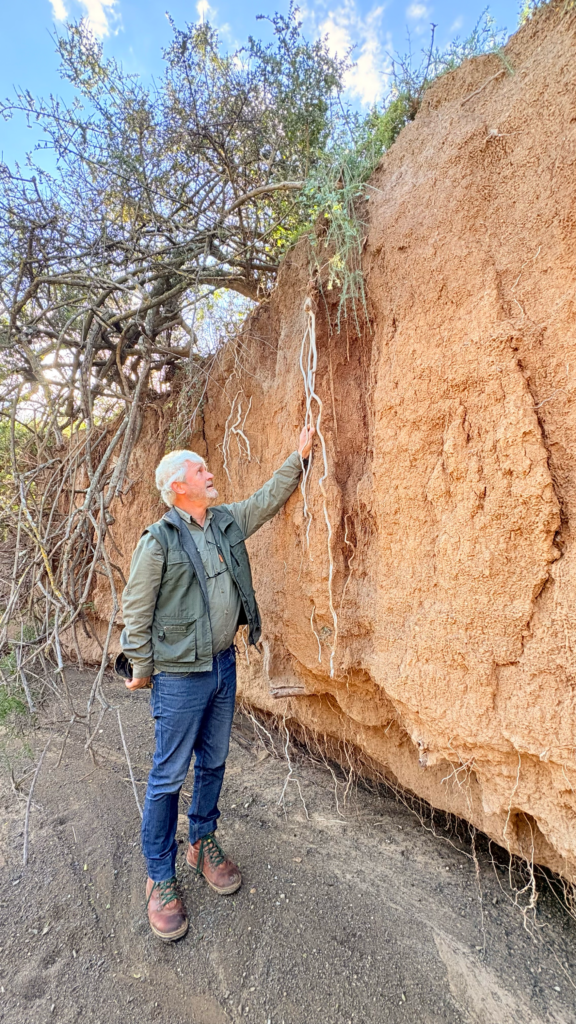
“These are the old ones,” says Nick Hamp-Adams, gesturing to a dense line of bushes, each a spray of boughs that erupts from the ground like fireworks. After half a century, they stand a little higher than a tall person’s head. Their plush, water-laden leaves create a pointillist hedge that’s hard to see through. Where the lower branches dip to the ground, some send out roots, which allows the plant to spread and further carpet the soil.
“The farmer planted them because mud [kept] flooding his barn,” says Hamp-Adams, an environmental policy graduate and general manager at Return to Thicket, a small restoration initiative in this emerging sector.
From those humble beginnings in 1976 — a farmer needing to shore up a slope that had been stripped bare by goats — this plot has become the holy grail of thicket restoration research. Hamp-Adams is, for the time being, the keeper of the grail. Return to Thicket now owns the historic Krompoort farm, previously a commercial mohair enterprise and now a critical study site for thicket restoration, which sits about an hour’s drive inland of the port city of Gqeberha.
“Over time, [the plot has] been added to and expanded,” Hamp-Adams says. “Researchers have experimented with different methods of planting spekboom.”
He points to the distinctive skirting around the base of the bushes. This loose weave of low-hanging young branches and leaves creates nursery conditions beneath it, shielding the ground from the jackhammer strikes of raindrops and softening the sun’s heat. Bare ground can bake at more than 60° Celsius (140° Fahrenheit) in summer. The power of raindrops and heat can turn fluffy, seed-friendly soil to concrete-like conditions, says Alastair Potts, a botanist and associate professor at Nelson Mandela University in Gqeberha.
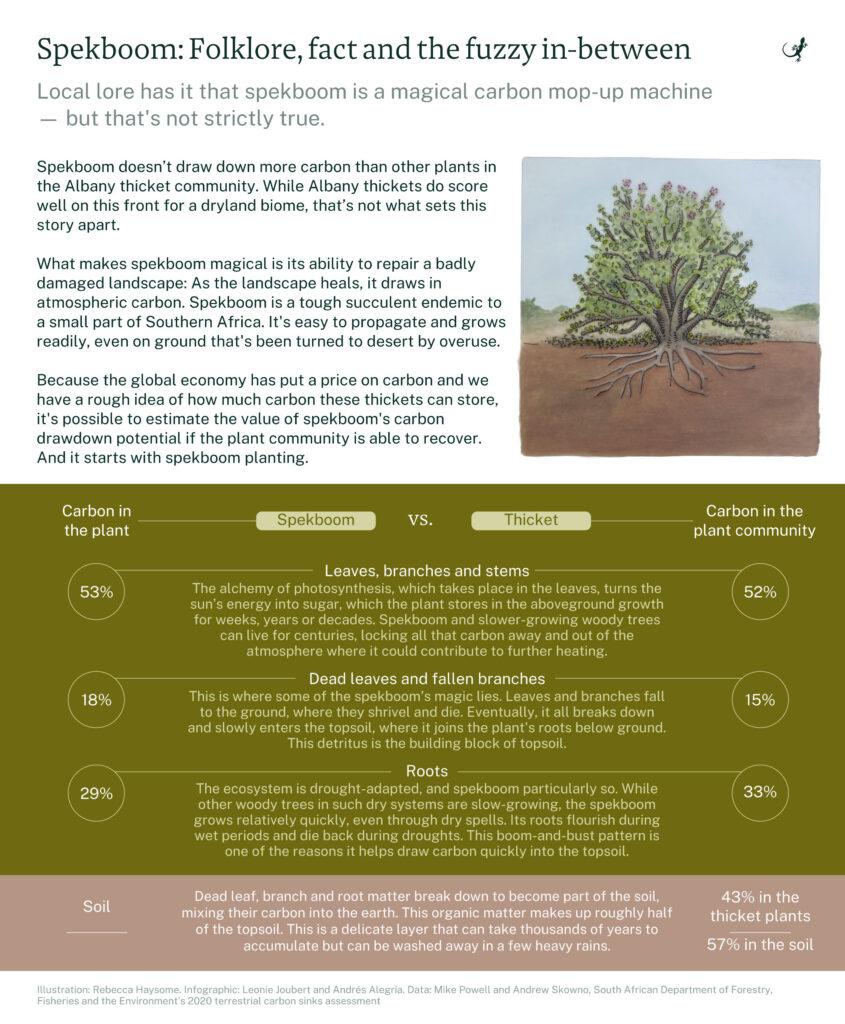
Spekboom is just one of many woody tree species in Albany thicket. But it’s this quick-growing skirt that is part of its magic, allowing it to heal and reverse this damage and, restoration ecologists hope, allow the original thicket to recover where the now barren landscape lets little else grow.
As the thicket has been stripped, exposed topsoils have been washed away, and unchecked runoff has carved erosion channels into stream and river systems. In addition to planting spekboom, Hive Ecosystem’s Japie Buckle is restoring eroded rivers on the property’s farms. Image by Leonie Joubert for Mongabay.
It’s this ability to heal the landscape that has had spekboom all over the news of late. As it grows, it draws down carbon dioxide from the overburdened atmosphere that is causing the global rise in temperatures. The world’s economy has put a price on carbon — for this specific kind of project, anything from $20 to around $45 per metric ton of CO2 cleaned from the atmosphere, sources say. That’s why spekboom-led restoration has attracted the attention of a big international carbon-capture project developer and financiers, including the World Bank, as well as interest from tech giant Amazon.
Ecologists can show early estimates for how much carbon these recovering thickets might bank away in the plant matter and soils. These calculations allow developers to build a business case so that they can draw on carbon markets to pay the bill for restoration. The idea is to kick off longer-term thicket recovery and revive farms left moribund by decades of land degradation: Get investors to pay upfront to replant the landscape, and let them cash in on carbon credits down the line.
Growth spurt
This maiden row of 50-year-old plants in the Krompoort plot is bigger by far than the other plants — each bush taller, wider, its fleshy hedge-like cover denser. Less competition, Hamp-Adams says, more water and nutrients. Uphill, younger rows were added over time, planted by researchers in a deliberate grid, with a meter’s gap, 3.3 feet, between individual plants, and varying spacing of 2-5 m (6.7-16 ft) between rows.
The plants’ carbon-capturing potential as it helps the thicket to recover has caught the attention of developers who are willing to pay for the mass planting of spekboom.
And the farmers here need it like a burn victim needs lifesaving skin grafts. Where many farms were once impenetrable hedge-like bush, they have been stripped to bare ground. Almost nothing can grow on the most damaged lands now. Except spekboom. And if spekboom can take root and create the nursery environment that will allow other thicket plants to sow their seeds, it may allow the wider ecosystem to return to a semblance of its former self. Wildlife could return, for instance, or even cattle, sheep and goats, though ideally at much lower stocking rates than in decades past.
Mass spekboom planting is the first emergency treatment that could, over time, allow the skin grafts to take. It could take decades. It could take centuries. But it starts with spekboom. Planted laboriously, one cutting at a time, but at scale and fast.
Artisanal versus industrial
This small emerging sector is now seeing a seismic change with a new international entrant that has attracted Global North investors with deep pockets.
The spekboom restoration community is cautiously optimistic. Wooing such hefty financiers shows growing faith in a business model for ecosystem repair that’s been in the works for roughly two decades, many say. Yet there’s concern that if restoration projects grow too fast, or if their carbon-capture numbers are more ambitious than the emerging science can account for, it could put the sector in jeopardy.
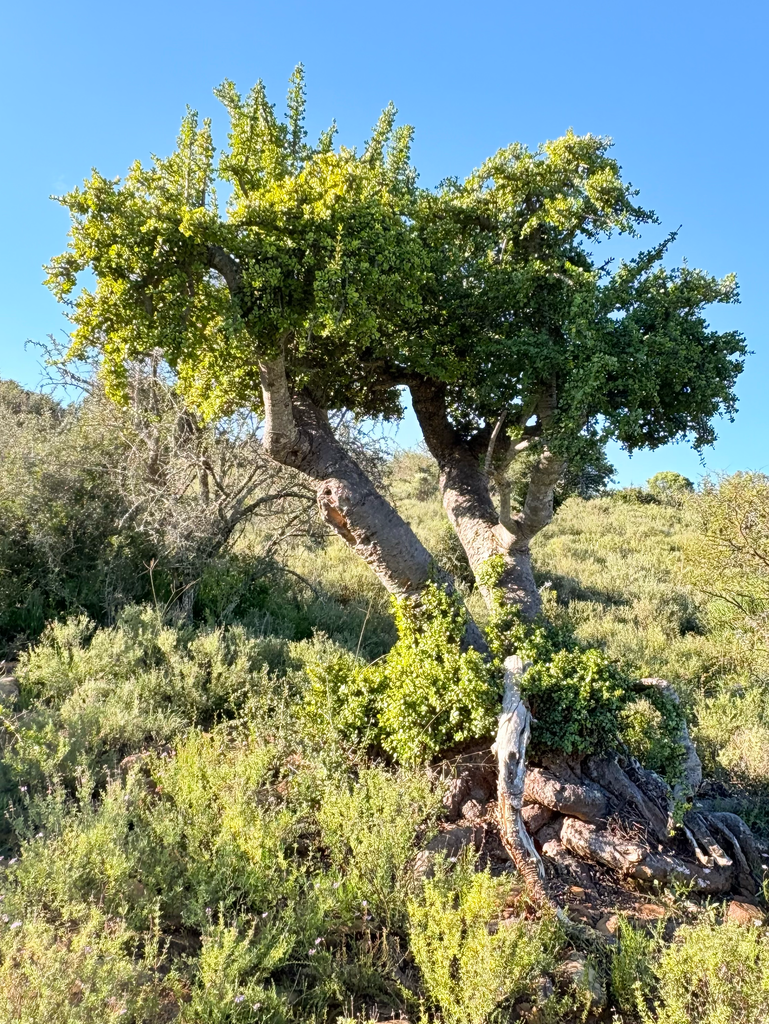
An old, badly damaged spekboom tree shows how goats browse the lower branches and leaves, stripping away its protective skirt and creating an artificial, topiary-like canopy. Picture: Leonie Joubert.
Singapore-based Imperative Global Solutions Pte. Ltd., a company that bills itself as an infrastructure developer — albeit one that builds ecosystems rather than bridges or dams — recently secured funding that should allow it to expand its initial pilot operation of 10,000 hectares (about 25,000 acres) five times over the next two years. Founded in 2022, the privately held company says it brings expertise in nature-based solutions through carbon markets.
Imperative recently announced it had secured financing of $91 million, with $25 million coming from a newly listed World Bank outcome-based bond named in spekboom’s honor, and another $66 million from a small number of big investors. Amazon has thrown its hat into the ring, de-risking the investor finance by agreeing to buy some of the carbon credits coming from Imperative’s new plantings, amounting to 9.4% of the 20.8 million carbon credits that are expected to come from this next planting.
Most projects until now have been small — akin to artisanal miners panning for gold — with the most ambitious aiming for around 5,500 hectares (about 14,000 acres) or less of restored land. These smaller operations are banking on their properties drawing down an average of between 4.6 and 8.5 metric tons of CO2 equivalent (tCO2e) per hectare per year in coming decades.
Mother lode: artisanal vs industrial.
Imperative is aiming for its project, which will ultimately scale up to a total of 100,000 hectares (247,000 acres) of spekboom plantings in the next four to five years, drawing down an average of 10.4 tCO2e per hectare per year over the next 40 years, according to Imperative project director Tiaan Burger.
The carbon-capture estimates used in projects’ business models are still open to debate, though. Even after decades of studying sites like Krompoort, thicket ecology research is still fairly young.
One number from the Krompoort site that surfaced in 2006 helped build the sector’s business case over the two decades that followed: 15.4 tCO2e. If thickets were allowed to recover, with spekboom leading the way, they had the potential to draw down this much atmospheric carbon per hectare per year.
Critics, though, urged caution, noting the figure comes from one study at a single location, and that this amount of carbon storage was only likely in optimal conditions, with good soil and higher rainfall. Respected ecologists said it shouldn’t be generalized across the entire thicket biome.
Side by side — how project numbers compare and the original carbon capture estimate
But other scientists countered, seeing the number as a back-of-the-envelope estimate that’s typical in any emerging field of scientific inquiry.
It was a starting point and one that has be adjusted over time to reflect a more modest carbon drawdown potential.
Whatever the case, the 1.5 million hectares (3.7 million acres) of excoriated land need emergency treatment, and restoring them with spekboom planting may be the only way to do it. Many thicket ecologists are anxious, though, that using overall optimistic numbers could jeopardize the sector, and are in favor of more conservative carbon drawdown figures. They say that projects shouldn’t be surprised if carbon yields don’t measure up to today’s model projections, warning that developers mustn’t oversell what the recovering land can do. Investors must also anticipate that the returns may be lower than hoped for and shouldn’t abandon the work as a result.
If projects don’t deliver on the promised drawdown, it could undermine investor confidence and cause capital flight from spekboom-led restoration. This could sink the broader effort, and deliver a death knell to a farming economy that’s already on life support. If spekboom projects fail, farmers won’t even be able to harvest this new kind of agricultural yield: elusive tons of atmospheric carbon.
This is the first article in Mongabay’s three-part investigation of spekboom-led ecosystem restoration in South Africa. It is part of an award-winning collaboration between independent science writer Leonie Joubert, theStellenbosch University School for Climate Studies, and theHenry Nxumalo Foundationwhich supports investigative journalism in Africa. Read parts two and three.
Ronald Madongwe waits for a taxi to take him to church in Bulawayo, Zimbabwe, 09 August 2026. Photo: Aaron Ufumeli/ SA|AJP
In 2022, Ronald Madongwe, an openly queer Zimbabwean pastor preaching for acceptance of the LGBTQI+ community in a country where homosexuality is outlawed, stumbled across a picture of himself on Facebook alongside a post appearing to call for his murder. The post appeared under the Facebook account of Alphonsus Makanga, a digital creator with about 5,000 followers.
Madongwe was shocked, but not unused to abuse and threats online. He reported the post to Meta’s Reporting Abuse function. Four years later the post still remains publicly visible on Facebook.
Madongwe leads God Adores You, a church-based organisation that works with LGBTQI+ Christians and seeks to challenge religious interpretations commonly used in Zimbabwe to justify discrimination against queer people.
He says online abuse, of the type he was subjected to by Makanga’s post, can easily spill into the real world.
“This harassment from online can result in loss of life, being arrested, and being bullied, and not having peace even when you go around because people know you. It kind of mobilises people against the work that I do or against myself,” said Madongwe in a recent interview.
A wider concern in Zimbabwe
The failure of Meta’s online moderation systems to remove Makanga’s post points to a wider concern that gay Zimbabweans have with homophobic and abusive content circulated on platforms such as Facebook and Instagram.
This reporter reviewed eleven cases of homophobic content posted on Meta’s platforms by users in Zimbabwe. In each of these cases, complaints were filed through Meta’s Reporting Abuse function. Five complaints were filed directly by the reporter during the course of this investigation. Six other complaints had previously been filed by other people, who shared their experiences.
In each of these cases Meta confirmed receipt of the complaints. In response to nine of the eleven complaints, Meta issued an automated response which said that the reported content had been reviewed. Meta’s response added that it had declined to remove it, because Facebook’s automated review had determined the content did not violate the platform’s Community Standards. While acknowledging the material “may be offensive or hurtful”, the company said it “only take[s] down content that goes against our standards” and invited the user to request a further review if they believed the decision was a mistake.
Instagram generated a similar message in response to users’ reports.
The posts and comments reported included death threats, doxing of gay individuals, calls for violence, AI-generated videos of assault and homophobic slurs in Shona and Ndebele. Based on Meta’s published Community Standards, all of those categories would likely fall within content that is prohibited or, at minimum, subject to enforcement.
The people affected
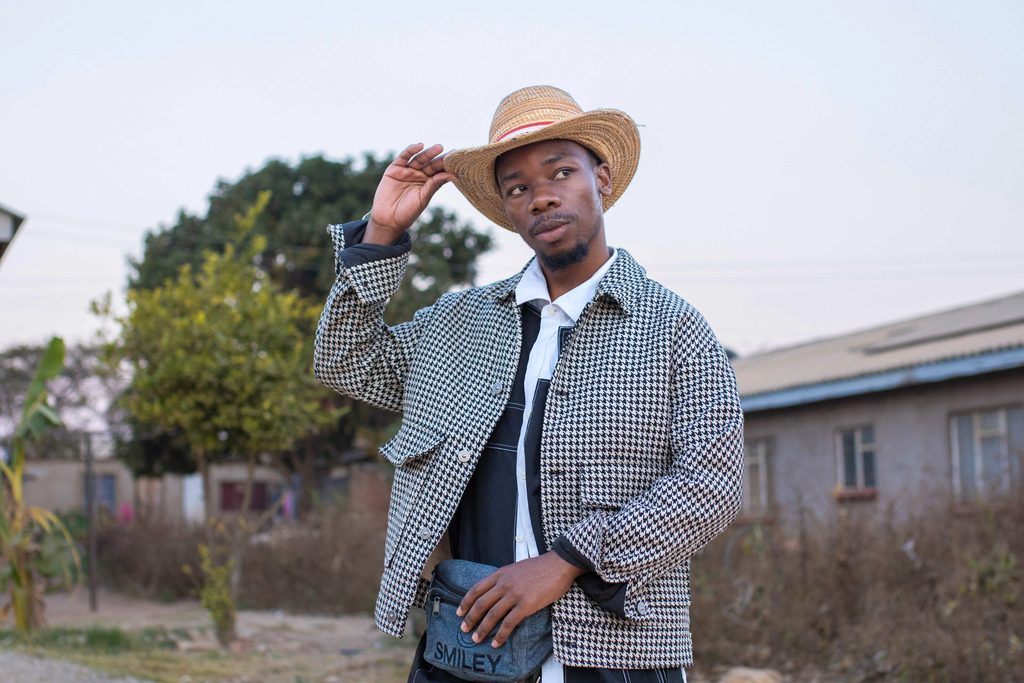
Tinashe Kurapa is a fashion designer based in Harare. Despite living and working in a country where being openly queer carries significant social and legal risk, he has still sought to build his career and brand in public view. He relies on social media to display his collections and connect with a client base. For Kurapa, Facebook and Instagram are essential business tools. But, it is also where much of the abuse he experiences as a queer professional begins.
An LGBTQ+ pride flag and the Zimbabwean flag fly outside the offices of Gays and Lesbians of Zimbabwe (GALZ) in Harare. GALZ is a voluntary membership based organisation that advocates for and supports the rights and interests of LGBTQ+ people in Harare, Zimbabwe. 13 August 2026. Photo: Aaron Ufumeli/ SA|AJP
On 20 July 2025, Kurapa posted photographs from the Dream House Academy Awards in Harare on his Instagram page. Instead of celebrating Kurapa’s work, the comment section quickly turned hostile.
One user, under the username itz.meegah, wrote, “Ngochani iyo… dai akaenda kugehena.” (Translated: “That gay person… he should just go to hell.”)
Another user, under the username unclaytontravi, added: “Batai murove kani.” (Translated: “He needs a beating.”)
During an interview, Kurapa confirmed he reported the comments to Meta. In this instance, he said, he did not even receive a response. He eventually deleted the comments himself. For him, this was about protecting his business and brand, and his integrity.
“I’m not achieving my full potential as a professional fashion designer because of this online harm and suffering brand damage as a result,” he said.
“My livelihood is affected.”
The risk of real world violence emanating from the abuse he suffers online is also ever present, he believes.
In April 2025, a Zimbabwean comedian named Chamakuvanga, who has more than 58,000 Facebook followers, posted an AI-generated video depicting himself physically beating Kurapa and locking him in a jail cell, captioned “Ngobhi tinorova” Translated, “we beat up the gays.”
The AI video Facebook post collected 655 likes and 223 comments.
Kurapa reported it on 21 May 2026, shortly after being interviewed for this investigation. Meta responded on the same day with its stock standard response: “Our technology reviewed your report and, ultimately, we decided not to take the content down.”
When checked on 17 June 2026, a month after it was posted, the video was still active. But, it appears that the video has since been removed or the link has been otherwise corrupted.
On 1 March 2026, Zim Stories 24, a public Facebook group with 774,823 members, posted a photo of Kurapa in costume at an event.
“So muZim tatove nengochani dzisingahwande, inga times change umm,” read the accompanying post. (Translated Shona: “So in Zimbabwe we now have gays who don’t hide, times have really changed,”)
A comment posted by user Taurai Kandishaya said that anyone who organises events attended by LGBTQ+ people should be “punished for promoting” homosexuality.
This reporter filed a complaint on Kurapa’s behalf on 9 June 2026. Meta acknowledged it twice, on 9 and 14 June. But, as of time of publication, the post was still online.
Fashion designer Tinashe Kurape in Harare, Zimbabwe, 08 August 2026. Photo: Aaron Ufumeli/ SA|AJP
Enock “Nox” Guni, a multi-award-winning musician with a verified Facebook page and another massive 668,000 followers, posted in Shona calling for the arrest of LGBTQI+ people who had attended the NAMA Awards. The post drew 1,300 reactions and 381 comments.
In the comments, a user named Tinashe Mugwira escalated the call for arrests into explicit vigilante violence. Translated from Shona, his comment read in part: “Give us the strength to grab them when we meet them and beat them. And everyone caught should just go to jail.”
This reporter reported Guni’s post on 19 May 2026 and five days later, Meta issued its stock response, explaining that the post would not be removed. As of the date of publication, it remained online.
Similarly, Meta declined to act on several other reports submitted as part of this investigation, including a post by Harare podcaster prominent DJ Sparks ZW threatening to “expose” prominent gay Zimbabweans, which garnered comments that gay people “must be wiped out.”
This reporter flagged three more pieces of homophobic content with Meta: a video by the creator K. Loopsy argued that gay people should be imprisoned for life because of their “troublesome spirit”; a Pachopisa TV video post purporting to show a gay person being assaulted and encouraging followers to “tag someone”; and homophobic comments on an Instagram reel featuring an LGBTQI+ charity from the outlet Openly.
As of the date of publication, these posts and comments remained online.
Shona language slurs especially likely to remain online
Mkokeli Moyo is a Bulawayo community activist who uses Facebook to amplify the voices of gay and other marginalised people afraid to speak out, describing his work as filling a gap left by the formal media. But that visibility has also made him a daily target.
“My main challenge is that people flood my page with comments, and many of the slurs are in the vernacular Shona or Ndebele. I try to block them, but it is difficult to block (so many) people. If I keep blocking accounts, I could end up getting my own account banned.”
Meta has long faced criticism for failing to adequately moderate content in so-called “low-resource” languages, where its automated systems and human review capacity are less developed than for English and other widely spoken languages. In Zimbabwe, this appears to create an additional blind spot: homophobic abuse written in Shona and Ndebele can more easily evade Meta’s automated moderation, allowing slurs and harassment to remain online despite the platform’s rules against hate speech.
In one such apparent instance, Prince Ryanne Chidzvondo was photographed at the 2023 NAMA Awards by zimcelebs_official, which used the derogatory Shona term “ngochani” to mock him on Instagram. He reported the post to Meta on 2 March 2023 but says he never received a response.
“People have figured out that Shona gives them cover. You can say things in Shona that would (otherwise) be removed. So they use Shona deliberately, not just out of habit, but because they know they will get away with it,” he said during an interview.
Meta fails to respond
Between April and July 2026, this reporter made repeated attempts to obtain Meta’s response to the investigation, sending multiple enquiries to the company’s press offices, communications staff and other official media contacts. The queries detailed evidence that Meta had failed to remove reported homophobic content targeting LGBTQ+ Zimbabweans, particularly abusive posts in Shona and Ndebele.
As of publication, Meta had not substantively responded to any of the enquiries.
An LGBTQ+ pride flag and the Zimbabwean flag fly outside the offices of Gays and Lesbians of Zimbabwe (GALZ) in Harare. GALZ is a voluntary membership based organisation that advocates for and supports the rights and interests of LGBTQ+ people in Harare, Zimbabwe. 13 August 2026. Photo: Aaron Ufumeli/ SA|AJP
Meanwhile, a number of people interviewed for this article say they live in constant fear for the day that online threats spill over into real world violence.
Mkokeli Moyo, the activist in Bulawayo whose account is regularly inundated with hate and threats, said that the hate he has suffered online has put a target on his back.
“I am not free to move around in Bulawayo,” he said.
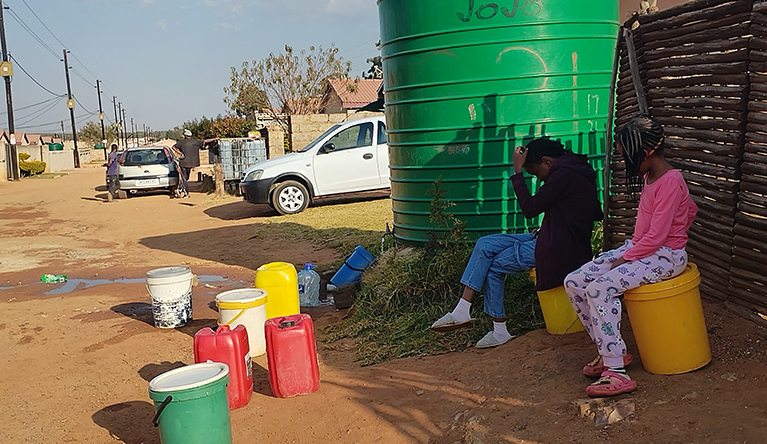
Empty water containers in the street tell the story of Siyanqoba’s ongoing water crisis in Emalahleni Local Municipality. Photograph: Rodney Hlatshwayo
A weeks-long investigation into water tanker procurement and service delivery in Mpumalanga’s Nkangala District reveals what happens when a temporary emergency measure becomes a long-term way of supplying water.
This comes as President Cyril Ramaphosa launches South Africa’s National Water Action Plan to address the country’s worsening water crisis. The Plan argues that water revenues should be ring-fenced to protect investment in water services.
In Nkangala District, the Lynnville office water depot in Emalahleni, and the Vezubuhle Gundry Water supply in Thembisile Hani are meant to supply communities with piped water. But recurring drought, ageing infrastructure and water sources that have failed to meet demand have left many communities dependent on erratic tanker deliveries that were intended only as an emergency measure.
This investigation found that Nkangala municipalities have become locked into a costly tanker system that has evolved from an emergency response into a long-term substitute for functioning infrastructure.
In parts of Emalahleni and Thembisile Hani municipalities, residents describe years of unreliable tanker deliveries, empty JoJo tanks and long periods without running water despite millions of rand being spent on emergency water provision.
Municipal records show that Emalahleni Local Municipality spent about R46 million on water tanker services in a single year, while neighbouring Thembisile Hani spent more than R21 millionover four financial years.
Despite this public expenditure, residents remain trapped in an unpredictable emergency water system, with little certainty about when water will arrive, whether it will be free or come at a cost, and little public accountability for how millions of rand spent on tanker services translate into reliable access to water.
Erratic delivery has opened the way for independent private providers to step in, charging even more for water delivery.
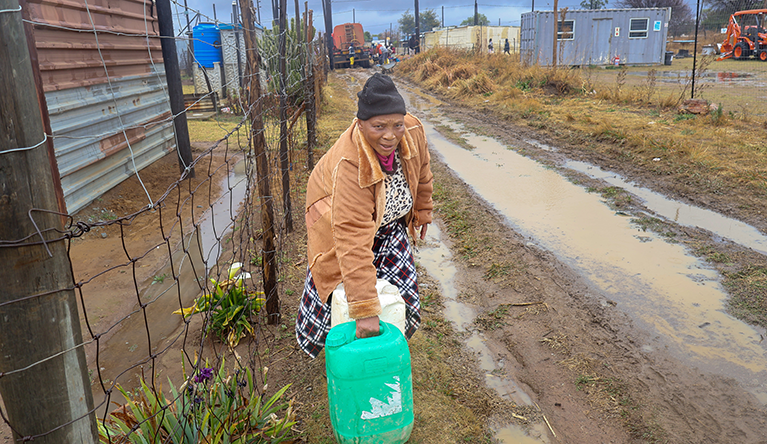
Elderly women carry water in their daily struggle for a reliable supply in Mimosa Township, Delmas. Photograph: Rodney Hlatshwayo.
And the private companies contracted by the municipality sometimes require payment in cash to the driver, raising suspicions that this money never gets to the municipality.
The investigation also found that some of the companies delivering water are owned by relatives of influential local politicians, raising questions about conflict of interest.
Living with a permanent emergency
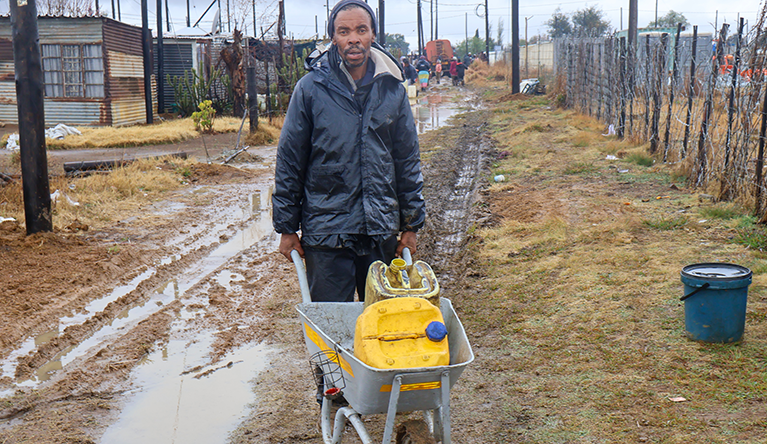
Across Nkangala, residents describe profound frustration with inconsistent and often unreliable water tanker services that affect almost every aspect of daily life. Communities, particularly in Emalahleni and Thembisile Hani, have grown dependent on JoJo tanks, yet frequently endure weeks without refills, forcing them to resort to unsafe alternative water sources.
Frans Duma, a resident of Waaikraal, says residents have raised serious concerns about how payments for municipal water tanker deliveries are being handled.
“As members of the Waaikraal community, we rely on municipal water tankers, and while I understand and accept that people may have to pay for water, the problem is that payments are made directly to the driver instead of through official municipal channels. There is no assurance that the money is reaching the municipality,” says Duma.
“Residents with JoJo tanks in their yards are charged R450 for a 5,000-litre delivery, while water from the communal JoJo tanks is free. For households like mine, where both my mother and I are unemployed, this is a significant expense.” Duma says earlier this year there was an attempt to increase the price, and he had to plead for the increase not to be implemented because many families have no source of income.
Residents push wheelbarrows carrying water containers through muddy streets in Mimosa Township in Delmas, as they search for water amid ongoing water shortages. Photograph: Rodney Hlatshwayo.
Duma wants the municipality to introduce a transparent payment system. “If payments were properly managed through the municipality, costs would be more transparent and there would be greater accountability. This situation places an unfair burden on vulnerable households and it calls for urgent intervention to ensure fairness and proper governance in water distribution within our community.”
A Waaikraal community member, who wished to stay anonymous, says he hasn’t received any water for about two to three months and that other residents have gone for more than eight months without receiving any water at all. “We have been left to fend for ourselves,” she says. “When people become desperate, they end up paying cash to the municipal water truck driver, whom we know as Sabza.” Sabza charges R300 to deliver a 2,500-litre load of water.
“Water is a basic service, yet we are forced to pay for something that should be provided by the municipality”, she says. Many families cannot afford these payments, and those who can’t are left without water.
Sebenzile Mnguni from Siyanqoba in Emalahleni Local Municipality describes how her community has had to rely on JoJo tanks since 2018, “We can go weeks without refills, forcing residents to collect water from streams,’’ she says.
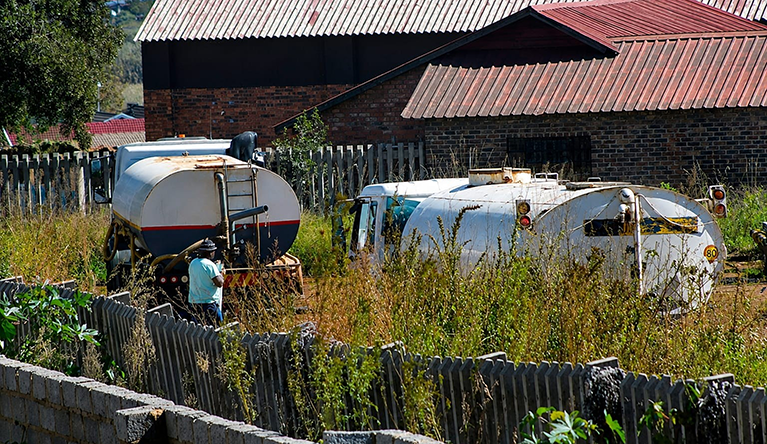
Mnguni says she has seen some tanker drivers collecting water from unsafe sources, posing serious health risks. A visit to the Siyanqoba community confirmed that a private water tanker was being filled from a nearby dam.
“I have lived in Siyanqoba since 2018, and throughout that time we have struggled with water every single day,” says Bennett Mdluli. “When there is no water, we are forced to fetch it from the river, where people are washing clothes and carrying out other activities. Mdluli says the Jojo tanks are often empty, and refilled only once a week. One 5,000-litre tank is expected to supply an entire street of about 50 households, which is simply not enough, meaning residents can’t even flush their toilets. When the water tanker eventually arrives, all rush to collect water, he says, but it is often yellow, and has an unusual taste. “Our struggle is severe, and we need a lasting solution.”
Patricia Zwane from Moloto in Thembisile Hani says her community only gets tap water once a week, after which tanker deliveries take over. This raises concerns about whether water is being shared fairly and why such limits exist. For residents, it means living with constant uncertainty, never knowing when water will come, and facing extra struggles in their daily lives. The system leaves people vulnerable and makes it easy for exploitation to creep in.
Taken together, these accounts describe more than isolated service failures. They show how a system introduced as an emergency response has become part of everyday life for many communities.
That raises the question of why when municipalities have spent tens of millions of rand on water tanker operations, residents still report empty JoJo tanks, erratic deliveries and long periods without water? More importantly, where has the money gone?
Follow the money
An analysis of municipal expenditure shows sharp disparities in water tanker procurement across Nkangala. Emalahleni Local Municipality spent about R46 million in a single year under Bid ELM 17/2023, appointing 47 companies for services between 2024 and 2027. Thembisile Hani Local Municipality spent R21 million over four financial years, involving at least 34 companies.
The dominance of water tankers reflects the failures of the piped water system. Aging infrastructure, drought conditions, and poor maintenance have left many communities without reliable tap water. Instead of repairing the system, municipalities have entrenched tanker operations as the default solution. What began as an emergency response has become permanent, with residents suffering expensive, irregular and unclear service delivery.
Financial analysis shows that Emalahleni spent an estimated R3.83 million a month on water tanker operations, compared with about R437,500 a month in Thembisile Hani over the same period. Although the two municipalities serve similar populations — about 455,000 people in Emalahleni and 431,000 in Thembisile Hani — Emalahleni’s monthly expenditure was more than eight times higher. The gap raises questions about the condition of Emalahleni’s piped water system and whether procurement practices have entrenched a costly dependence on tankers.
Tankers remain a lifeline for residents during the water crisis in Mimosa Township, Delmas, in Victor Khanye Local Municipality, which neighbours Emalahleni Local Municipality. Photograph: Rodney Hlatshwayo.
The disparity is stark on a per-resident basis. Our calculations show Emalahleni spent about R101 per resident on tanker services in a single year. Thembisile Hani spent about R49 per resident over four years — roughly R12 per resident each year. The figures point to a more deeply entrenched reliance on tanker water in Emalahleni.
The Nkangala findings are consistent with broader national concerns. Johannesburg Water spent R130.5 million on tanker services in 2024/25, and the Gauteng High Court later declared a R263 million tanker tender invalid because of procurement irregularities. The cases illustrate how prolonged reliance on tanker procurement can increase corruption risks while diverting resources from repairing piped water infrastructure.
The spending disparity is also reflected in contractor allocations. Emalahleni averaged about R81,500 per contractor per month, compared with about R12,900 in Thembisile Hani. The financial records show that municipalities have committed substantial resources to emergency water provision. But they do not explain how suppliers were selected, whether procurement processes were consistently followed, or why emergency water provision has become such an enduring feature of service delivery.
With municipalities providing few answers, the investigation turned to the companies behind the contracts. We compared municipal supplier lists with Companies and Intellectual Property Commission (CIPC) records to see whether the companies could be verified.
Procurement and Supplier Integrity
CIPC checks found discrepancies in 32 of the 47 companies Emalahleni appointed, including inactive registrations, naming inconsistencies and companiesthat could not be matched to the municipal records.
The records also showed uneven contractor allocation patterns, with some companies receiving multiple allocations while others appeared inactive or unused. While these findings point to weaknesses in supplier verification and procurement oversight, the investigation found no documentary evidence that contracts were awarded unlawfully or that political interference influenced procurement decisions.
Experts at the University of Pretoria’s Centre for Human Rights say Nkangala’s experience illustrates the wider risks of relying on emergency procurement to deliver basic services
Olayinka Adeniyi and Ebenezer Durojaye at the Centre argue that Nkangala’s reliance on water tankers is a systemic governance failure with human rights implications. Drawing on similar cases, they stress that this “seems to involve a combination of infrastructure failure, weak planning, procurement risk, governance gaps – and thus human rights concerns – and in particular a violation of socio-economic rights.”
Tankers are defensible in emergencies, they say, but their entrenchment as the default mode of supply signals a deeper breach of constitutional guarantees.
Several interviewees raised concerns about political influence and potential conflicts of interest in procurement, though no documentary evidence was available.
A senior municipal insider with firsthand knowledge of infrastructure projects in Emalahleni, who requested anonymity for fear of victimisation, alleges that Municipal Member of the Mayoral Committee (MMC) for Technical Services Thabang Mathebula plays a significant role in project allocation and maintains close relationships with contractors involved in infrastructure delivery.
The whistleblower further alleges that individuals involved in project implementation and community liaison have close personal and residential ties to officials responsible for technical services oversight.
The source also claims that several contractors working on the Hlalanikahle Bulk Water Project and the Doornpoort pipeline project, including one linked to the MMC’s brother, regularly fund community activities and local events. While these contributions are presented as corporate social responsibility, the whistleblower says they also help cultivate political goodwill and strengthen the contractors’ influence over municipal project allocations.
The investigation also identified companies owned by relatives of prominent political figures within the broader procurement environment. These include Mamolato Construction, owned by Sophie Sibanyoni, the ex-wife of former Municipal Public Accounts Committee (MPAC), chairperson Obet Skhosana, and another company owned by Poppy Mahlangu, the spouse of ANC regional secretary Sello Matshoga.
These relationships raise questions about potential conflicts of interest. When contacted for comment, ANC regional secretary Sello Matshoga maintained that his wife Poppy Mahlangu operates her business independently and without his involvement. Former MPAC chairperson Obet Skhosana could not be reached for comment, and Sophie Sibanyoni did not respond to inquiries. Similarly, MMC Thabang Mathebula failed to respond to detailed questions regarding his alleged role in project allocation and the contracts linked to his brother.
Operational distinctions: municipal vs. independent suppliers
Recurring droughts and declining local water sources have left municipal systems unable to meet demand. In many areas, boreholes and reservoirs have either run dry or cannot supply enough water, forcing municipalities to rely on tanker deliveries as a substitute for piped supply.
This has created space for private suppliers to step in. Unlike municipal tanker operations, which are funded through public contracts, companies such as DES Emergency Water Supplies operate on transparent commercial rates, charging households directly for deliveries.
DES Emergency Water Supplies charges about R500 for a 2,000-litre delivery, roughly 25 cents per litre. By comparison, ordinary municipal tap water in Victor Khanye Local Municipality costs about R5 to R6 per kilolitre, or less than one cent per litre. The comparison shows how prolonged reliance on tanker deliveries shifts the cost burden onto households, forcing residents to pay many times more for water than they would through a functioning municipal system.
Gert Oosthuizen of DES Emergency Water Supplies says these are fuel, transport, labour and logistics charges – not for the water itself.
Private suppliers publish what they charge. In contrast, residents and whistle-blowers say some municipal tanker drivers collect cash directly from households outside the municipality’s billing and accounting systems.
Accountability in Question
One of the biggest obstacles the investigation encountered was the municipalities’ lack of transparency. To understand how millions of rand had been spent on water tanker contracts, we submitted Promotion of Access to Information Act (PAIA) requests to Emalahleni, Thembisile Hani and Victor Khanye municipalities in February 2026.
The requests sought contracts, invoices, procurement records, payment schedules and supplier appointment documents. Thembisile Hani and Victor Khanye acknowledged receipt but provided no substantive response. Emalahleni did not acknowledge the request at all.
We followed up repeatedly by telephone, email, WhatsApp and in person between March and June 2026. Despite these efforts, none of the municipalities provided the requested records or meaningful responses.
What millions of rands bought
Millions have been spent, an emergency water supply system has become entrenched, and accountability remains incomplete.
The silence from the Nkangala municipalities over these multi-million-rand contracts reflects the very governance weaknesses the National Water Action Plan seeks to address. If that plan is to succeed, it will first have to assess and repair ageing infrastructure. It will also have to ensure that emergency measures do not become a long-term substitute for reliable municipal water services.
The new National Water Action Plan recognises that emergency measures cannot become permanent. In Nkangala, they already have. The challenge now is whether the plan can reverse that reality.
Eswatini Medical Christian University, under investigation for corruption and lapses in governance. Photo: Eswatini Observer
Five of seven Eswatini Members of Parliament appointed to investigate the Eswatini Medical Christian University (EMCU) accepted payments authorised by the very office whose conduct they had been tasked with scrutinising.
The EMCU Council is challenging Prime Minister Russell Mmiso Dlamini’s commission of inquiry into the university as conflicted and legally flawed, but our investigation has revealed that the EMCU Bursar made payments amounting to E99 000 to the MPs while they were part of Parliament’s special investigative committee inquiring into allegations of corruption, governance failures, bribery and financial mismanagement at the university.
The university council’s legal challenge against the PM’s established commission rests partly on the argument that Parliament had already established a legitimate investigation into the same issues.
Financial records we have obtained show that five members of that parliamentary committee accepted EMCU-funded payments before completing their work or tabling their report before the House of Assembly.
Established in October 2025, the parliamentary committee comprises seven members.
Among other things, it is investigating whether payments made by the university to Minister of Education and Training Owen Nxumalo and Principal Secretary Naniki Mnisi were attempts to buy favour from the officials, as the EMCU bursar, Ngwenya, approved these payments.
When offered an all-expenses-paid “teambuilding” trip to Cape Town, two of the committee’s seven members refused, including the committee’s chairperson, Masiphula Mamba.
Mamba later explained that he wanted to avoid a potential conflict of interest.
Yet five other MPs accepted the invitation. They were Mancoba Sihlongonyane, Sithobela MP; Shawnette Henwood, Shiselweni 1 MP; Thulani Nsingwane, Timphisini MP; Futhie Ngcamphalala, Lubombo Regional MP; and Thandeka Mavuso, Manzini Regional MP.
These MPs subsequently travelled to Cape Town at the university’s expense while the inquiry was still underway. The trip took place from November 9 to 12, 2025.
Why Parliament Intervened to Investigate EMCU
EMCU was established in 2007 as a partnership between government and the Africa Continent Mission (ACM), a South Korean missionary organisation.
In October, Parliament established a special investigative committee into EMCU’s finances and governance following months of instability at the university.
There had been repeated staff and student protests over what demonstrators described as management’s failure to address core academic and welfare concerns while continuing to incur significant expenses.
Education And Training Principal Secretary Nanikie Mnisi and EMCU Bursar Alex Ngwenya, who both took money from the university while sitting on an inquiry into allegations of corruption at the university. Photo: Sibusiso Dlamini, Eswatini Observer.
However, EMCU’s management is split into two rival camps, each claiming to legitimately represent the university’s interests.
One faction is led by the university council and Bursar Alex Ngwenya. The opposing faction is led by Vice-Chancellor Professor Paul Seung Hun Yang and staff members aligned with ACM founder Pastor Chong Yang Kim.
At the heart of the dispute between the two groups is the status of more than E50 million in reserves accumulated from government subventions.
The Ngwenya faction argues that the money belongs to the university as a public enterprise. They contend that the funds cannot legally be used for capital projects such as building infrastructure. Such projects, this faction argues, should instead be financed by the ACM.
The ACM faction, on the other hand, believes that the council is trying to cut it out of decision-making processes pertaining to how the E50 million is to be spent.
Yang argues that Ngwenya’s office has amassed disproportionate influence within government by cultivating support among politicians and senior government officials responsible for resolving the dispute.
“Once people visit the resorts, most of them return siding with the bursar,” Yang wrote in a letter to the Parliamentary Investigative Committee Chairperson Masiphula Mamba dated May 5, 2026.
It is this dispute that underpins the wider governance crisis, which ultimately prompted Parliament’s investigation into EMCU.

Payments to Politicians
Apart from the E99,000 paid to the five members of Parliament’s Special Investigative Committee, EMCU records show that the university made a series of other payments to politicians and senior government officials while Parliament’s investigation was underway.

For instance, on January 15, 2026, EMCU paid E216,000 in allowances to 12 other MPs. While these MPs were not on the investigative committee, they would ultimately have power over the impact of the committee’s report when it is considered and debated in the House.
Two senior officials from the Ministry of Education and Training, Nxumalo and Mnisi, have been among the most regular recipients of such payments from EMCU.
Between May 2025 and January 2026, Minister Nxumalo received three payments into his bank account totalling E16,158, E32,400 and E16,200. Over the same period, Mnisi received E8,066 and E18,000.
Accommodation, travel and allowances paid directly to MPs and other officials for two trips to Cape Town and Badplaas, Mpumalanga, cost EMCU a total of E1.43 million.
Conflict of Interest
While the Cape Town trip was still underway, Vice-Chancellor Yang formally warned that it risked compromising Parliament’s investigation.
In a letter dated November 12, 2025, to EMCU Council Chairperson Dr Boy Dlamini, Yang said the trip carried a “high possibility of being perceived as a conflict of interest or even bribery” because Parliament was actively investigating the university.
Such concerns were shared by Committee Chairperson Masiphula Mamba, who, together with MP Lomalanga Dlamini, refused invitations to attend both the Cape Town and Badplaas engagements.
Mamba said he declined the invitations because accepting EMCU-funded trips while leading Parliament’s investigation would have created a conflict of interest.
“I personally did not think it was the right thing to attend those trips,” Mamba said.
Rather than attempting to overrule fellow committee members, he said he referred the matter to the Prime Minister’s Office because he feared the committee would become divided.
Right of Reply Offered to MPs
We asked each of the five committee members who accepted EMCU-funded allowances to respond to the perception that the payments compromised the committee’s independence.
None addressed the question directly.
Instead, Henwood, Mavuso, Ngcamphalala, Sihlongonyane and Nsingwane each referred this newspaper to Mamba, saying only he was authorised to speak on behalf of the committee.
Even after they were informed that Mamba had declined the trips because he believed they created a conflict of interest, they maintained the same position.
EMCU and Civil Society Respond
EMCU does not accept that there was any impropriety.
Registrar Sebenta Menon said the trips were routine workshops intended to brief MPs on the university’s mission, progress and challenges.
He argued that there was no conflict of interest, saying the Speaker of the House would not have permitted the engagements had they been improper.
Civil society organisations disagree.
Coordinating Assembly of Non-Governmental Organisations (CANGO) Executive Director Thembinkhosi Dlamini said the issue was not whether the trips had been authorised, but whether they compromised Parliament’s independence while it was conducting an active investigation.
“What we are seeing compromises the legislative process and widens the democratic deficit in the country because clearly, you can’t give benefits to someone investigating you and then claim they are independent in judgment,” he said.
He called on Speaker Jabulani Mabuza and Senate President Lindiwe Dlamini to intervene.
Minister, PS Exercise Right of Reply
Principal Secretary Naniki Mnisi strongly denied that the payments from EMCU created a conflict of interest.
Although she was the ministry official who communicated the invitation for the Cape Town trip, Mnisi said she played no role in organising the engagements, arguing that such decisions rested with the university council rather than the bursar’s office.
She further maintained that, as the ministry’s controlling officer, she was duty-bound to attend activities organised by institutions under her portfolio, particularly where the use of public funds was concerned.
She also urged that the parliamentary inquiry be allowed to conclude its work before any inferences were drawn.
Minister Nxumalo, on the other hand, did not respond to the questions sent to him via WhatsApp on both his cellphone numbers.
However, when this newspaper questioned him in November 2025 about the controversial EMCU-funded Cape Town trip, he described the participation of members of the special investigative committee as “untidy” and acknowledged concerns that it created the perception of a conflict of interest.
He said he had not been informed of the trip. Nevertheless, financial records reviewed by this newspaper show that less than two months later, in January 2026, Nxumalo was among the politicians who received EMCU-funded allowances.
PM’s Probe Challenged
Before Parliament’s Select Committee concluded its work or tabled its findings before the House of Assembly, the PM established a separate commission of inquiry into EMCU.
Announced on June 18, 2026, the commission is chaired by Mbuso Simelane, deputised by Setsabile Matsebula-Khumalo, with Mangaliso Magagula and Lunga Dlamini serving as commissioners and Hlobsile Ndzimandze as secretary.
The commission was given four weeks to investigate allegations of impropriety, maladministration, misconduct and fraud, abuse of authority, conflicts of interest, governance failures and non-compliance with applicable policies.
The university council, however, opposed the inquiry and successfully obtained an interim High Court order preventing it from commencing while the legality of its establishment is challenged.
In court papers, the council argues that the commission unnecessarily duplicates investigations already being undertaken by Parliament, the Anti-Corruption Commission and the Auditor General.
It also questions the commission’s independence, alleging that Chairperson Mbuso Simelane previously chaired the EMCU Foundation and maintains close ties with university founder Pastor Chong Yang Kim.
The council further alleges that Commissioner Mangaliso Magagula is representing Vice-Chancellor Professor Paul Seung Hun Yang in ongoing litigation involving the university council and the Ministry of Education and Training.
The PM’s Office opposed the application, arguing that the commission had been lawfully established and that the council’s challenge was based on inaccurate facts.
Justice Sabelo Masuku nevertheless granted interim relief, finding that the council had demonstrated the possibility of irreparable harm should the commission proceed before the legality of its establishment had been determined.
The legal challenge therefore leaves the commission on hold while simultaneously leaving Parliament’s own investigation incomplete, with its report still not tabled before the House of Assembly more than eight months after the committee was appointed.
What the Committee’s Terms of Reference Say
Section 7 of the committee’s terms of reference requires members to observe the highest ethical standards and avoid conflicts of interest.
EMCU maintains there was nothing improper about funding the trips and paying the allowances, and this investigation does not establish that the payments influenced Parliament’s work.
What it does establish is that the very parliamentary inquiry now relied upon by the university council as a reason to oppose the PM’s commission of inquiry was conducted by a committee in which five of its seven members accepted payments authorised through the offices they had been appointed to investigate.
A worker pours chicken feed for one-week-old chicks at a poultry farm just outside Harare, Zimbabwe. Photography by Aaron Ufumeli/SAAJP
In a drive to maximise profits, Zimbabwean chicken farmers regularly buy antiretroviral drugs (ARVs), intended for HIV patients in the country, on the black market to mix into chicken feed. Farmers believe that the drugs protect their stock from diseases and act as growth stimulants. This means fewer deaths and quicker turnaround of chickens for slaughter. But, the practice is unlawful and harmful to the health of unsuspecting human consumers of the meat.
The Southern Africa Accountability Journalism Project (SA AJP) interviewed two people operating on the frontlines of broiler chicken farming in the Harare area, both of whom illuminated the practice.
Zimbabwe is a country with a high incidence of HIV. Experts say there are concerns that repeated exposure to antiretroviral residues could interfere with HIV treatment or contribute to drug resistance, although direct evidence for this in humans is limited.
The use of ARVs in chicken feed has been documented in other African countries, notably in studies conducted in Tanzania and Uganda. But, the practice as it occurs in Zimbabwean chicken farms has not been widely known or exposed.
A farmer’s admission
Jane, which is not her real name, is a broiler chicken farmer operating in the Waterfalls neighbourhood of Harare. She agreed to be interviewed at her farm only on condition of anonymity, because she was admitting to doing something illegal. She admitted that she covertly mixed ARVs – illegally purchased from a health worker at a local hospital – into the feed for her chickens.
Jane’s operation sits hidden in a backyard, disguised as an ordinary residential property. From the street, nothing suggests poultry. The main house fronts the property, while a high wall shields what lies behind. At the centre of her property, the chicken houses are out of sight, accessible only through a narrow gate. Staff cottages line the rear, another rear gate leads directly into the pens, and CCTV cameras watch over the compound.
“I get my monthly supply from the health official who has a network of peddlers who handle the business on his behalf,” she said. She held up a small, empty, blue bottle which once had contained the ARVs bought from the official.
A woman holds an empty bottle of ARVs that came from a poultry farm in Harare, Zimbabwe. Some poultry farmers are mixing ARV’s with chicken feed to feed their chickens. Photography by Aaron Ufumeli/SAAJP
“My first interaction with the official was when a fellow farmer introduced me to him. I paid a deposit to show that I was serious about making a purchase from him,” she added.
“He then directed me to his peddler found at Copa-Cabana, a local bus terminus in the Harare CBD, who requested a code which I supplied, and I was given my stash of ARVs.”
Drug peddlers often use coded words or phrases when communicating with their buyers, she explained. These codes can be random names, letters or numbers which are relayed at drug collection points and they are frequently changed to avoid detection.
Jane explained that it was not, at first, the desire to stimulate unnatural growth in her chickens that led her to consider ARVs. She merely wanted to bring down the rate at which her stock was dying from common poultry diseases.
“Mortality was eating my profits”, she said.
“Newcastle disease would sweep through, and I was losing half my birds in some cycles. There was no money left for school fees.”
After hearing about her challenges at a poultry workshop held in Harare, a fellow poultry farmer came to her farm in Waterfalls. For a fee – 100USD paid in two installments – this confidant offered to help.
What she offered was TLD, a combination of antiretroviral drugs consisting of Tenofovir Disoproxil Fumarate, Lamivudine and Dolutegravir. It is a once-daily fixed-dose tablet recommended for adults and adolescents, according to Zvandiri. In Zimbabwe, this triple-therapy regimen is the preferred first-line treatment for adults and adolescents living with HIV.
She began mixing the crushed tablets into her chicken’s feed and water.
“The mortality rate plummeted, and my broiler chickens grew faster. I have since expanded my operation from 200 to 10,000 birds per cycle (over a period of about two years). And, instead of waiting six weeks, I could sell them (for slaughter) at just four weeks,” she added.
Unauthorised ARV use in chickens farming is prohibited and harmful to human consumers
According to Zimbabwe’s Medicines and Allied Substances Control Act, medicines intended for human use are regulated separately from veterinary medicines, and using human medicines in food-producing animals without appropriate authorisation is prohibited.
Daniel Zulu is the former Head of the Toxicology and Clinical Department at the Government Analyst Laboratory in Zimbabwe and now runs his own pharmacy business. He said that feeding ARVs to broiler chickens is harmful to human consumers who purchase and consume the meat. Repeated exposure to antiretroviral drug residues, he explained, could pose risks for people living with HIV.
Although the extent of those risks has not been well studied, he was of the strong opinion that HIV-positive patients, who consume poultry exposed to ARVs could potentially see a reduction in the effectiveness of antiretroviral treatment.
Zimbabwe currently has 1.3 million people living with HIV, with 1.2 million of them currently on ARVs, according to statistics from the Zimbabwean Ministry of Health and Child Care.
The loss of USAID funding disrupted HIV service delivery in Zimbabwe, affecting medicine distribution, patient management and clinic staffing. Although the government and other donors have sought to maintain access to antiretroviral treatment, the diversion of ARVs by corrupt officials into the black market could further impact the availability of the drug for those most critically in need.
Other consumers who don’t have HIV may also be exposed to these drugs through contaminated meat. Zulu said this raises concerns about potential long-term health effects, including possible toxicity and other risks that warrant further research.
Farmers believe ARVs stimulate growth and drive profits
Commercial broiler chickens normally follow a 5 – 6 week growth cycle, reaching 2 – 2.5 kg by market age under standard management.
In a 2019 study, Ugandan farmers told researchers they fed antiretroviral drugs to broiler chickens because they believed the drugs promoted rapid weight gain. Researchers confirmed the presence of ARV residues in feed and poultry. (In spite of this widespread belief, no controlled study has demonstrated that ARVs themselves accelerate broiler growth.)
Farmers reported obtaining ARVs within their communities, either for cash or in‑kind payment. Laboratory screening confirmed ARV residues across chicken and pig feed samples.
A Tanzanian study found residues of the antiretroviral drug lamivudine in broiler chicken muscle and blood, pig muscle and blood, and animal feed, providing evidence that human-designated ARVs were being used in animal production.
Still, little research has been done on the practice in Zimbabwe.
An agricultural business advisory officer’s account
Jane’s accounts of feeding her chickens ARVs were confirmed by experiences of an Agricultural Business Advisory officer who works at the Ministry of Lands, Agriculture, Fisheries, Water and Rural Development in Harare. His job entails working directly with farmers to improve productivity, profitability, and resilience in the sector. He also agreed to be interviewed on condition of anonymity, because he is a government official and did not have clearance to speak to the media.
“I have been on site visits to different farms across the country,” he explained, adding that he regularly interacted with farmers who used ARVs as medication and growth hormones for their stock. The practice appeared to be widespread, he said.
“The farmers admitted that they were using ARVs mixed with their chicken feed to accelerate broiler growth for financial gain.”
On these site visits, the officer said he often sought to educate poultry farmers on the dangers of using unprescribed human medication when feeding and treating their broiler chickens.
In his account, the advisory officer described what he considered to be unusual characteristics in the meat of broiler chickens fed with ARVs.
“When slaughtered, the chickens have a reddish abnormal colour that is not found in free-range broiler chicken,” he said.
“The taste of the chicken when cooked is bland and differs from the natural flavour of free-range broiler chickens.”
Other medicines used in cocktail
In Zimbabwe, ARVs are actually just one ingredient in a cocktail of human medications mixed into chicken feed by farmers, said Brian Fungai Chikodze, a registrar for the Council of Veterinary Surgeons of Zimbabwe. ARVs are most often mixed with other antimicrobial agents.
Antimicrobial agents are medicines used to prevent and treat infectious diseases. They include antibiotics, antivirals, antifungals and antiparasitic drugs.
According to the World Health Organization (WHO), the misuse and overuse of antimicrobials in humans and animals, including poultry, accelerates the development of antimicrobial resistance, in which bacteria and other microorganisms evolve and no longer respond to medicines that would normally kill or inhibit them. This makes infections harder to treat in both people and animals.
Antimicrobial resistance (AMR) is one of the world’s leading public health threats.
In February 2026, the Food and Agriculture Organization of the United Nations (FAO) said antibiotic-resistant bacteria are becoming a growing challenge in Zimbabwe’s poultry sector as the country works to reduce antimicrobial use in poultry and dairy production.
“In Zimbabwe, easy access to medicine through informal markets, limited laboratory facilities for testing, and misuse of antibiotics contribute to the growing risk of antibiotic resistance in humans,” the report stated.
The FAO says antimicrobial resistance (AMR) is a global health threat that disproportionately affects sub-Saharan Africa and South Asia. More than 1.2 million deaths were directly attributable to bacterial AMR in 2019, with children under the age of five among the most affected.
In Zimbabwe, the FAO has identified the broiler production value chain as a considerable user of antimicrobials, driven in part by production practices and demand for affordable poultry products.
“Whatever antimicrobial is used in the animals is going to be passed to the human consumers and simple infections become harder to treat, and people will be sicker for longer and in cases die from infections that were previously curable,” Chikodze added.
Jane, the poultry farmer in Waterfalls understands this risk.
“I don’t eat the ARV fed chickens,” Jane said.
“I have my own coop behind my house where I raise free-range chickens for me and my children.”
Government does not respond
Media queries were submitted to the Ministry of Health and Child Care about the likely health implications associated with the allegations that the practice is widespread in Zimbabwe. Spokesperson Donald Mujiri acknowledged receipt of the query, and committed to respond. At time of publication, no such response was forthcoming.
The Department of Veterinary Services, which falls under the Ministry of Lands, Agriculture, Fisheries, Water and Rural Development, did not respond to emails or follow up calls.
Residents of Ethekwini Ward 105 wash clothes in the stream where the surrounding community get their drinking water. Photograph Rogan Ward / SA I AJP
For residents in eThekwini Metro Municipality’s ward 105, every sunrise begins with the same painful routine. Instead of turning on a tap, they pick up buckets and walk long distances to collect water from streams shared with cattle, goats, and dogs. The community says it has not had a reliable supply of municipal water since 2020, with families seemingly waiting endlessly for promises from the municipality to materialise.
Ward 105 is a predominantly rural area on the southern outskirts of eThekwini. Communities live in small pockets of settlements such as Mfume and Odidini which all face high levels of poverty, unemployment and limited access to basic services. Despite falling within the boundaries of a metropolitan municipality, the ward retains a distinctly rural character, with traditional leadership playing an important role in community life.
A resident carries water from a borehole to his home as service delivery issues persist in Ehtekwini Ward 105. Photograph Rogan Ward / SA I AJP
Over the last few weeks, Inkundla Newspaper has visited this area a number of times to see and hear the community’s struggles first hand. Residents described years of suffering and frustration. They accused the eThekwini Municipality and their ward councillor of neglecting them. In this area, they said, there used to be wide access to piped running water. It was flowing well until a series of projects took place which disrupted that access. First, water meter installations in households caused interruptions. Then, in early 2020 a road construction project damaged a main pipe providing water to the community.
A former construction worker on that project, Shadreck Mzulwini, told Inkundla recalled how the pipeline burst during roadworks in March 2020.
“The pipe burst while we were working. We immediately reported it to our manager, who informed the head of construction. We repaired what we could, but the remaining section was left for the Municipality to repair,” he said.
Six years later, residents say that repair has never happened. Furthermore, the water system that once served parts of Ward 105 relied on a borehole pump that fed water to the community’s taps. When the pipeline burst, the pump was also damaged, according to residents. Since then, neither pipe nor pump has been repaired. Resident Ezekiel Nkosi questioned why the Municipality has failed to repair this common infrastrastructure for so long.
“Every year we hear another excuse. First it was the pipe, then the pump. Are we expected to believe a broken pump can take five years to repair? A pump that costs less than R1 million cannot take five years to fix. A broken pipe cannot take seven years. It is clear they do not care. They are good at empty promises,” he lamented.
Daily reality: we “don’t have a choice”
During our visit to Ward 105, we found Siyanda Malunga, a young man washing his clothes beside one of the streams that now serves as the community’s main water source. The stream, known locally as Kwanjapha esihosheni, is located in KwaMpule, about two kilometres from the residential area, and flows through the valley below the community.
“I don’t have a choice. This is where we wash our clothes, collect water, and sometimes even drink. The same stream is used by cows and dogs.”
Nearby, elderly residents waited with buckets while women and children queued for water, then carried heavy containers back to their homes – some balancing them on their heads, others dragging them across the dust. The daily ritual is repeated by hundreds of families. The water crisis is also stealing valuable learning time from children. Grade 11 learner Fanele Njwara says every school day ends with another exhausting journey to fetch water.
“We go to school, come back home, and then spend hours fetching water. By the time we finish, we are exhausted. How are we expected to compete with learners who have running water at home?”
He added that despite years of suffering, he has never seen the current ward councillor Ayanda Ndlovu, meeting residents to discuss their concerns. Residents say they have attended meetings, submitted complaints, and waited patiently for answers. They claim the ward councillor repeatedly promised that the problem would be resolved.
“The ward councillor Ayanda Ndlovu, even sent our school principal to take notes on his behalf so our complaints could be recorded. We believed something would finally happen, but nothing changed,” said a resident who asked to remain anonymous for fear of being victimised by local leaders. Ntombenhle Makhanya, a ward committee member, said she spent years forwarding residents’ complaints to the councillor.
“He knows exactly how we live. I used to pass every complaint to him until he stopped taking my calls. Now the community believes I have betrayed them because nothing has changed.” She said the last time she spoke to the councillor was when he was celebrating his appointment as a regional ANC Treasurer.
“The community has become divided because people believe I am ignoring them and no one is fighting for them anymore,” she said.
In August last year, the eThekwini Municipality spokesperson Gugu Sisilana said that water services had been restored to parts of Ward 105. However, residents interviewed by Inkundla disputed this claim.
“Officials say water has been restored, but that is simply not true. No one from the Municipality has ever come here to check that or explain what is happening. They are neglecting us because we are a rural farming community and uneducated. They remember us when they need our votes, but after elections, they disappear.”
Basic services transfers cost burden to most vulnerable
The health risks continue to grow. Simphiwe and Thokozile Nkosi, elderly pensioners who live in the heart of Ward 105, say they now spend R600 from their monthly pension buying water because municipal water tankers rarely reach their home.
“We are old and cannot go to fetch water. When we ask tanker drivers for help, they tell us to phone the Municipality or the councillor. Nobody takes responsibility,” said Mrs Nkosi.
Former Ward 105 Councillor Simphiwe Kweyama, who served as the community’s elected representative and primary link to the eThekwini Municipality for several years, has watched his successor fail the community. He described the situation as unacceptable.
“These water schemes were built to assist the community. It is disappointing that after all these years, residents are still suffering with no solutions. I have myself reported this to the municipality, and that is how some of these structures were built. But it is sad that after so much work, nothing seems to work, and no one is willing to assist the community.”
The community’s Induna, Thulebone Mkhize, said the water crisis has reached a breaking point.
“Our people have suffered for too long. Water is a basic human right. The Municipality must stop making promises and come here with permanent solutions.”
Residents are now calling on the eThekwini Municipality to conduct an urgent site visit, meet directly with the community, and provide clear timelines for restoring water. Until that happens, Ward 105 residents will keep making the same lonely journey every morning walking to the stream with buckets in hand.
The municipality however disputes residents’ account that an unrepaired pipeline remains the primary cause of the crisis, saying the original pump was later decommissioned and that current shortages stem from ageing infrastructure, vandalism and growing demand.
EThekwini and councillor Ndlovu respond
Inkundla submitted queries to eThekwini Municipality, channeling the frustrations of Ward 105’s residents. Mduduzi Nkosi, head of the municipality’s water and sanitation committee, responded.
Asked whether Ward 105 has a reliable water supply, he acknowledged the ward is on intermittent supply, saying water is rationed between communities. He maintained that most areas receive water at least twice a week and that tankers cover the gaps in service.
He was asked about residents’ complaints that water tanker services are unreliable and rarely reach affected households.
“Water tankers are dispatched based on the number of tankers available to serve the various areas within the South Region. Several communities rely on tanker services, and deliveries are scheduled accordingly; the distribution is done through the relevant ward councillor,” Nkosi said.
He also denied that a long-reported damaged pipeline remains unrepaired, saying the vandalised pump had been decommissioned and supply reconfigured.
“The ongoing supply challenges are attributed to the repeated vandalism of critical infrastructure,” he said.
He added that any confirmed pipeline damage would be repaired, but gave no budget or timeline for upgrades.
Ward 105 Councillor Ayanda Ndlovu also responded to queries. He said the area’s longstanding water shortages stem from ageing infrastructure inherited from the former Ugu District, population growth and illegal connections that have overwhelmed the existing water system.
He said the municipal council had approved upgrades to key water infrastructure in the 2025/26 financial year, with projects including upgrades to the Mfume pump station and reservoir, the Umgodi pump station and the Vumelethu reservoir funded for 2026/27.
Ndlovu said the municipality has relied on water tankers and boreholes to supply affected communities while permanent infrastructure is developed, although tanker services were previously disrupted by procurement issues. He added that boreholes have so far been installed in six areas, with priority given to communities that have never had piped water infrastructure.
Volunteer of the Environmental Management Agency in a clean-up exercise in Harare’s central business district. Photograph Aaron Ufumeli / SA I AJP
In 2010 Zimbabwe’s plastic waste stood at 297,000 tonnes annually, according to a joint University of Zimbabwe and United Nations study. Today it stands at 342,000 tonnes. Of the estimated 1.6-billion plastic containers placed on Zimbabwe’s market every year, only 7.1% is formally recovered, according to Petrecozim, an industry-led post-consumer producer recovery initiative.
This crisis did not emerge overnight. A rapidly urbanising population, swelled by climate-induced migration from rural areas where livelihoods are collapsing, a consumer economy that has embedded plastic into the fabric of daily life, and local authorities too financially strained to sustain basic refuse collection have combined to produce a waste burden that has outpaced every regulatory intervention.
Against that backdrop, the laws were supposed to intervene. They have not. This investigation found two distinct regulatory failures: the non-enforcement of bans on thin plastics and polystyrene that have been law since 2010, and the absence of any legally binding framework compelling producers to recover the plastic waste they generate. At the centre of both failures sits the Environmental Management Agency, the country’s environmental regulatory body.
What the law says
Zimbabwe’s plastic regulatory framework rests on two statutory instruments, a form of secondary legislation used to bring an Act of Parliament into force or alter existing laws.
Statutory Instrument 98 of 2010 prohibited the manufacture, importation and distribution of plastic packaging with a wall thickness of less than 30 micrometres unless it was biodegradable.
To understand what that threshold means in practice: a standard supermarket carrier bag – the thin, crinkly kind that tears easily and goes translucent when held to light — typically measures between 20 and 25 micrometres. A heavier reusable bag or bin liner sits above 30 micrometres. If you can see your hand through a bag when you hold it to the light, it is almost certainly banned.
Statutory Instrument 84 of 2012 strengthened the framework. Section 3(1) re-asserted the ban on thin plastics. Section 3(2) prohibited polystyrene packaging outright — the white foam material used in takeaway containers, meat trays and disposable cups. Section 3(3) required polystyrene users to take responsibility for recycling the material they manufacture and sell.
Most significantly, Section 6 introduced a provision titled “Responsibility of Producers”. It states that any establishment producing, distributing, importing, transporting, recovering or generating plastic waste “must” take all available measures for prevention, reuse, recycling, recovery and disposal at EMA-registered facilities. Any responsible party who wilfully neglects those duties is guilty of an offence liable to a fine, imprisonment for up to one year, or both.
On paper, the regulations are robust. On the ground, they have been dead letters for 15 years.
Failure one: the ban that is not enforced
During visits to markets across Zimbabwe, this reporter found thin plastic bags and polystyrene food containers openly and commercially available despite their prohibition under Zimbabwean law.
Stacks of used plastic bottles ready for recycling at a plant in Harare. Photograph Aaron Ufumeli / SA I AJP
The Environmental Management Agency is the designated enforcement authority. Under Section 37 of the Environmental Management Act, inspectors may enter premises without a warrant, seize prohibited materials, issue compliance orders and refer offenders for prosecution. Premises may be closed for up to three weeks for non-compliance.
When asked why banned products remain on sale, EMA’s environmental education and publicity manager Amkela Sidange did not address the question.
This reporter asked specifically: “EMA has powers under Section 37 to seize prohibited products and refer violations for prosecution. Why have there been zero manufacturer prosecutions for producing or distributing plastic packaging banned under SI 84 of 2012 or its predecessor?”
Sidange spoke instead about Extended Producer Responsibility — a post-consumer recovery framework entirely separate from the manufacturing ban. “Extended Producer Responsibility is currently a voluntary best practice rather than a statutory requirement,” she said.
Pressed specifically on prosecutions for banned thin plastics and polystyrene, she responded: “Zero prosecutions or fines have been executed specifically for PET recovery non-compliance, as post-consumer PET recovery targets are not yet codified into mandatory regulations.”
The ban on manufacturing and selling thin plastics and polystyrene has been law since 2010. Neither response addressed it.
EMA said seizures and fines had been conducted over the past 24 months, but provided no names, dates, locations, quantities or fine values. The agency also failed to confirm whether any producer has ever filed the waste prevention targets required under Section 6 of SI 84 of 2012 — a mandatory legal obligation. Follow-up questions submitted to the agency on June 15 2026 went unanswered.
The enforcement gap is sharpened by a direct contradiction in EMA’s own public record. In March 2021, EMA Director of Environmental Protection Christopher Mushava told an international meeting convened by the United Nations Environment Programme – attended by the Basel Convention secretariat and the Norwegian Retailers’ Environment Fund — that the plastic ban had achieved a reduction in thin plastic and polystyrene use of more than 95%.
Five years later, EMA confirmed in writing that zero manufacturers had been prosecuted. Markets across Zimbabwe carry the banned products openly. EMA did not reply when asked to reconcile these two figures.
Failure two: a recovery system the law never required
The second failure is distinct in nature but connected in cause. Unlike thin carrier bags and polystyrene, PET plastic is not the target of an outright ban. PET — polyethylene terephthalate — is the clear, rigid material used in water bottles, soft drink bottles and cooking oil containers. It is one of the most recyclable plastics in commercial use. It is also one of the most visibly accumulated in Zimbabwe’s waterways, roadsides and open dumpsites.
According to PetrecoZim — the industry-led producer responsibility organisation whose members include Delta Beverages, Dairibord Zimbabwe, Varun Beverages, Schweppes Zimbabwe and Coca-Cola Central Africa — approximately 5,500 tonnes of PET enter Zimbabwe’s market every quarter. Only 393 tonnes are recovered. That is 7.1%.
Both SI 98 of 2010 and SI 84 of 2012 carry the words “Plastic Bottles” in their formal titles. The body of those instruments tell a different story. The core prohibition applies a 30-micrometre thickness threshold to packaging. A standard PET bottle is rigid plastic typically between 200 and 500 micrometres thick — physically outside the scope of that threshold. Neither instrument contains any provision governing what happens to a bottle after a consumer finishes using it.
A soft drinks vendor in Harare’s central business district. Photograph Aaron Ufumeli / SA I AJP
“The title of a statutory instrument signals legislative intent,” said Emerge Masiya, an environmental law lecturer at Great Zimbabwe University. “But if the operative provisions do not reach PET bottles, the title cannot create an obligation the body of the law does not establish. The bottles are named. They are not regulated.”
This explains, with legal precision, why the recovery rate is 7.1%. There was never a law requiring anything different.
The voluntary trap
PetrecoZim acting general manager Tendai Nyawiri said the voluntary system has reached its structural limits.
“Benchmarking with regional peers and international systems, EPR cannot work if not legislated,” Nyawiri said. “Members are not obligated to provide reverse logistics. It’s a pro bono service subject to withdrawal and without contractual implications.”
EMA’s own written response confirmed the legal position plainly: “Operating outside of a voluntary EPR network does not make a company an illegal operator under current Zimbabwean law.” A producer placing millions of PET bottles on to the market and recovering none of them has broken no regulation.
Delta Beverages, one of Zimbabwe’s largest beverage producers and a founding member of PetrecoZim, illustrates the structural gap most starkly. On its website, Delta states it has taken “deliberate measures to maintain returnable packaging as the core of its offerings”, and that its approach is based on four principles: reducing packaging material, increasing recycled content, promoting recovery and reuse, and rethinking packaging models.
Yet Delta’s own data shows that more than 70% of its lager beer volume is in returnable packs — a positive step for glass and can formats. For PET bottles, the picture is different.
This reporter submitted written questions to Delta asking it to confirm its annual PET volume placed on the market, its financial contribution to recovery systems, and whether it had ever filed the waste prevention and recovery targets required under Section 6 of SI 84 of 2012. Delta did not respond by time of publication.
EMA confirmed it has never audited whether any producer has filed those targets. The provision has been law since 2012. Thirteen years, no confirmed compliance, no confirmed enforcement.
The law says ‘must’. EMA says ‘voluntary’.
This is where EMA’s shortfall becomes hardest to defend.
Section 6 of SI 84 of 2012 uses the word “must” and attaches criminal penalties for wilful neglect or failure to recover plastic. Yet EMA has consistently characterised producer responsibility as voluntary best practice throughout this investigation.
Masiya said that characterisation is not legally reconcilable with the statute: “The use of ‘must’ combined with criminal sanctions makes this a mandatory obligation, not a voluntary one,” she said. “Punitive measures are usually linked to mandatory obligations. EMA’s position that producer responsibility is voluntary best practice is inconsistent with the plain language of Section 6.”
She grounded her analysis in the plain meaning rule applied by Zimbabwean courts: where words are unambiguous, courts apply their ordinary meaning. There is nothing ambiguous about “must”.
Masiya added that 15 years without a single referral to the National Prosecuting Authority raises questions under the Administrative Justice Act, which requires authorities to act lawfully, reasonably and in good faith.
“Fifteen years of non-prosecution is not the same as choosing which cases to prioritise,” she said. “That is a blanket non-enforcement — and that is a completely different thing.”
A further problem sits inside the law itself. SI 84 of 2012 amended the core thickness prohibition to read “not less than 30 micrometres” — which as written permits packaging below the threshold and prohibits packaging above it: the precise opposite of the intended ban. This drafting error has stood uncorrected for 13 years.
Masiya said courts would apply purposive interpretation and read the provision as originally intended — but the uncorrected error, she said, “affects the credibility of the agency. If enforcement was really mandatory, why didn’t they fix it?” EMA did not respond to questions on this discrepancy.
Political urgency elsewhere, paralysis here
Against the documented failure of plastic regulation, Zimbabwe’s government has projected environmental urgency in other arenas.
President Emmerson Mnangagwa’s monthly national clean-up campaign — running since 2018 — has mobilised citizens to clear plastic waste from streets and rivers on the first Friday of every month. Cabinet approved the Environmental Management Amendment Bill of 2026, introducing tougher environmental penalties. In May 2026, government fast-tracked Statutory Instruments 91 and 92 of 2026, operationalising the polluter-pays principle for river and wetland protection — moving from Cabinet approval to gazetted law within days.
The political will, where rivers are concerned, is demonstrably real.
The Ministry drew a distinction in its formal response: plastic packaging waste, it said, “does not pose the same immediate, life-threatening risk” as alluvial mining pollution, allowing for “a more consultative, economically measured policy approach”.
That distinction is difficult to sustain against EMA’s own evidence. The same agency told international partners in 2021 that plastic waste kills 5,000 animals annually, including elephants, donkeys and cattle; blocks stormwater drains causing urban flash flooding; and releases toxic gases, including dioxins and furans through dumpsite burning.
National clean-up campaigns remove plastic from the environment. They do not stop it being produced or compel its recovery. The structural fault — a law that does not require producers to recover what they generate — remains unaddressed.
The government’s own admission
On June 19 2026, Secretary for Environment, Climate and Wildlife Simon Masanga signed a formal written response to questions submitted by this reporter — the most significant official document this investigation produced.
On the enforcement gap, it noted: “The Ministry acknowledges, without reservation, that the absence of a gazetted, comprehensive EPR framework creates an enforcement gap within Zimbabwe’s plastic packaging regulatory architecture. Statutory Instrument 98 of 2010 established a foundational, high-level obligation for producers to manage the end-of-life lifecycle of their packaging. However, it lacked the specific, mandatory mechanisms required to make that obligation strictly enforceable in practice.”
On EMA’s constraints, it said the Ministry “accepts the assessment that current enforcement actions are legally constrained by the narrow scope of outdated instruments, rather than an institutional lack of enforcement capacity at EMA, and is actively working to resolve this statutory limitation.”
On the reason for the three-year gazetting delay, it stated: “While the draft regulations have been finalised for some time, their formal gazetting is currently deferred pending the evaluation of critical macroeconomic and policy concerns. Specifically, the Government of Zimbabwe is executing an Ease of Doing Business initiative. Introducing a new regulatory levy on business owners introduces a high risk of cascading costs, as businesses are likely to pass these compliance expenditures onto consumers, thereby impacting inflation.”
Masanga also confirmed that standing executive directives currently freeze any pending legislation introducing new levies, taxes or regulatory fees, and that the draft EPR regulations must still clear the Attorney-General’s Office and the Cabinet Committee on Legislation before the Minister can gazette them.
South Africa gazetted mandatory EPR regulations in 2021. Kenya and Rwanda have binding producer responsibility frameworks. Zimbabwe has discussed EPR for more than a decade. The regulations are written, approved in draft, confirmed by the government to exist — and sitting on hold.
A familiar pattern
This is not the first time EMA’s enforcement record has attracted scrutiny. A 2022 Auditor General’s report found that EMA issued 109 wetland enforcement orders between 2014 and 2019 and enforced none of them. The National Environmental Council had not met since 2013. The Auditor General concluded that EMA was not adequately carrying out its statutory environmental protection mandate.
A 2022 peer-reviewed study by University of Johannesburg researchers, drawing in part on interviews with EMA officials, concluded that Zimbabwe’s plastic regulations “have not achieved their intended objectives” and face a systemic threat from “insufficient resources or political will to enforce legislation”.
The Ministry pointed to the Environmental Management Amendment Bill and tightened EIA compliance as evidence of reform. Those measures address development approvals and wetlands. They do not address plastic packaging enforcement.
Fifteen years, one question
This is not about one company. It is about whether Zimbabwe’s environmental laws are actually enforced.
The powers exist. The bans are clear. The mandatory language of Section 6 is unambiguous. The draft EPR regulations are finished and waiting. Banned products are everywhere. Recovery is stuck at 7.1%. The regulations that could change everything are being withheld by executive directive.
When asked why violations continue despite EMA’s extensive powers, Sidange said: “Our current enforcement is not limited by our capacity, but by the scope of the existing regulations.”
The Ministry has now confirmed, without reservation, that the scope of those regulations is insufficient.
What it has not explained is why the fix — finalised, confirmed, ready — continues to gather dust while Zimbabwe’s plastic burden grows, its cities fill with waste, and the question of who bears responsibility for the crisis remains, 15 years on, unanswered.
This report has been produced by the Southern Africa Accountability Journalism Project (SA | AJP), an initiative of the Henry Nxumalo Foundation, with the financial assistance of the European Union. It can under no circumstances be regarded as reflecting the position of the European Union
The numbers at a glance
297,000 tonnes: plastic waste generated annually in 2010 — University of Zimbabwe, 2011
342,000 tonnes: plastic waste generated annually today — EMA, 2021 — up 15% under regulation
1.6 billion: plastic containers placed on market annually — EMA published materials
5,500 tonnes: PET plastic entering market every quarter — PETRECOZIM Q2 2025
393 tonnes: PET recovered every quarter — PETRECOZIM Q2 2025
7.1%: national PET recovery rate — PETRECOZIM Q2 2025
Zero: manufacturer prosecutions in 15 years of plastic packaging regulation — EMA written response, 2026
Zero: companies confirmed to have filed waste prevention targets under Section 6, SI 84 of 2012 — EMA non-response, June 2026
13 years: since SI 84 of 2012 was gazetted without meaningful amendment
3+ years: draft EPR regulations finalised but withheld from gazetting — Ministry of Environment, June 2026
$1.9 billion: declared profit of Zimbabwe’s leading beverage manufacturer — ZSE filings
5,000: animals killed annually by plastic waste as of 2010 — EMA, UNEP presentation 2021
109: wetland enforcement orders issued by EMA 2014–2019 — none enforced — Auditor General, 2022