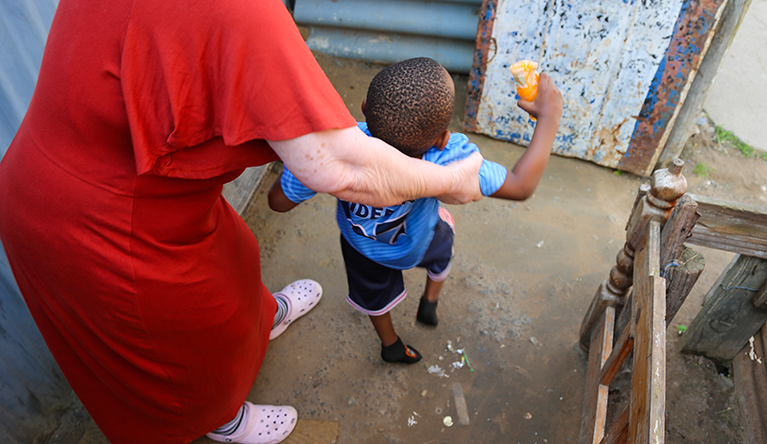
Eastern Cape woman Zoe*, 33, put off motherhood until her late twenties – “until I was done with being a young person,” she said during a recent interview.
“When I found out I was pregnant, I immediately started looking after myself. I didn’t drink or smoke. I attended clinics for check-ups.”
In 2022, shortly after the expected birth date, she presented at Frere Hospital in KuGompo (formerly East London). She was admitted, but — with her cervix dilated by only two centimetres — staff sent Zoe home the next day. For two weeks, hospital staff stalled re-admitting her, Zoe said.
Finally hospitalised again, she walked around and sat on a bench in a waiting room for two nights because no maternity bed was available. She spent three more days in the ward, in severe pain. Nurses gave her cold water – a remedy often believed to quicken delivery, but one without any scientific basis.

“My baby had been very active during the pregnancy but now he was not kicking,” she recalled.
Early one morning she noticed a thick, sticky, dark green discharge. This should have galvanised staff to initiate an urgent delivery to protect the baby. The substance was meconium, a critical indicator of fetal distress which is often cited in cases of medical negligence brought against hospital staff overseeing deliveries. But an emergency caesarean section was only done in the late afternoon. Zoe’s boy weighed 4.1kg. He was taken away to receive oxygen.
During post-natal hospital visits, Zoe repeatedly asked staff about what she had suspected were lags in her son’s development during the first months of her baby’s life. She was only told when he was 18 months old that he had cerebral palsy. Having learned this, Zoe is now considering filing her own medical negligence claim against Frere Hospital staff and the Eastern Cape Department of Health (ECDoH).
The cost of such claims, and how government seeks to curb it
The story of Zoe and her son is not unique. Hundreds of Eastern Cape women and their babies have similar experiences every year, with almost a third of the national total of medical negligence claims being levelled against the ECDoH.
In September 2023, the Auditor General of South Africa (AGSA) reported to Parliament’s Select Committee on Appropriations that 15,158 medico-legal claims were lodged against provincial health departments, in the 2021/22 financial year.
And head of the ECDoH Dr Rolene Wagner confirmed in an emailed response to our media query that, by the middle of the 2026 financial year, there were 4,583 “verified” negligence cases on the department’s “eLiability register”.

According to an August 2024 Special Investigating Unit statement, the majority of claims were from families suing the department for alleged negligence in the birthing process which they believed caused their babies to develop cerebral palsy.
Such claims generally include a projected cost of future medical treatment. These costs are typically priced at private healthcare rates. A child with cerebral palsy often requires lifelong treatment by a multidisciplinary team of doctors, therapists and caregivers, as well as mobility aids and costly adaptations to their homes.
In 2013, the ECDoH’s “contingent liability” – meaning the total cash damages it must pay out if all claims against it are successful – was R3.5 billion for 1,910 cases. By 2021, that figure had risen to much more than the department’s entire budget for that year: R38.6 billion, for 4,175 claims.
From 2011 to 2024, the department paid out R4.4 billion for finalised claims, according to its August 2024 reporting to the EC provincial legislature’s portfolio committee on health.
Such amounts place significant strain on provincial health budgets, especially in the Eastern Cape – the country’s poorest province with one of the country’s most historically embattled public health services.

But, according to a South African Law Reform Commission (SALRC) discussion paper looking into such claims, only one of the nine provinces (the Western Cape) effectively budgets for the costs associated with paying out medical negligence claims.
Instead, as the Auditor General of South Africa (AGSA) has noted, most provincial health departments pay for such claims from “funds earmarked for service delivery, affecting departments’ financial sustainability and their ability to meet their service delivery commitments”. The AGSA has made this point repeatedly.
Some provincial governments go so far as to expressly prohibit budgeting for the significant costs associated with these claims.
In 2022, the Makhanda High Court ruled that an Eastern Cape Treasury directive against budgeting for claims was without legal basis. The court asked the National Prosecuting Authority (NPA) to consider prosecuting ECDoH officials under the Public Finance Management Act for their failure to budget. But, the matter has since stalled.
Despite the court’s order, the province’s health MEC Ntandokazi Capa has doubled down.
“If (provincial treasury) says we can’t budget, we can’t budget,” she said, during an interview.
In light of the massive costs associated with these claims, the department, and the South African government at large, are now pursuing two legal strategies which critics say seek to deprive victims of medical negligence of payouts due to them.
Constitutional Court appeal seeks to replace payments with “public healthcare remedy”
The first strategy is through the courts, where judgement in certain landmark cases can inform the “common law” – which determines how future cases are interpreted and judged.
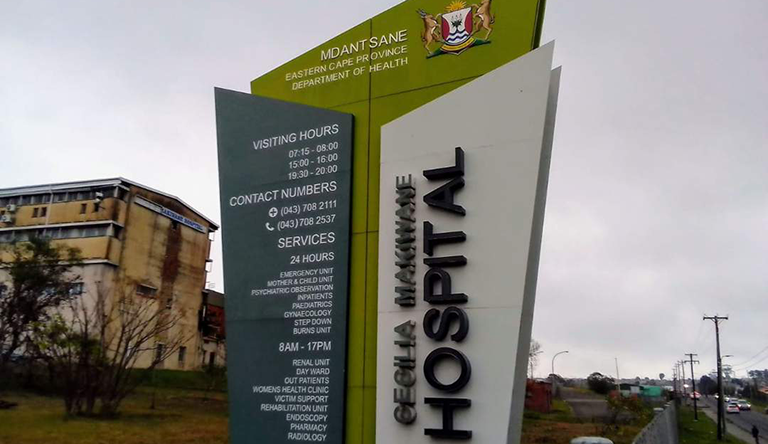
In a case before the Bhisho High Court in 2023, the ECDoH challenged a R23 million medical negligence claim brought by the mother of a baby, identified only as BN in court papers, who was born with cerebral palsy at Mdantsane’s Cecilia Makiwane Hospital (CMH) in December 2011.
The department had already conceded liability in 2018, so the dispute was not about whether its staff had been negligent during the birth. Instead, it centred on how BN’s future medical and care costs should be provided for.
The ECDoH put forward what has become known as the “public healthcare remedy”. It argued that, rather than paying the family a lump sum to cover BN’s future care, the court should order that his treatment, therapy and other medical needs be provided through the public health system.
The High Court ruled in the department’s favour. But in February 2026, the Supreme Court of Appeal (SCA) overturned that judgment, delivering a stinging rebuke of what it regarded as an attempt to fundamentally alter the way successful medical negligence claims are settled.
The SCA ruled the High Court’s order “ironically” violated BN’s best interests because, “on the department’s own version”, the ECDoH could not provide medical services and supplies “at a reasonable standard”, nor could it ring fence funds specifically for his care.
“The remedies create uncertainty and expose the child – who is vulnerable and has suffered a catastrophic injury – to systemic failure by the department,” the SCA found.
The ECDoH has nevertheless taken the matter on appeal to the Constitutional Court, turning the case into a legal test of the department’s proposed approach to medical negligence payouts.
In her 2026 policy speech, Health MEC Capa said the appeal was intended “to seek clarity on key constitutional principles”.
But, retired attorney Gary Austin, whose practice largely focused on medical negligence and malpractice matters, said if the department succeeded, “every cerebral palsy child” would be failed.
“The system can’t handle basic obstetrics at the moment; how are they going to now accommodate these patients?” he asked, during an interview.
A government official, with expert knowledge on the public health system and medical negligence claims, and who spoke on condition of anonymity, agreed:
“There are no real services – the kind of services that they testified about at court are not available. Where did they come with occupational and speech therapy, with specialised this and specialised that? It’s just not there.”
Outside the courtroom, government still seeks law change
Answering questions in the National Council of Provinces this year, Health Minister Aaron Motsoaledi brushed off the SCA judgment as being “short-lived”. His confidence may be rooted as much in the ECDoH’s appeal to the Constitutional Court, as it is in the fact that a second prong to government’s strategy is underway.
After almost a decade of investigation, the SALRC has completed a report, including draft legislation, aimed at overhauling the entire system for dealing with medical negligence claims.
Both Professor Kathy Govender, the SALRC commissioner who led the investigation into medico-legal claims, and lead researcher Advocate Ronel van Zyl, confirmed that the completed report was submitted to Justice Minister Mmamoloko Kubayi. It is understood that the report has been on Kubayi’s desk since mid-2025. The Minister’s spokesperson Palesa Rammitlwa did not respond to queries requesting a confirmation and update.
Still, a close reading of SALRC’s discussion paper provides pointers to what draft legislation might contain.
Firstly, many disputes may be moved out of the courts all together. Instead of going straight to court, claims would likely be screened and certified. A compulsory mediation process may follow. Smaller claims would likely be settled administratively and larger ones could be handled by a specialist tribunal, instead of the courts.
Compensation, too, would be a major area of upheaval. Under the proposed changes, it might be more standardised and even capped. In this scenario, some awards would see structured payment plans, perhaps augmented with public healthcare, replace large lump-sum awards.
How negligence actually drives cerebral palsy in the Eastern Cape
Noticeably absent from most government plans to reduce medical-negligence claims are interventions aimed at preventing the very negligence that gives rise to these claims in the first place.
Labour and birthing processes, even when there are no complications, are stressful for a pregnant woman and the foetus. A mother’s medical condition directly affects that of the foetus. Difficult, abnormal or prolonged labour will exacerbate foetal stress. If the baby does not get enough oxygen-rich blood, unless this is treated urgently, it can cause brain damage. That damage is what often causes cerebral palsy.
While not all cerebral palsy births are entirely avoidable, many such births in public hospitals in the Eastern Cape arise from health workers’ failure to monitor women in labour and their unborn babies, and to act quickly if risk factors such as oxygen deprivation arise.
But, it would be a misnomer to view the high number of cerebral palsy cases in the Eastern Cape as attributable solely to the individual failures by healthcare workers. Various reports have pointed to deeper systemic problems, including weak leadership, corruption, poor training and shortages of staff, equipment and medicines.
Over the years, the AGSA has identified a long list of failures within the department, including poorly maintained facilities, delays in upgrading hospitals, weak financial controls, rising staff costs, poor performance management, unimplemented policies, inadequate patient records and failures to report adverse events and manage negligence claims.
Often turning a blind eye to such findings, the ECDoH has been quick to frame the high number of negligence claims as driven by the “sheer greed” of lawyers representing patients.
At the same time, it appears as though the department has never disciplined or held accountable any healthcare worker for the thousands of negligence claims which have cost the department billions in payouts over the years.
“No, no! I tell you, it’s not happened,” exclaimed Andre Calitz, chief operating officer of the Medical Malpractice Lawyers Association when asked if he knew of any such case.
While he acknowledged that corruption implicated both healthcare workers and lawyers, medical legal litigation would not exist if negligence did not occur.
“The standard of healthcare in the public healthcare system is woefully inadequate – very, very serious things go wrong on a daily basis.“
But, Dr Ben Gaunt, a former clinician for the department at Zithulele Hospital on the province’s Wild Coast, offered a more cautious response, warning against making “the last person in the chain, the scapegoat … in a massively constrained system.”
Standard of care
The national health department’s Integrated Maternal and Perinatal Care Guideline highlights how healthcare workers may “provide better service” to a pregnant woman and the foetus; mothers and their newborn babies.
If Frere Hospital staff had instituted minimal care under the guidelines for Zoe and her baby, they would have confirmed the gestational age of the foetus as beyond 41 weeks.
They would have continued with delivery, unless the baby was breached or in another position that made a normal delivery unsafe.
They would have induced delivery, instead of giving her the meaningless advice of drinking cold water.
They would have closely monitored the foetal heart rate manually or electronically, to check for deceleration which could indicate foetal distress.
They would have asked the mother if the foetus was moving well.
They would have clinically assessed the colour, odour and volume of the amniotic fluid during a vaginal examination to exclude potentially dangerous meconium infiltration or blood haemorrhage.
If any or all of these investigations indicated a foetus in distress, they would have expedited delivery – either a caesarean section if there was sufficient time to perform it, a vacuum extraction or a forceps delivery.
Instead, Zoe is left to ponder why doctors and nurses continued to ignore her and the child struggling to survive inside her.
Obstetricians don’t agree on causes of cerebral palsy
There are sharp differences within the global and local medical fraternity on what causes cerebral palsy in newborn babies.
Part of the ECDoH’s reluctance to look inward is its reliance on some obstetricians whose expert evidence in damages claims negate allegations that it is responsible for cases of cerebral palsy births.
One of the foremost voices in this camp is Professor Ismail Bhorat, a foetal medicine subspecialist at the University of KwaZulu-Natal with dual public and private clinical practices. He is also the president of the SA Society of Obstetricians and Gynaecologists (SASOG).
Bhorat and some colleagues attribute cerebral palsy mainly to one or more chronic causes such as genetic makeup, environmental issues linked to maternal lifestyle and health, and even mild, ongoing but invisible antenatal injury – none of which ought to be blamed on healthcare, they assert. In this way, they distinguish the majority of cerebral palsy cases from the short-term, acute and preventable foetal injury which may occur as a result of health worker negligence.
But a Bhorat-led group’s “position statement” on causes of intrapartum brain injury faced robust pushback by another group led by the retired head of Groote Schuur Hospital’s maternal and foetal medicine unit, Dr John Anthony. These doctors characterised the statement as “designed for litigation defence, (buttressed) with literature that unfortunately does not support their premise”.
Bhorat denied this charge in an interview. He believes that negligence claims for cerebral palsy births are “all about eloquent legal argument at the end of the day”.
He added: “The law doesn’t actually recognise that pregnancy is nine months, it’s not 15 hours of the intrapartum (labour and delivery) process. For most of the babies, the ship has already sailed before they come to the intrapartum process.”
While he believed that healthcare workers should face consequences in cases of “clearcut” negligence, he nonetheless said that the debilitating problems for foetuses – which may impact on their risk of cerebral palsy – developed well before labour in most cases.
For example, conditions such as maternal hypertension or diabetes, or problems with the foetus’s umbilical cord or nutrition, can create a compromised environment in the womb that leaves the foetus less able to withstand further complications during labour, such as a delay in initiating a caesarean delivery, increasing the risk of cerebral palsy.
In one article, Bhorat and five colleagues warned against oversimplifying cerebral palsy, given numerous risk factors, complex genetic makeup, environmental and lifestyle causes, even “possible priming (sensitising) of the foetal brain” in which mild and undetected antenatal injuries make it more vulnerable to a “final straw” stress.