Hard-line promises on immigration may be impossible for parties to fulfill after elections

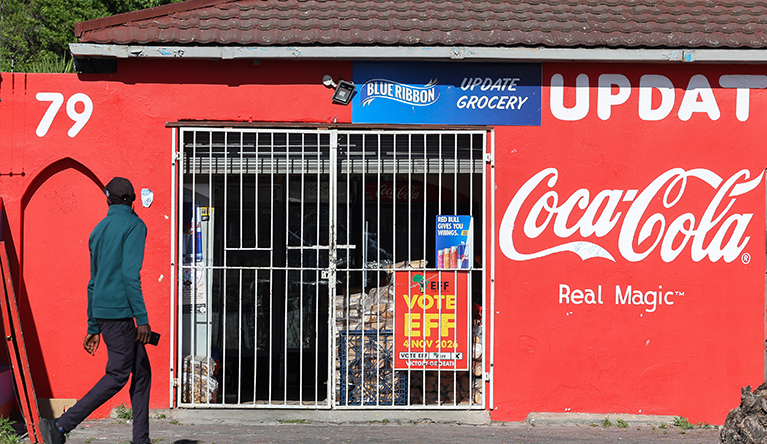
A man walks past a spaza shop displaying an EFF election poster in Goodwood, Cape Town, on 2 November 2026. Political parties have increasingly placed immigration enforcement at the centre of their local government election campaigns. Photograph: Shelley Christians/SA|AJP
Xenobarometer
A man walks past a spaza shop displaying an EFF election poster in Goodwood, Cape Town, on 2 November 2026. Political parties have increasingly placed immigration enforcement at the centre of their local government election campaigns. Photograph: Shelley Christians/SA|AJP

Compared with their campaigns for the 2021 local government elections (LGE), political parties across the spectrum have shifted to the right in their rhetoric and promises on immigration enforcement. Several parties have also made the policing of foreign nationals central to their election messages. 

Yet many of these promises may be impossible to fulfil, as they fall outside the legal powers and jurisdiction of local government. Fact-checking company Ukweli, at Viewfinder’s prompting, reviewed twelve parties’ election manifestos for promises relating to immigration.

Ukweli identified sixteen election promises, across seven of the party manifestos reviewed, which related directly to immigration. Those parties were ACDP, ActionSA, ANC, BOSA, AMM, EFF and IFP. Immigration was mentioned in a further 11 passages across the manifestos, but without any specific promises being made. 

Ukweli’s analysis determined that none of the parties’ promises on immigration could be delivered by a municipal council using only its own powers. Municipal council powers are limited to municipal-level services and local bylaws, whereas immigration control, visas, asylum, and deportation are the exclusive mandate of the national government.

Half of the promises identified were deemed to lie entirely outside council powers, and within the domain of other branches of government. For instance, the ACDP promised to “ensure” that government enforced immigration laws and executed deportations. BOSA promised to “facilitate” a “documentation registration window” to help undocumented immigrants to regularise.

Several of the other promises identified would require substantial support from other spheres of government to implement. ActionSA pledged to use routine municipal operations to identify and refer suspected immigration violations to the relevant authorities, and to ensure that cases are “followed through”. The AMM promised to “establish specialised municipal police units to fight drugs, illegal immigration and building hijackings”.

An immigration attorney who assessed the analysis and its findings concluded that they were “broadly correct”.  He emphasized that collaboration between municipal councils and other government spheres is often highly complex.

“Delivering on promises that require a mix of powers is largely unattainable for councils that do not have party influence in the national and provincial portfolios that they would need to collaborate with to get the job done,” he said. 

He however requested anonymity due to prior threats from the anti-immigration movement.

A rightward shift in parties’ stance on foreign nationals

Five years ago, in the run up to the 2021 LGE, parties made very few promises about immigration enforcement. For instance, in 2021 the manifestos of the ACDP, ANC and ActionSA make no mention of immigration at all. In their 2026 manifestos, these three parties collectively made nine immigration enforcement related promises. 

The ACDP said it would deliver, “developmental plans to deal effectively with migratory realities and challenges”. The ANC promised to tighten immigration-law enforcement by working with the departments of Home Affairs, Employment and Labour, and law enforcement agencies to protect communities, workers and legitimate businesses, promising to “strengthen compliance”.

Of all the manifestos, only the EFF’s adopts a supportive stance, promising “targeted support for vulnerable groups, including persons with disabilities, LGBTQIA+ persons, migrants, people living in poverty, and survivors of gender-based violence.”

Comparison: 2021 vs 2026

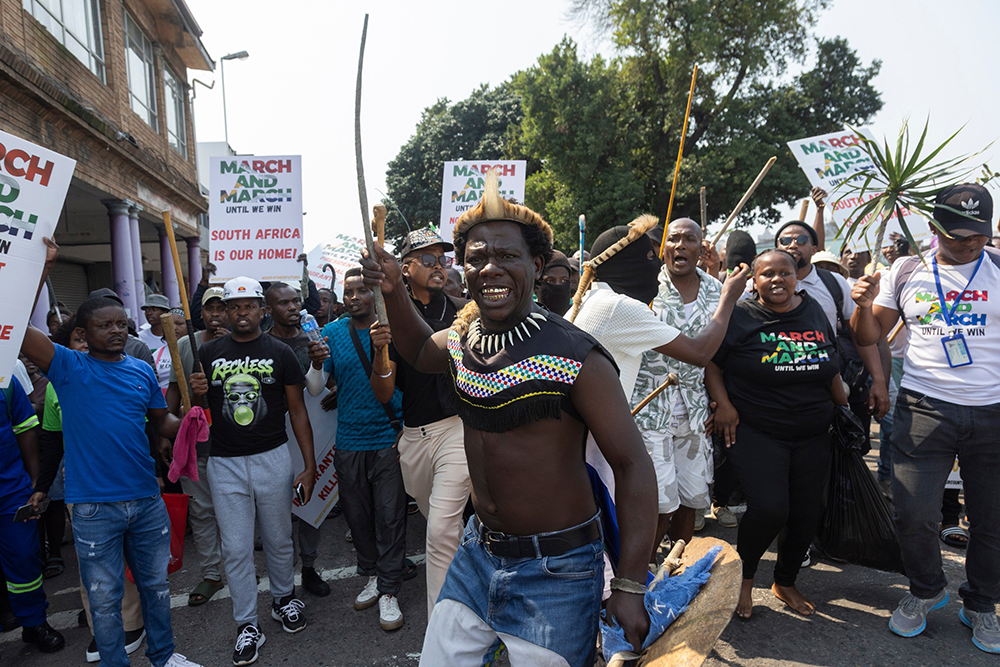
In 2021, the Covid-19 pandemic was an abiding concern for South Africans. In 2026, the political discourse in the country has been largely subsumed by the demands of anti-immigration movements such as March and March.

Mirroring this, the language that political parties use to describe foreign nationals has markedly changed between election manifestos of 2021 and 2026 – often shifting from positive characterisations of migrants in 2021, to hard-line positions in 2026.

For instance, in 2021 ActionSA promised “to ensure that it is easier for foreign nationals to enter our country legally or to get protected legal status”. In 2026, it promises “to use every lawful municipal power available to help tackle crime and illegal immigration”.

In 2021, the IFP promised “to prioritize South Africans for job and trade opportunities”. In 2026, it insists on a more hardline framing: “the spaza-shop industry must be reserved for South Africans in every municipality – large or small.” It has promised to “crackdown on property owners, landlords or South Africans who commit offences by fronting for, or registering businesses on behalf of, undocumented foreign nationals.”

Individuals on the campaign trail

The absence of immigration enforcement promises from some parties’ manifestos has not stopped individual senior party members from making public statements on immigration on the campaign trail.

While campaigning in KwaZulu-Natal on 25 October the First Deputy President of the MK Party Duduzane Zuma questioned what he viewed as selective, racially-framed outrage over illegal immigration. He argued for a “blanket approach” to immigration enforcement, asking why undocumented European nationals are not subjected to the same scrutiny and protests as black African foreign nationals.

The word immigration doesn’t appear once in the DA’s 2026 manifesto. This did not stop Tshwane mayor Cilliers Brink from leading and publicising a raid on suspected hijacked premises in search of undocumented migrants, accompanied by private security.

Spaza-shops and informal traders in the cross-hairs

Many of the immigration enforcement promises parties made in 2026 address foreign ownership of informal shops and grocery businesses, the first time such promises have been made in LGE manifestos.

The ANC promises, for example, that in order to “protect communities, workers and legitimate businesses” its councils will work with national departments “to ensure compliance with labour and immigration laws…and ensure that opportunities created through municipal programmes, procurement and trading spaces prioritise South African workers, entrepreneurs and businesses”.

BOSA promises voters “strict municipal frameworks that prioritise South African citizens” as well as a “zero-tolerance policy for unlawful economic participation”.

The IFP’s manifesto is particularly focused on the regulation of spaza-shops, promising voters its municipalities will “halt the operations of spaza shops and food-handling facilities that fail to meet health, safety and business-registration requirements…[and] seek the prosecution of property owners, landlords or South Africans who commit offences by fronting for, or registering businesses on behalf of undocumented foreign nationals.”

An immigration lawyer weighs in

Asked if such promises were enforceable, the attorney consulted for this article said: “a municipality creating its own foreign-ownership ban is likely overstepping into national immigration territory”. 

But, there have been examples where national government is trying to facilitate some municipalities’ appetite for regulating businesses to favour South Africans at the expense of foreign owners.

He cited the example of Minister of Cooperative Governance and Traditional Affairs (CoGTA) Velenkosini Hlabisi, a member of the pro-regulation IFP, who in 2024 gazetted standard draft by-laws for township economies, including clauses that explicitly allow municipalities to set quotas on the proportion of businesses owned by foreign nationals. These stipulated that at least 60% of businesses in certain categories must be locally owned, making it that a South African cannot transfer a business to a foreign national without approval from both the municipality and the Department of Home Affairs.

“If a municipality implements a quota system that is explicitly authorized and standardized by a national CoGTA framework, the municipality is acting lawfully within delegated powers,” he said.

The MK Party is also seeking to attack foreign ownership of spaza shops at the national level, with MP Carol Mafagane tabling a Private Member’s Bill in May this year seeking to make it explicitly illegal for non-citizens to own or run spaza shops. 

“The legal concern here shifts from municipal overreach to national constitutional rights, specifically whether such a blanket ban at the national level would violate constitutional protections against unfair discrimination,” said Viewfinder’s source.

*This story also appeared in Daily Maverick

XenoBarometer tracks the anti-immigrant movement and its impact. We aim to surface underreported stories, paying close attention to potential rights abuses, emerging patterns in anti-immigrant mobilisation and failures in the government’s response.  It is produced by the Southern Africa Accountability Journalism Project (SA | AJP), an initiative of the Henry Nxumalo Foundation working with Viewfinder and with the financial assistance of the European Union. It can under no circumstances be regarded as reflecting the position of the EU.
What the Constitutional Court judgment on asylum actually said

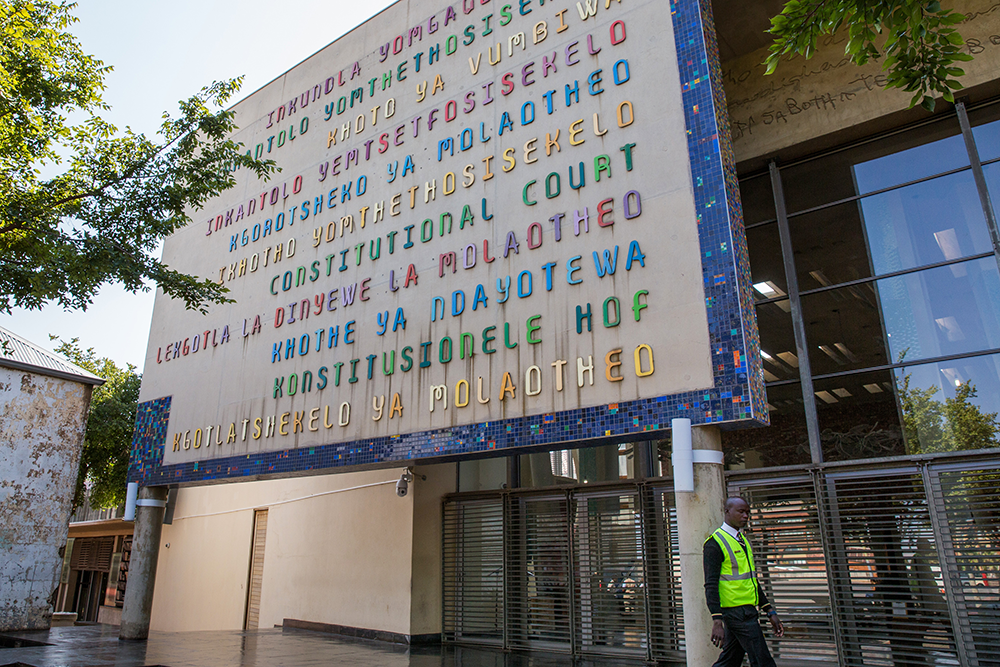
The Constitutional Court in Johannesburg, South Africa. The court on 7 July 2026 upheld a ruling striking down provisions of the Refugees Act that restricted access to the asylum system.. Photo: Ashraf Hendricks/GroundUp
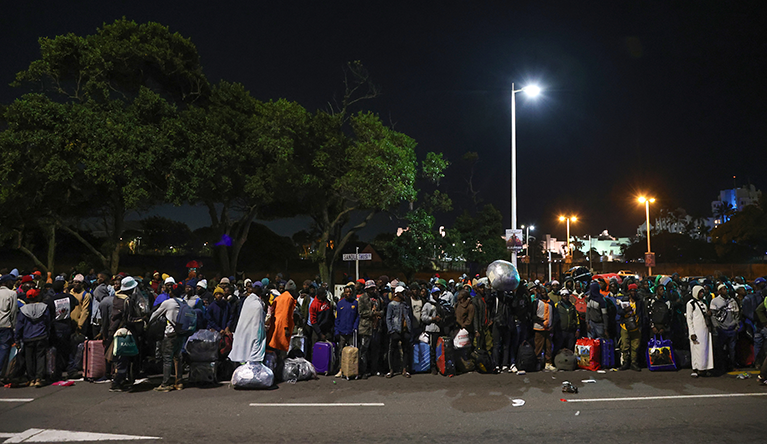
Undocumented Malawian nationals queue outside a repatriation centre in Durban’s city centre for processing ahead of their voluntary return to Malawi on 23 June 2026. Photo: Felix Dlangamandla/Daily Maverick

Last week, March and March’s portrayal of a Constitutional Court judgment as a radical change to immigration law helped fuel days of violent anti-immigrant protests in Durban, Soweto and outside the court itself.

Online, the judgment was misrepresented as granting immigrants citizenship, jobs and voting rights.

But little has been written about what the judgment actually ordered or the legal timeline leading up to it.

The ruling built on established legal principles, but also struck down provisions of the Refugees Act that created barriers to the asylum process. It reaffirmed that people cannot be denied access to asylum application procedures simply because of how or when they entered South Africa.

Origins of the case 

In 2020, amendments to the Refugees Act effectively barred anyone who enters the country unlawfully from accessing the asylum system. 

Those amendments required immigration officials to conduct “good cause” interviews with undocumented people to establish whether they had good reason for entering South Africa illegally and failing to report to a refugee reception office within five days, according to Liesel Fourie, an attorney at the Nelson Mandela University Refugee Rights Centre in Gqeberha.

“In practice (those interviews) never happened,” said Fourie.

The Constitutional Court in Johannesburg, South Africa. The court on 7 July 2026 upheld a ruling striking down provisions of the Refugees Act that restricted access to the asylum system..  Photo: Ashraf Hendricks/GroundUp
The Constitutional Court in Johannesburg, South Africa. The court on 7 July 2026 upheld a ruling striking down provisions of the Refugees Act that restricted access to the asylum system.. Photo: Ashraf Hendricks/GroundUp

“(Immigration officials) felt they didn’t have the necessary training on it and weren’t provided with the necessary paperwork. They were also not allowed to actually make a decision themselves, and instead had to send their interview notes to the provincial or regional head of department, who had to make a decision.”

The inefficiency of this process, coupled with officials’ reluctance to even attempt to implement it, effectively brought asylum processing at South Africa’s RROs to a standstill. Fourie said that her office “never received a single good cause decision back in all the years since the amendments were passed”.

Tens of thousands of asylum seekers were stuck with no meaningful way of applying for refugee status. 

In April 2024, the Scalabrini Centre of Cape Town, which works to protect immigrant rights in South Africa, approached the Western Cape High Court to challenge the amendments.

On 15 May 2025, the High Court found in its favour, striking those provisions down. 

It was this ruling that was finally confirmed by the Constitutional Court on 7 July 2026. 

For weeks, the Department of Home Affairs (DHA) “sat on that judgment”, said a senior staffer at Scalabrini. (Editor’s note: The staffer was interviewed on record on 5 October. Scalabrini’s board subsequently took the decision that no staff should be quoted in the news media as a safety precaution – owing to the anti-immigration movement’s tendency to dox and threaten activists. In respect of the Scalabrini board’s request, an editorial decision was taken to anonymise the staffer.)

In a letter to Home Affairs Minister Leon Schreiber on 4 September, Scalabrini and Lawyers for Human Rights called on the department to immediately reopen refugee reception offices to new applicants and stop applying the unconstitutional “good cause” requirement. The Minister did not reply.

Then, on 28 September, DHA issued a directive ordering all RROs to start processing new asylum claims with immediate effect. The suddenness of the directive caught those offices off guard and many RROs were soon inundated with hundreds of queuing migrants.

“The RROs were given no support to deal with the inevitable sudden wave of applicants, and it comes as no surprise that chaotic scenes ensued,” the Scalabrini staffer observed.

After violent anti-immigrant protests, on 9 October, the DHA revoked its own directive. It issued a statement that it would find the most appropriate way to comply with the Constitutional Court’s order.

“We are effectively back to where we were, with tens of thousands of asylum seekers not able to access the system. The difference now is that the country’s highest court has said they must have access, and unlike the DHAs directives, that order cannot be revoked,” said the Scalabrini staffer. 

Judgement was not groundbreaking

Despite the incredible ire this Constitutional Court judgement drew from the anti-immigrant movement, it actually builds on several cases that came before and achieves little that is new or controversial in South African immigration law. 

In a 2018 case called Ruta v the Minister of Home Affairs, the Constitutional Court had already affirmed that anyone wishing to apply for asylum must be allowed to do so regardless of how they entered the country, or how long it took them to apply.

Here, the court affirmed the principle of non-refoulement, enshrined in the Refugee Act, which prohibits returning people to places where they face persecution, torture or other serious harm.

Fourie said the principle protects even prospective asylum seekers: they cannot be deported until they have completed the application process and exhausted all appeals.

In December 2021, Abore v the Minister of Home Affairs and Another confirmed this part of the Ruta judgement. 

In June 2023, Ashebo v Minister of Home Affairs and Others provided further confirmation that an illegal foreigner who has expressed an intention to apply for asylum cannot be deported until they are given a fair opportunity to process that claim. 

“In this year’s Scalabrini judgement, the Concourt confirms what was said in the Ruta judgement, the Abore judgement and the Ashebo judgement. The anti-migrants have been jumping up and down saying the Scalabrini judgement is this unheralded thing but in fact the foundations were laid long ago,” Fourie said. 

What about people already stuck in detention?  

In August, the South African Police Service (SAPS) reported to Parliament that it had arrested, detained and, in some cases, deported thousands of “illegal” immigrants. This continues.

The DHA’s since-revoked directive to RROs to re-open on 28 September still did not cover asylum seekers who are currently detained or in the process of being deported. 

According to the Scalabrini staffer, this is because two Gauteng High Court judges took conflicting approaches to the Constitutional Court’s July decision.

“In Mnamo and others v Home Affairs, which was heard in August, Judge Mandelonkosi Motha ordered that the applicants [a group of undocumented people detained in Lindela Repatriation Centre] should remain in detention, and that immigration and refugee officials should instead go to Lindela to process their asylum claims,” said the Scalabrini staffer.

Of the other case he said:

“In Ered v Minister of Home Affairs and Another, which was heard in September, Judge Stuart Wilson strongly disagreed with Motha’s reasoning, and ordered that the applicant [a Lindela detainee] in his case be released with immediate effect.”

To resolve these conflicting approaches, Gauteng Judge President Aubrey Ledwaba referred the differing interpretations to a full bench court for legal certainty. The session will take place on 29 October.

March and March protesters make their way to the Home Affairs office on Che Guevara Road, where foreign nationals have been living on the street for months, in Durban, South Africa, on 10 September 2026. Photo: Rogan Ward/Daily Maverick

Fourie said the earlier Constitutional Court judgments offer competing guidance on detention. The 2018 Ruta judgment held that detention and deportation procedures must stop when someone expresses an intention to seek asylum.

“The 2021 Abore judgement said something different. It said that the provisions in the Ruta judgement that deal with the right to be released immediately fall away, because the regulation that previously provided for this was not included in the new regulations that came into effect in January 2020,” said Fourie. 

The 2023 Ashebo judgement also moved away from the Ruta judgement. It said that people in detention who wish to apply for asylum should be provided with an opportunity to be interviewed by an immigration officer, to ascertain whether they have good cause for being in the country unlawfully. It also put a duty on the state to assist people to apply for asylum while in custody.

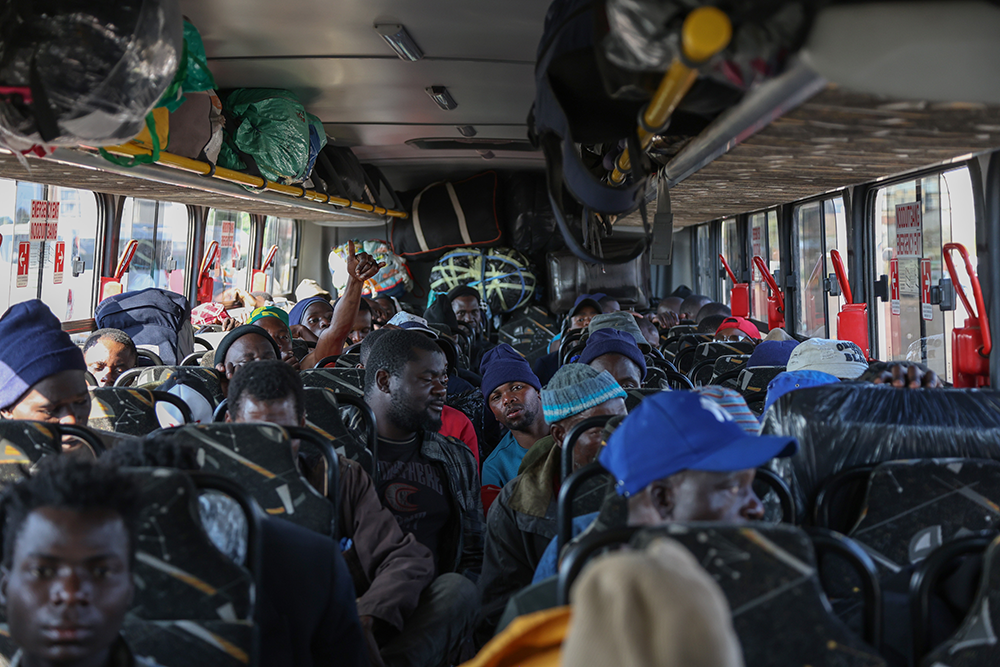
Malawian nationals sit aboard a bus at the Durban Drive-In temporary repatriation centre in Durban, South Africa, on 1 July 2026, ahead of their departure for Malawi as part of a voluntary repatriation programme. Photo: Felix Dlangamandla/Daily Maverick

“It should be said that this is completely impractical, because refugee asylum applications can only be made in person at an RRO – the officers aren’t mobile. This means immigration must load everyone into a van and take them to an RRO, where they may or may not be assisted, which is problematic,” she said.

the Scalabrini staffer believes that, following the Scalabrini judgement, which did away with the good cause requirement in the Refugee Act, the procedure should automatically revert to what was outlined in the Ruta judgement.

“In other words, people should be automatically released so that they can go and apply for asylum,” he said. 

Scalabrini will join the 29 October full bench hearing as a friend of the court. 

“It is highly political,” the Scalabrini staffer conceded. 

Timeline

XenoBarometer tracks the anti-immigrant movement and its impact. We aim to surface underreported stories, paying close attention to potential rights abuses, emerging patterns in anti-immigrant mobilisation and failures in the government’s response. It is produced by the Southern Africa Accountability Journalism Project (SA | AJP), an initiative of the Henry Nxumalo Foundation working with Viewfinder and with the financial assistance of the European Union. It can under no circumstances be regarded as reflecting the position of the EU.
Xenobarometer

Xenophobic surge dials up trauma for many immigrant pupils at SA schools in 2026

The documentation status of migrant pupils has come under scrutiny after two Cape Town high schools requested that foreign children provide valid immigration or study permit documents. (Archive photo: Ashraf Hendricks / GroundUp)

The wave of xenophobic nationalism that has swept over South Africa has inflected some longstanding issues in the education sector. In Cape Town, immigrant parents of pupils in several schools were dismayed in the last week of June after school authorities sent messages requesting valid immigration documentation.

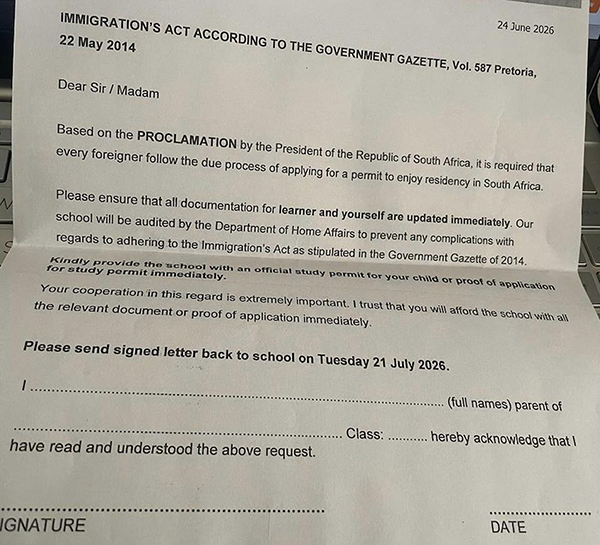
On 24 June, a week before the expiry of the March and March deadline for undocumented migrants to leave the country, Excelsior High School in Belhar sent a letter home with pupils of immigrant parents, asking them to “Kindly provide the school with an official study permit for your child or proof of application for study permit immediately”, and warning that “our school will be audited by the Department of Home Affairs to prevent any complications with regards to adhering to the Immigration’s (sic) Act as stipulated in the Government Gazette of 2014”.

In the same week, Buren High School in Brooklyn sent out a WhatsApp message requesting “foreign learners to submit an updated copy of their child’s valid immigration documentation… by tomorrow”. 

Buren’s deputy principal, Shamini Govender, told Viewfinder that the communication had been issued “because a valid document is a requirement. Especially in matric exams, we have to check it, otherwise the student can’t write.”

She added that the process was in no way punitive, and that in cases where pupils had no documents “we assist them, by working with the relevant authorities to get them what they need in order to write”.

Excelsior High School did not respond to questions submitted by Viewfinder, but a teacher, requesting anonymity, said that the letter had followed a meeting of a group of school principals in June, at which the March and March deadline had been discussed.

“These are schools in areas where there are a lot of migrants, so it was felt that some action needed to be taken, in case [anti-immigrant] groups came [to the schools] like they did in KwaZulu-Natal and Gauteng. That is why a lot of schools issued letters at the same time, all saying the same thing,” the teacher said.

The letters and the law

According to Zeenat Sujee, the head of the Education Rights Programme at SECTION27, communications from schools of this nature do not necessarily comply with the South African Schools Act.

“The Act very clearly states that a child must be allowed to attend school even if they don’t have documents. It also says that schools must not unfairly discriminate against learners in any way. Placing learners at risk of deportation is a failure to act in the best interests of the children.”

According to Sujee, the belief that matrics cannot write exams without identity documentation has a long history, and is not true.

“In 2019, the so-called Phakamisa judgment [Centre for Child Law v Minister of Basic Education] was handed down, which made it clear that a lack of identity documentation should not be a barrier to basic education. After this we were still seeing cases of learners being barred from registering for and writing their National Senior Certificate [matric] exams, but subsequent Department of Basic Education circulars have clarified that matrics are allowed to sit exams, whether they have documentation or not,” she said, adding that Section27 has received no cases of Grade 12 pupils being barred from writing exams in 2026. 

A letter sent to parents of immigrant learners enrolled at Excelsior High School in Belhar in June. The Western Cape Education Department says it is not aware of any Department of Home Affairs audit, but that requests for documentation are common practice. Civil society organisations expressed concern about the wording of this and similar messages, as well as the timing, coming a week before the March and March deadline for undocumented migrants to leave the country. (Credit: Supplied)

In a response to Viewfinder, the Western Cape Education Department (WCED) said it was not aware of any Home Affairs audit, but that a request for identity documents “was made a while ago by the schools concerned for the administration of the National Senior Certificate. This is common practice – and the request is made to all learners.”

The WCED specified that if a candidate does not have an South African identity document, they should provide a birth certificate, and that those without these documents “should contact the WCED’s Examination Directorate or the nearest district office as soon as possible, as registration and certification details must ultimately be linked to the learner’s official identity records when writing the National Senior Certificate”.

Bullying, hate and trauma

Culture-based bullying is another longstanding issue in South Africa’s schooling system, but Viewfinder has now received a number of testimonials about bullying episodes inspired by the activities and ideas of the anti-immigration movement.

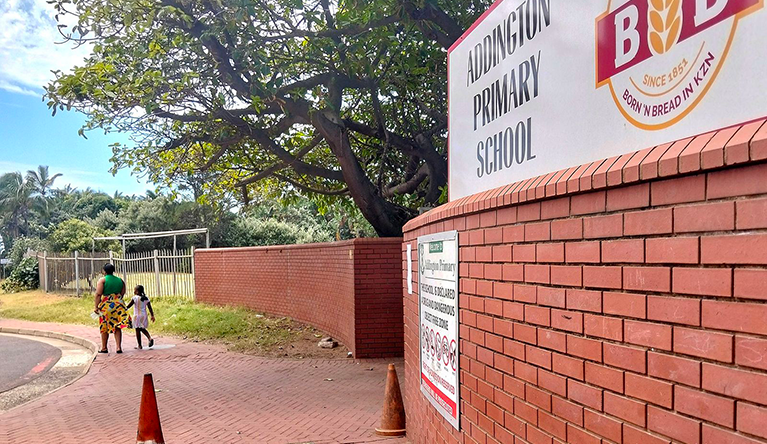
In January, after immigrant parents demonstrated outside Addington Primary School in Durban, demanding places for their children, supporters of the March and March movement staged a three-day protest outside the school that left several pupils and parents in need of counselling, according to Consolee Kanamugire of the Durban-based organisation Refugee Social Services.

“At a point during the protest the school called parents of existing immigrant learners to come and remove their children from the school for safety reasons, and when they came some were beaten,” she said, adding that although immigrant children are used to a degree of exclusion, as well as bullying from their peers, what happened in January was different.

“These children have been schooled by their parents not to speak unnecessarily, not to wear anything that identifies them as foreign, and other coping strategies, but when March and March came it was their first time seeing that hate from outsiders, and it has left several of them severely traumatised,” she said. 

Immigrant pupils at Addington told Viewfinder they were taunted in July after the passing of the March and March deadline for undocumented migrants to leave the country.

“We were asked, ‘why are you still here?’” said one.

In Nyanga in Cape Town, a principal of a faith-based education centre, requesting anonymity, said two immigrant pupils are enrolled in the school, and both reported episodes of bullying in June. 

“They are used to being ridiculed for their Shona, and their accents, but what did stick out in June was the fact that they were told they need to be out of the school by the time of the March and March deadline. The other students had obviously picked it up, whether from the news or their parents, and some of them were using it to be nasty,” he said.

A Vista High School pupil of mixed parentage, whose father is from central Africa, told Viewfinder he does not feel able to embrace his father’s culture, because it would open him up to ridicule.

“My mother is from the Eastern Cape. Recently I went back for ulwaluko [traditional circumcision], so I am a bhuti now, and at school I only hang out with other bhutis. If I spent time with foreigners people would ask me what am I doing? As much as I am interested to find out about my father’s culture, I will wait until I am finished school. For now, it’s too complicated,” he said.

Viewfinder asked the Department of Basic Education whether an increase in culture-based bullying had been reported by schools but received no response. In July, however, the department issued Circular No. S7 of 2026, which prohibits vigilantism and violence around schools, a step that civil society organisations have broadly welcomed. 

XenoBarometer is a reporting project published weekly. It seeks to track the anti-immigrant movement, and its impact on politics and migrant communities in the country. It is produced by the Southern Africa Accountability Journalism Project (SA | AJP), an initiative of the Henry Nxumalo Foundation working with Viewfinder and with the financial assistance of the European Union. It can under no circumstances be regarded as reflecting the position of the EU.
Xenobarometer
>