Database of victim testimony details months of violence by March and March supporters in Durban

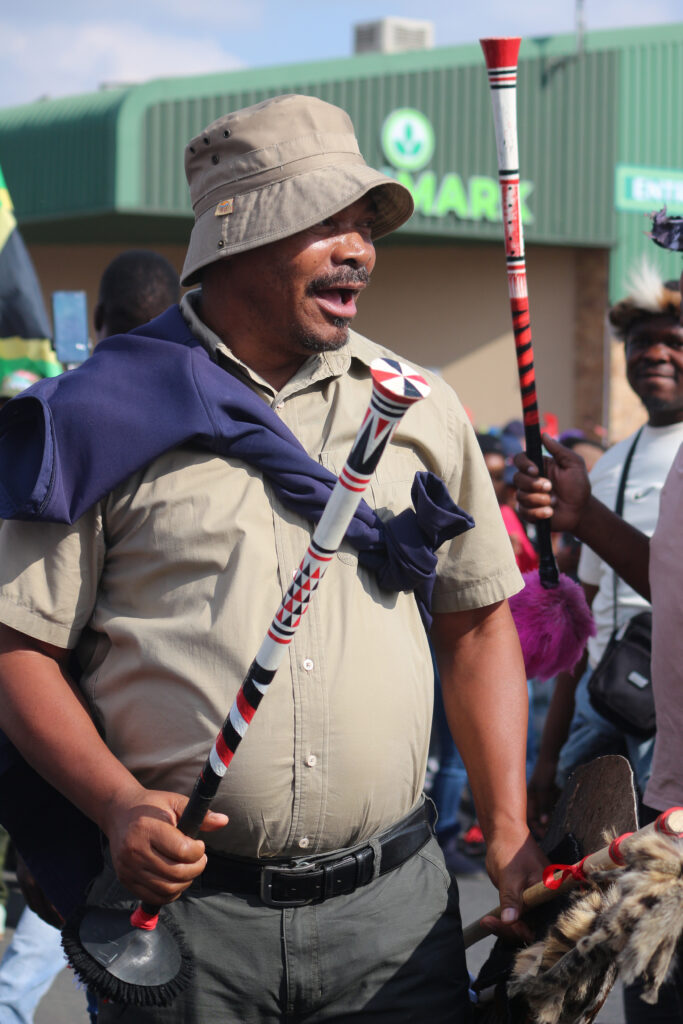
An immigrant displaced to Che Guevara Road in Durban holds up papers. Almost all people displaced to the encampment were documented. (Photo: Joseph Bracken, GroundUp)

Last month, on 3 September, March and March supporters converged on an encampment of displaced immigrants at Che Guevara Road in Durban in a “clean up” operation. But, in their own words, the people displaced there had been driven from their homes and businesses by March and March in the months before. 

March and March has consistently said that it is concerned with illegal immigration. But, a Department of Home Affairs verification process in June had found that all but three out of 457 were documented and legally resident in South Africa.

The march on 3 September turned violent and four immigrants were hospitalised. Possessions were piled in the road and marchers reportedly attempted to set these alight. This marked an escalation in the character of public demonstrations by March and March, which presents itself as non-violent, lawful and supportive of immigrants’ rights to reside legally in South Africa.

Unofficially, however, the movement’s supporters in Durban had flouted those principles for months, according to a new database containing the testimonies of 235 immigrants who say they were targeted by the movement.

The database was compiled by civil society coalition Siyafana Sonke Action Campaign and relied on individualised interviews with displaced immigrants – mostly Congolese and Burundian nationals. It describes how supporters of March and March took matters into their own hands in the run-up to the movement’s 30 June deadline for undocumented foreigners to leave the country. 

In incidents throughout much of the year, and culminating in mid-May, respondents described small groups armed with machetes, spears and knopkieries marching on the homes, businesses and places of employment of scores of immigrants in and around the city centre.

Many interviewees said they were assaulted, while respondents commonly described being ordered to leave. Immigrants’ landlords were told to put them out and employers were told to fire them. Immigrant businesses and homes were looted. 

Many immigrants reported that the police refused to assist or open cases, sometimes telling complainants to “go back” to their countries. 

In September, Siyafana Sonke shared a redacted version of the database with Viewfinder for analysis. This article summarises the many findings.

Viewfinder also visited a shelter – at a private home in Glenmore, Durban – housing immigrants who have refused to leave the city, but are unable to return home for fear of attack.

Reports of violence and assault

Nearly a third of the 235 testimonies contained descriptions of physical assault by supporters of March and March, sometimes with the use of weapons.

A 54-year-old Burundian man, a Hutu who said he fled ethnic attacks in his home country, said he spent a week in King Edward Hospital after a group of around 20 people assaulted him on 14 July 2026.

A 58-year-old Congolese woman, who worked as a vegetable vendor on Smith Street in Durban, described how a group of March and March supporters attacked her, hit her on the head. While fleeing, she said that a nail got lodged in her leg and she required a tetanus injection. 

A 46-year-old Burundian woman, who worked as a shoe vendor at Durban’s Sunday Market, said that she and her son were attacked at their stall on 8 March 2026. She was also forced from her home by her neighbours, who threatened to attack her family. She described five other attacks on her and her family at the market between 2019 and 2024, and shared police case numbers for each.

Loss of livelihoods and businesses

About a fifth of the people interviewed said they had lost their livelihoods. The reasons mostly related to businesses being attacked, looted and destroyed; to employers turning people away; or, to trading sites being abandoned due to threats. 

A 51-year-old Congolese woman said that she was chased from a market where she traded in 2024. Protesters allegedly stole the business permit and subsequently operated from the site themselves. She was put out of her home on 27 May, she said.

A 29-year-old Burundian man said that protesters destroyed his motorbike which he used to generate an income.

A 27-year-old Burundian man said that his barbershop was attacked on multiple occasions   between April and May 2026. He attempted to restart the barbershop several times, and was attacked each time. He described being assaulted with fists and sticks.

Theft, looting and destruction of property

In some instances, people described being robbed and looted as they were chased from their homes or turned out from their places of business. 

A 38-year-old Congolese man from Umbilo said that protestors came to his mechanic yard and demanded that he close shop. He said that he was badly beaten and that the perpetrators took over his business and seized control of his equipment, which he estimated as being valued R42,000.

A 40-year-old Congolese man described how a large group attacked his barbershop in Chesterville on 14 March. One attacker allegedly had a knife and another a gun. He was robbed at knifepoint, with attackers taking his equipment and inverters.

Police allegedly refused to open dockets

About a fifth of respondents reported that police refused to open cases when immigrants tried to report the types of incidents outlined above.

Umbilo police station was most frequently accused of this, with seven people complaining that officers there refused to help them. Other stations accused of refusing to take cases included Mayville, Sydenham, Berea, Glenwood, Pinetown, Umkomaas, Durban Central, Point and Broad Street.

A 38-year-old Congolese nail technician who was attacked, chased from her stall and robbed said she attempted to open a case at Umbilo police station. She says the officer refused to open a case and told her to “go back” to her country, and that “if you don’t leave, we will hit you more”.

A 49-year-old Burundian woman said she tried to report an assault by March and March supporters on her son to police (her account does not identify which police station). Police told her, she said, that there are too many cases like this and that they do not have the capacity to give her a case number.

A 34-year-old Congolese woman from Mobeni who said that both the contents of her home and of her shop was looted bare, in April and July respectively. Her shop, she said, was looted in front of police officers who refused to intervene, despite her requests that they do. She attempted to report both incidents to Umbilo police station, but in both instances she was turned away. 

SAPS says it is unaware of xenophobic attacks

Viewfinder put a query to KwaZulu-Natal police spokesperson Colonel Robert Netshiunda. It asked for SAPS’s response to allegations that it failed to protect migrants and refused to open cases in response to xenophobic attacks linked to March and March supporters.

“Police in KwaZulu-Natal are not aware of any xenophobic attacks at any part of the province,” he said. 

“As for the alleged refusal to open cases by police, we will appreciate to be given specific details of each matter, what day, which police station and the names of police officers who refused to open cases (every police officer at the Community Service Center wears uniform with a name tag). They should be held accountable if found to have refused to open cases.”

“You must leave, or they will kill you”

Last month, Viewfinder visited one of the shelters – a residential home where at least fifteen people were huddled together in a small living room. 

Burundian national Germain Semihare, 46, said he fled his home country in 2004 after his father was shot and killed during a dispute over the seizure of his property. Fearing the same fate, he left.

Semihare told a story of resilience and resolve. He arrived in Durban not knowing a word of English. He spent his first nights at the central police station for shelter and found work as a car guard in South Beach. 
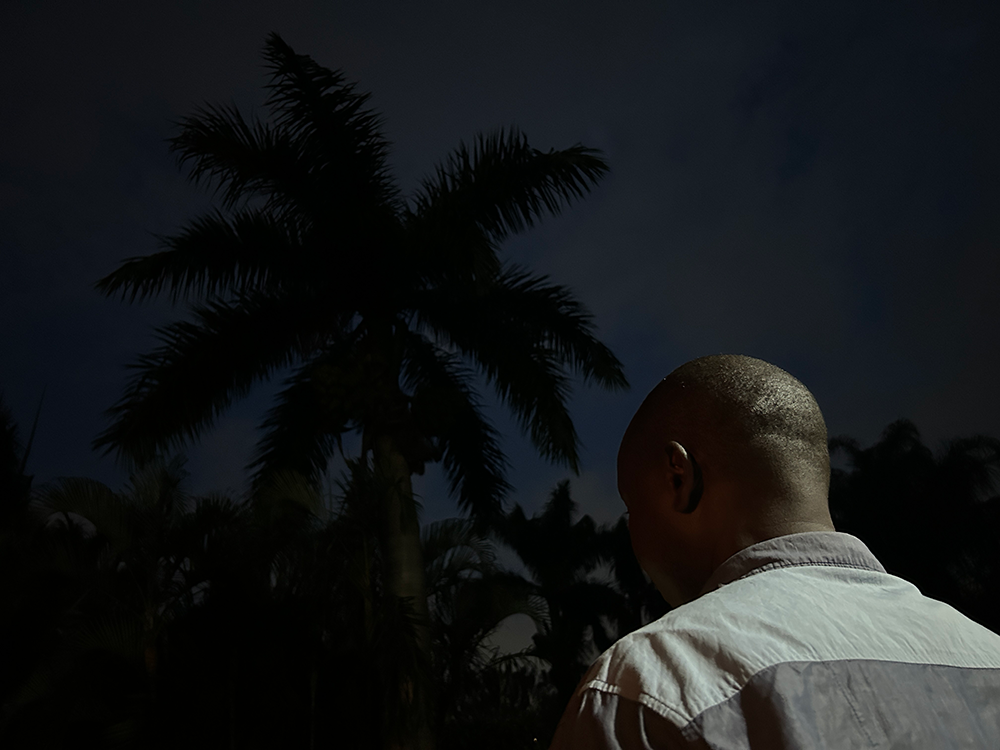
Germain Semihare was driven from his home in May, and has not seen his wife and children since. He asked to be photographed anonymously. (Photo: Daneel Knoetze, Viewfinder)

Twenty-two years later, before the attacks, he had come to consider himself settled, stable and integrated. He had married a Xhosa woman, with whom he has two children. He had opened a hair salon which employs four people. He also worked full-time as an admin clerk at a laboratory, earning a decent income. He said he was spared when xenophobic violence flared up in South Africa in 2008 and again in 2015.

In May, that all changed. He was attacked with sticks on the streets. His barbershop was looted. His employers asked him not to return. Then the vigilantes came for him at home. 

“They beat our door. They said that they are going to kill us if we don’t leave. Luckily my wife was talking to them in Zulu,” he recalls.

“She then said to me ‘you must leave, or they will kill you.’”

He fled with just a tog bag. His wife later took the children to her parents in Mthatha. He has not seen them for four months. 

“She says that she is praying for me to be stable again, like before. She says that it is going to be okay. I have to wait, maybe they are going to stop. We can go to the community. And start to open a business again, like before,” he said. 

“We wish that, but we don’t know.”

March and March responds

Two weeks ago, Viewfinder interviewed March and March spokesman Sandile Dube over the phone.

He was asked what the movement’s position was on why more than 400 immigrants ended up sleeping on the street on Che Guevara Road for months, in light of claims that March and March supporters had displaced them. He did not answer directly.

“First and foremost, we are concerned about those people (the immigrants) and their own safety,” he said, explaining the movement’s rationale for marching on the encampment. 

“It is inhumane that you can have a human being living under those conditions, both foreigners or South Africans. That must be condemned. There are children involved there. They must be protected.”

He was again asked to take a position on March and March supporters who had allegedly driven these people from their homes.

“Any South African who stands up for his country, we support that action. But, it must be within the laws of this country. So what does that mean?” he said. 

He did not explain what that meant. He pivoted instead: 

“Any illegal immigrant that is found in our country – we still stand to say that those immigrants should leave the country with immediate effect.”

When pressed, he acknowledged that he was aware that only three of the 457 people on Che Guevara Road were found to be undocumented. He was asked to reconcile his response with that fact.

“They are documented. However they don’t want to go back to their respective communities where they were. So, in the absence of going back to their communities, they must be deported to your respective countries.”

When asked point blank what he made of reports of widespread violence and intimidation by March and March supporters in Durban in the run up to the 30 June deadline, he pointed to the fact that on 30 June there were scores of non-violent marches in South Africa described by government as “peaceful”

“Then you come to say it was violent. There is a contradiction there. There is a possibility that these foreign nationals are not telling the truth.”

A query to eThekwini Municipality asked it to explain its failure to provide safe accommodation and protect the refugees from attacks. Spokesperson Senzelwe Mzila responded that immigration and refugee affairs fell under the mandate of the Department of Home Affairs, while policing, public order and criminal investigations were the responsibility of SAPS.

“We therefore respectfully refer you to SAPS and the Department of Home Affairs for

comment on the matters raised in your correspondence,” he concluded.

XenoBarometer

XenoBarometer tracks the anti-immigrant movement and its impact. We aim to surface underreported stories, paying close attention to potential rights abuses, emerging patterns in anti-immigrant mobilisation and failures in the government’s response. It is produced by the Southern Africa Accountability Journalism Project (SA | AJP), an initiative of the Henry Nxumalo Foundation working with Viewfinder and with the financial assistance of the European Union. It can under no circumstances be regarded as reflecting the position of the EU.

“We want to see if it’s your country” – Video shows vigilantes’ blockade of Durban clinics continues unchecked

March and March supporters stop patients at Lancers Road Clinic in Durban (Poster design: Henry Nxumalo Foundation)

More than a year after making headlines for blocking immigrants from entering Addington Hospital in Durban, March and March supporters are still staking out clinics in the city. They demand identity documents from patients at the gate. They deny entry to those who do not comply. A video, recorded surreptitiously by Viewfinder, has captured one such interaction.

The video was filmed inside the gate of Lancers Road Clinic in Durban on Tuesday morning last week. It shows a March and March supporter demanding an identity document from this journalist.

“No, it’s from March and March,” the woman says, when asked if she was acting on authority from the clinic.

“We want to see if it’s your country or not … Show me what I need.”

She appeared to call for back-up soon afterwards. She then led this journalist to the security guard manning the gate. The security guard also demanded ID, saying that he was acting on “instruction”. He did not answer when asked who issued this instruction.

A video, recorded surreptitiously, shows a March and March supporter demanding identity from this journalist on Tuesday last week. (Video: Viewfinder) 

In July last year, the KwaZulu-Natal health department characterised this “vigilantism” as “illegal”, “unconstitutional” and posing “a serious risk to public health”. Court rulings in Gauteng have confirmed this interpretation. 

Lancers Road Clinic is run by EThekwini Municipality, which last year also confirmed “that individuals without IDs are (not) being denied access to basic healthcare services”. 

The fact that a government contracted security guard at Lancers Road Clinic appears to be working with March and March supporters looks to be unlawful and at odds with government’s official position. 

The municipality confirmed receipt of a query about the video, March and March’s activities and whether it had instructed the security guard to also demand IDs from patients. 

Luthando Ngubane, a media relations officer, said that the municipality intended to respond. It had not done so at the time of publication.

One citizen’s story of healthcare xenophobia

March and March has consistently indicated that it is concerned only with undocumented immigrants in South Africa. But, one man’s experience suggests that this is not always the case.

Gaby Bikombo, a naturalised South African citizen and a longtime advocate for migrant rights in Durban, was the one who showed Viewfinder to Lancers Road Clinic. He sat for an interview later that day.

Bikombo fled from war in the eastern Democratic Republic of Congo (DRC). He recalled scenes of terrible violence – mass killings, people being submerged in burning palm oil, artillery raining down, thousands fleeing on foot. He and his fiancé joined the fleeing masses. They arrived in Durban in June 1997.

Born in the DRC, Gaby Bikombo has lived in Durban for nearly 30 years. He obtained citizenship in 2022, but was blocked by March and March from entering Addington Hospital in July 2025. (Photo: Daneel Knoetze)

“From Mozambique, I just followed the other people. They were coming to Durban. I did not know why. I could not speak a word of English,” he said. Today, he has lived here, uninterrupted, for nearly thirty years. 

In 1997 he applied for asylum – he was not allowed to work or study and his documents had to be renewed regularly. In 2001, he obtained refugee status and got formal work as a security guard. In 2006, he applied for permanent residency. He obtained it in 2009. In 2015, he applied for naturalisation. In 2019, he received a certificate of naturalisation. In 2021, he applied for a South African identity book. He received it the following year. 

Bikombo is insistent on this point: he has a thirteen digit identity number, just like any other South African citizen. 

Two of Bikombo’s children, the older ones, are also citizens by naturalisation. The other two, the younger ones, are citizens by birth. All four were born at Addington Hospital. The youngest was born with autism. He is now 15. Bikombo used to accompany him regularly to Addington Hospital to pick up his medication. 

That all changed on 3 July 2025. 

“That is when we were blocked at the entrance,” he said. 

“I knew they were stopping people who were not South Africans. But, I did not believe that me, or my son, or my wife would be affected, because we all have green ID books.”

March and March members said that the boy could go in, but that his parents were not allowed, Bikombo recalls. Owing to his son’s autism, that was impossible.

“My ID says ‘country of birth: DRC.’ And they said, ‘you can’t go in, you are not born here.’”

Bikombo no longer goes to Addington, and fears that worse yet is to come. 

“The more the anti-migrant movement becomes better organised, better funded, able to use social media and able to mobilise and convince the politicians. That is what makes me extremely worried,” he concluded.

Health department and police agree that this is illegal, but do little

Last week, Viewfinder did spot checks at three other healthcare facilities: Addington Hospital, the hospital’s Gateway Clinic and Beatrice Street Clinic. All these are managed by the provincial department of health. At Gateway Clinic, another March and March supporter was found at the gate. She also demanded identity documents from patients seeking to enter. 

A March and March supporter at the gates of Gateway Clinic in Durban on Tuesday last week. (Photo: Daneel Knoetze)

While the department has been clear about the illegality of this, MEC for Health in the province Nomagugu Simelane has also said that “what happens beyond the gates is beyond (hospital staff’s) control”. In court papers, hospital staff have also been quoted as saying that what happens outside the premises is “solely the responsibility of the municipality or SAPS.”

Addington Hospital’s Gateway Clinic is within line of sight of Point police station. 

When queried, police spokesman Colonel Robert Netshiunda also confirmed that what March and March supporters were doing was illegal. He did not answer questions about the police’s apparent failures to act, however.

“If such is happening, we appeal to the victims to alert the police and police will act without fear,” he said. 

Subsequently, he did not respond when forwarded letters from Lawyers for Human Rights (LHR) detailing how their clients were refused assistance at Point police station when they attempted to open such cases last year.

March and March disowns vigilante supporters

In July last year, March and March took ownership of the tactic of staking out clinic gates and demanding identification from patients. 

“We are enforcing Section 17 of the South African Constitution,” the movement’s chairperson, Teresa Nortje, was quoted as saying in The Citizen.

Last week, both March and March supporters confronted by Viewfinder again claimed to be acting on behalf of the movement.

But, in an interview this week, March and March spokesperson Sandile Dube distanced the movement from these supporters. 

“(Since 30 June) that has never been our campaign,” he said, referencing the deadline March and March gave for undocumented migrants to leave South Africa. 

“The checking of IDs, whether anyone is a foreign national or not, that is the work of the law enforcement agencies.”

He was pressed on whether March and March then disowned the supporters that Viewfinder recorded and interacted with at Lancers Road and Gateway clinics.

“Give me the names of those people so that we can do a follow up on that. And we’ll see if they are acting within or outside … for getting their side of the story.”

Viewfinder shared screengrabs with Dube identifying the March and March supporters in question. No further response has been received at time of publication. 

Healthcare blockades in context 

One of the earliest documented cases of vigilantes turning immigrants away from public healthcare facilities dates back to August 2022, when members from Operation Dudula did so at Kalafong Hospital in Atteridgeville, in Pretoria.

In the subsequent months, Dudula has employed this tactic at other hospitals and clinics in Gauteng. 

In 2025, Kopanang Africa Against Xenophobia (KAAX) took Operation Dudula to court. In November, KAAX secured a judgement from the High Court in Johannesburg which affirmed that only immigration and police officers had the power to demand a private person produce a passport or other identity document. 

The court interdicted Dudula from its members doing so and obstructing access to services.

In October 2025, the SAHRC also sought an urgent interdict against Operation Dudula, March and March for the blocking of access to healthcare facilities in KwaZulu-Natal. But, the application was struck off the roll for lack of urgency.

The SAHRC’s provincial manager Pavershree Padayachee responded to queries that it intends to reinstate the case.

*XenoBarometer tracks the anti-immigrant movement and its impact. We aim to surface underreported stories, paying close attention to potential rights abuses, emerging patterns in anti-immigrant mobilisation and failures in the government’s response.  It is produced by the Southern Africa Accountability Journalism Project (SA | AJP), an initiative of the Henry Nxumalo Foundation working with Viewfinder and with the financial assistance of the European Union. It can under no circumstances be regarded as reflecting the position of the EU.

Xenobarometer

Xenophobic surge dials up trauma for many immigrant pupils at SA schools in 2026

The documentation status of migrant pupils has come under scrutiny after two Cape Town high schools requested that foreign children provide valid immigration or study permit documents. (Archive photo: Ashraf Hendricks / GroundUp)

The wave of xenophobic nationalism that has swept over South Africa has inflected some longstanding issues in the education sector. In Cape Town, immigrant parents of pupils in several schools were dismayed in the last week of June after school authorities sent messages requesting valid immigration documentation.

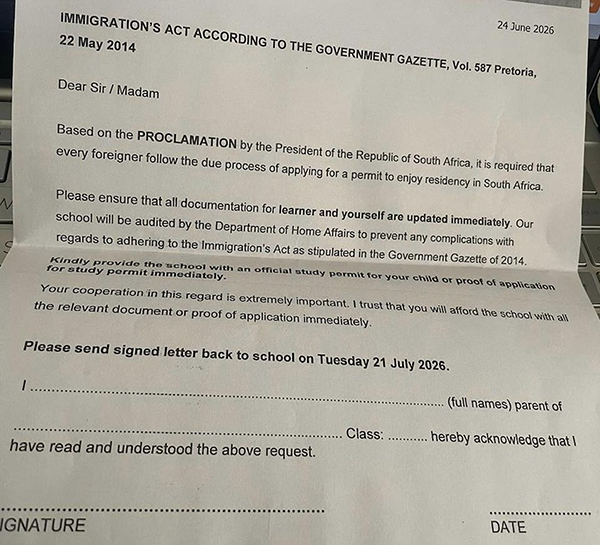
On 24 June, a week before the expiry of the March and March deadline for undocumented migrants to leave the country, Excelsior High School in Belhar sent a letter home with pupils of immigrant parents, asking them to “Kindly provide the school with an official study permit for your child or proof of application for study permit immediately”, and warning that “our school will be audited by the Department of Home Affairs to prevent any complications with regards to adhering to the Immigration’s (sic) Act as stipulated in the Government Gazette of 2014”.

In the same week, Buren High School in Brooklyn sent out a WhatsApp message requesting “foreign learners to submit an updated copy of their child’s valid immigration documentation… by tomorrow”. 

Buren’s deputy principal, Shamini Govender, told Viewfinder that the communication had been issued “because a valid document is a requirement. Especially in matric exams, we have to check it, otherwise the student can’t write.”

She added that the process was in no way punitive, and that in cases where pupils had no documents “we assist them, by working with the relevant authorities to get them what they need in order to write”.

Excelsior High School did not respond to questions submitted by Viewfinder, but a teacher, requesting anonymity, said that the letter had followed a meeting of a group of school principals in June, at which the March and March deadline had been discussed.

“These are schools in areas where there are a lot of migrants, so it was felt that some action needed to be taken, in case [anti-immigrant] groups came [to the schools] like they did in KwaZulu-Natal and Gauteng. That is why a lot of schools issued letters at the same time, all saying the same thing,” the teacher said.

The letters and the law

According to Zeenat Sujee, the head of the Education Rights Programme at SECTION27, communications from schools of this nature do not necessarily comply with the South African Schools Act.

“The Act very clearly states that a child must be allowed to attend school even if they don’t have documents. It also says that schools must not unfairly discriminate against learners in any way. Placing learners at risk of deportation is a failure to act in the best interests of the children.”

According to Sujee, the belief that matrics cannot write exams without identity documentation has a long history, and is not true.

“In 2019, the so-called Phakamisa judgment [Centre for Child Law v Minister of Basic Education] was handed down, which made it clear that a lack of identity documentation should not be a barrier to basic education. After this we were still seeing cases of learners being barred from registering for and writing their National Senior Certificate [matric] exams, but subsequent Department of Basic Education circulars have clarified that matrics are allowed to sit exams, whether they have documentation or not,” she said, adding that Section27 has received no cases of Grade 12 pupils being barred from writing exams in 2026. 

A letter sent to parents of immigrant learners enrolled at Excelsior High School in Belhar in June. The Western Cape Education Department says it is not aware of any Department of Home Affairs audit, but that requests for documentation are common practice. Civil society organisations expressed concern about the wording of this and similar messages, as well as the timing, coming a week before the March and March deadline for undocumented migrants to leave the country. (Credit: Supplied)

In a response to Viewfinder, the Western Cape Education Department (WCED) said it was not aware of any Home Affairs audit, but that a request for identity documents “was made a while ago by the schools concerned for the administration of the National Senior Certificate. This is common practice – and the request is made to all learners.”

The WCED specified that if a candidate does not have an South African identity document, they should provide a birth certificate, and that those without these documents “should contact the WCED’s Examination Directorate or the nearest district office as soon as possible, as registration and certification details must ultimately be linked to the learner’s official identity records when writing the National Senior Certificate”.

Bullying, hate and trauma

Culture-based bullying is another longstanding issue in South Africa’s schooling system, but Viewfinder has now received a number of testimonials about bullying episodes inspired by the activities and ideas of the anti-immigration movement.

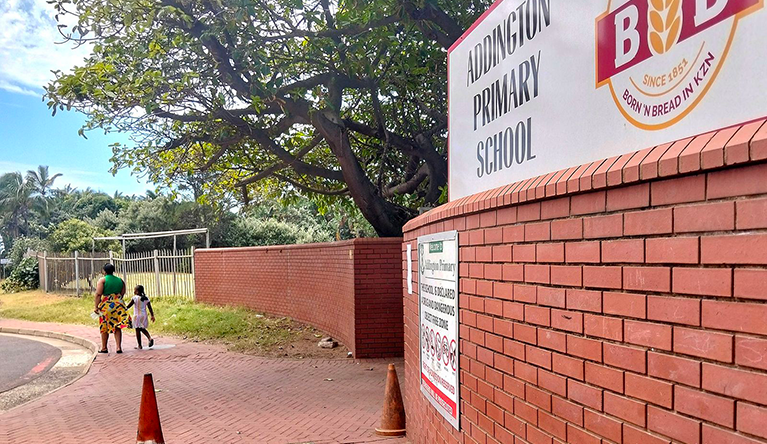
In January, after immigrant parents demonstrated outside Addington Primary School in Durban, demanding places for their children, supporters of the March and March movement staged a three-day protest outside the school that left several pupils and parents in need of counselling, according to Consolee Kanamugire of the Durban-based organisation Refugee Social Services.

“At a point during the protest the school called parents of existing immigrant learners to come and remove their children from the school for safety reasons, and when they came some were beaten,” she said, adding that although immigrant children are used to a degree of exclusion, as well as bullying from their peers, what happened in January was different.

“These children have been schooled by their parents not to speak unnecessarily, not to wear anything that identifies them as foreign, and other coping strategies, but when March and March came it was their first time seeing that hate from outsiders, and it has left several of them severely traumatised,” she said. 

Immigrant pupils at Addington told Viewfinder they were taunted in July after the passing of the March and March deadline for undocumented migrants to leave the country.

“We were asked, ‘why are you still here?’” said one.

In Nyanga in Cape Town, a principal of a faith-based education centre, requesting anonymity, said two immigrant pupils are enrolled in the school, and both reported episodes of bullying in June. 

“They are used to being ridiculed for their Shona, and their accents, but what did stick out in June was the fact that they were told they need to be out of the school by the time of the March and March deadline. The other students had obviously picked it up, whether from the news or their parents, and some of them were using it to be nasty,” he said.

A Vista High School pupil of mixed parentage, whose father is from central Africa, told Viewfinder he does not feel able to embrace his father’s culture, because it would open him up to ridicule.

“My mother is from the Eastern Cape. Recently I went back for ulwaluko [traditional circumcision], so I am a bhuti now, and at school I only hang out with other bhutis. If I spent time with foreigners people would ask me what am I doing? As much as I am interested to find out about my father’s culture, I will wait until I am finished school. For now, it’s too complicated,” he said.

Viewfinder asked the Department of Basic Education whether an increase in culture-based bullying had been reported by schools but received no response. In July, however, the department issued Circular No. S7 of 2026, which prohibits vigilantism and violence around schools, a step that civil society organisations have broadly welcomed. 

XenoBarometer is a reporting project published weekly. It seeks to track the anti-immigrant movement, and its impact on politics and migrant communities in the country. It is produced by the Southern Africa Accountability Journalism Project (SA | AJP), an initiative of the Henry Nxumalo Foundation working with Viewfinder and with the financial assistance of the European Union. It can under no circumstances be regarded as reflecting the position of the EU.

Xenobarometer

Migrant crackdown raises concerns over state’s role in growing anti-immigrant pressure

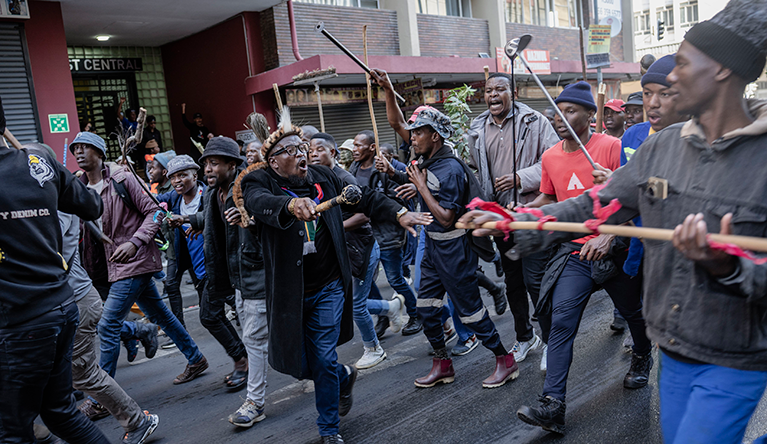
March and March supporters demonstrate in Johannesburg on 30 June 2026. (Photo: Ihsaan Haffejee, GroundUp)

In the weeks since March and March announced a 30 June deadline for undocumented migrants to leave South Africa, tens of thousands of foreign nationals have self-deported from the country. By early September, 129,000 Zimbabweans had voluntarily repatriated, according to Chronicle, a state-owned newspaper. By early August, Malawian news media reported that more than 56,000 migrants had returned to that country.

Around the same time, the South African Police Service (SAPS) reported to Parliament that it had arrested, detained and, in some cases, deported thousands of others. 

Still, many foreign nationals – documented and undocumented – have opted to stay and weather an increasingly insecure future in South Africa. 

XenoBarometer is a new reporting project that will be published weekly. It seeks to track the anti-immigrant movement, and its impact on politics and migrant communities in the country.

XenoBarometer

For this first edition, Viewfinder spoke to 13 activists and community leaders representing some of those who have remained. We asked them all the same question: how has life changed for you and your community since 30 June?

Their responses were wide-ranging. But, almost all of them reported a growing sense of insecurity and fear, coupled with shrinking access to services and opportunities to make a living.

In Johannesburg, Claude Kayitare, of the Southern Africa Network for Immigrants and Refugees (SANIR), said that immigrants were still being stopped on the streets of Marshalltown and asked for documents from citizens who associate with the anti-immigrant movement. Sometimes, vigilantes were also extorting these immigrants for money, he said. 

In Durban, Gaby Bikombo, of the organisation Refugee Social Services, said documented immigrants driven from informal trading sites remained unable to return to work. Bikombo said immigrants were still being refused access to public healthcare facilities, which had been happening since June last year. 

Olorunfemi Adeleke, of the Nigerian community in Tshwane, said many migrants were keeping a low profile because they feared attracting the attention of authorities. 

Crispin Kassarombo, of Voice of Africans for Change (VAC) in Bellville, said many had lost jobs and businesses, leaving some struggling to afford rent and basic living costs.

Perhaps the most striking feature of these interviews, however, were accounts of government departments taking actions that appeared to align with, and in some cases advance, the anti-immigrant movement’s agenda. Three cases in particular stood out. 

Home Affairs accused of freezing migrants’ bank accounts

Asylum seekers who decide to voluntarily repatriate to their countries of origin cannot simply exit across South Africa’s land borders. The Border Management Authority (BMA) is likely to refuse exit to any asylum seekers who do not first “cancel their application for protection”. 

Cancelling one’s asylum application requires presenting at the Department of Home Affairs, and obtaining paperwork to be presented to the authority to ensure passage. 

But, according to Isaiaha Mombilo from the Congolese Civil Society of South Africa, some asylum seekers who have attempted to follow this requirement have found their bank accounts suddenly frozen – leaving them unable to access the money needed for their repatriation.

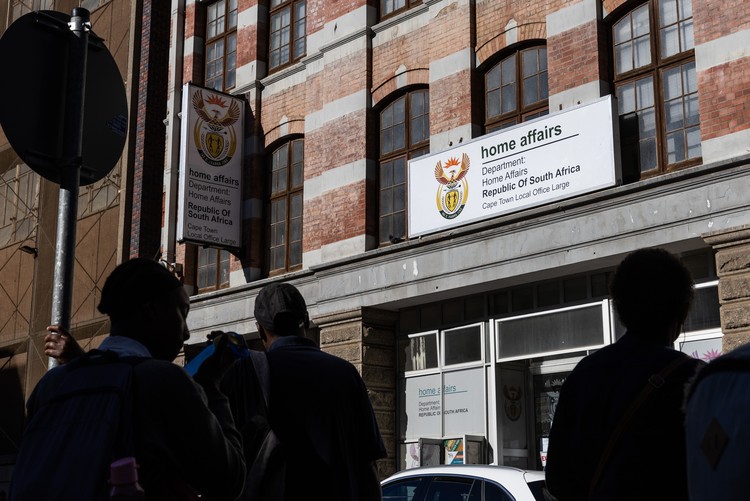
The Department of Home Affairs’ offices in Cape Town (Photo: Ashraf Hendricks, GroundUp)

Mombilo claimed that the Department of Home Affairs was responsible for freezing these asylum seekers’ bank accounts. He said that banks had told affected people that they needed permission from Home Affairs for the accounts to be reopened.

“Some people are still here but cannot access their money, while some people have traveled home without their money. This has only increased the suffering and number of people that need social assistance,” Mombilo said during an interview. 

Lumumba Chia, of the South African Refugee-Led Network (SARLN), said he had also received reports of bank accounts being frozen when people’s asylum permits expired.

“People are afraid. Some want to return home, but their money is frozen,” said Chia.

Viewfinder reached out to the Department of Home Affairs for comment. Spokesperson David Hlabane acknowledged the queries and said the department was working on a response. None was forthcoming by the time of publication.

Court win for migrant shopkeepers

On 17 August, the KwaZulu-Natal Division of the High Court in Pietermaritzburg ordered Alfred Duma mayor Zama Sibisi to unlock migrant-owned businesses which were physically shuttered with padlocks during what the municipality had billed as bylaw enforcement operations in June. Alfred Duma Municipality includes the town of uMnambithi, formerly known as Ladysmith, KwaZulu-Natal.

The shopkeepers who took the mayor to court argued that they were documented and legally allowed to operate businesses in South Africa.

Despite having publicly joined March and March protests in the town, Sibisi had said that he was not “victimising” anyone and that the operation was about maintaining “proper standards, especially when it comes to public health and safety.”

Alfred Duma mayor Zama Sibisi at a March and March demonstration in uMnambithi, KwaZulu-Natal, on 2 June 2026. (Photo: Ladysmith Herald)

But, for the shopkeepers, the court’s reprieve was short-lived.

“After we got the court order, we tried to open our shops. They were only open for two days … (then) March and March came and closed down the whole town,” said a community leader representing Congolese, Ethiopian and Burundian shopkeepers. 

He asked not to be named, fearing retaliation, owing to the volatile situation in Ladysmith where shops have been looted on several occasions too in recent weeks.

Winelands police detain migrants

The Western Cape Coalition Against Xenophobia reported that more than a hundred migrants in the Winelands area of the Western Cape have been arrested in sporadic raids and detained in overcrowded conditions since June 30. 

The coalition alleged that the police have withheld critical information and documents to the detainees. The areas impacted include Robertson, Montagu, Bonnievale and McGregor. 

“This is all being done on the pretext that these are undocumented people, despite the fact that many of them do have documents,” said the coalition, in a statement. 

SAPS has rejected allegations of indiscriminate arrests and unlawful treatment of detainees.

“SAPS remains committed to ensuring that everyone in its custody is treated lawfully, fairly and with respect for their dignity and constitutional rights,” said Colonel André Traut, quoted in GroundUp which produced a report on the detentions.

This report has been produced by the Southern Africa Accountability Journalism Project (SA | AJP), an initiative of the Henry Nxumalo Foundation working with Viewfinder and with the financial assistance of the European Union. It can under no circumstances be regarded as reflecting the position of the EU.

>