
We commissioned two series on South Africa’s disturbingly-low levels of child literacy, the first looking at what is and can be done about the problem, the second focusing on literacy and literacy teaching in indigenous languages. It was done in partnership with Binding Constraints Lab and the Allan and Gill Gray Foundation.
For the work coming out of our SA | AJP project, go here. | For Our City News see here.

We know the problem and the solution, but …
By Rod Amner and Lucas Nowick
23-12-2025
Why does the child literacy problem persist in our schools? The solution is not just pedagogical. It is political.

Why mother-tongue education is failing our children
By Jane Viedge and Rod Amner
24-12-2025
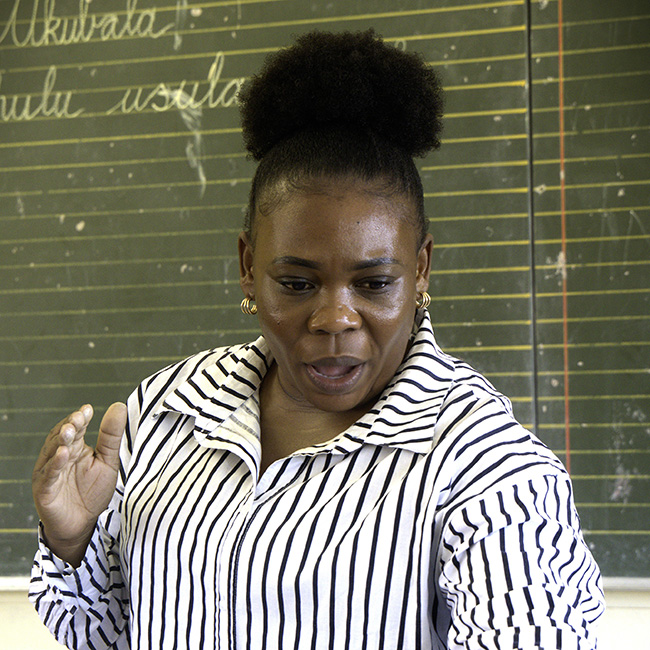
In Makhanda, children taught in English outperform those taught in their ‘mother tongue’ by more than two to one. The data doesn’t prove mother-tongue education is wrong — it reveals the gap between policy ideals and classroom realities. As one expert says, “We are setting children up to fail by insisting on mother-tongue instruction without giving teachers the specific tools to teach it. We’ve got to stop being scared of saying the controversial thing. We’ve tried it for 30 years. We haven’t made it work.”
Makhanda shows what can be done with child literacy
By Jane Viedge
14-12-2025
Two contrasting interventions in one Eastern Cape town show how coaching and structured materials raise literacy among school children – and how quickly these gains fade when support is withdrawn.

How funding apartheid fail young library users
By Gcina Ntsaluba and Rod Amner
12-12-2025
When Grade 11 learner Sipho Mthembu arrives at Duna Library, his local facility in Joza, Makhanda, on Monday afternoons, he’s not looking for books to borrow. Like thousands of learners across South Africa’s poorer provinces, he needs something more basic: a quiet place to study with working electricity – luxuries his home doesn’t provide. Yet the library closes at 5 pm, soon after school ends.

How 20 books make all the difference to children
By Cathy Gush, Kabelo Mafiri and Kearabetswe Nkadimeng
05-12-2025
Children growing up in homes with many books receive three years more school than those from bookless homes. The 20 Books in 200 Homes campaign delivers carefully curated, age-and language-appropriate books to homes that do not have reading matter.

New data points to solutions for SA’s child literacy woes
By Laura Grant
11-12-2025
New research has highlighted both the depth of the problem with child literacy in South African schools – and pathways to solutions. The results were released in November and they are far from fun. For example, 15% of children could not read a single word by the end of grade 3. That means that in a classroom of 40 children, there could be six who cannot read.
Preschoolers falling through the cracks
By Cathy Gush
05-12-2025
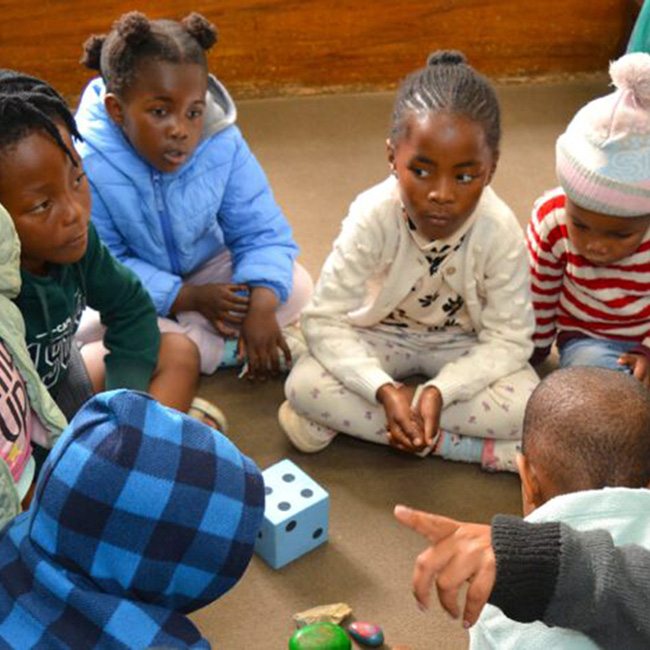
South Africa spends just 1,8% of its budget on ECD, and the damage shows. New research paints a grim picture: only 42% of enrolled 4-year-olds are on track for early learning, with children in higher-fee centres faring better. Alarmingly, 7% show signs of moderate or severe physical stunting, linked to long-term cognitive delays.

Sesotho’s fight for survival in the Western Cape
By Michael Nkalane and Zolani Sinxo
30-11-2025
Teaching is challenging in any circumstances, but instruction in Sesotho is especially tough in the Western Cape, where English, Afrikaans and isiXhosa dominate. This highlights the difficulties for those who speak minority languages in areas where other indigenous languages dominate.

The challenges are real when it comes to the language of learning
By Phalane Motale and Nomsa Moeti
30-11-2025
Oarabile Lentswe and Tsakane Chauke, are both in grade 4, but living in “different worlds” of rural and urban settlements that face distinct mother tongue challengeso. Setswana-speaking Oarabile from the rural North West, struggles with a lack of qualified mother tongue teachers at her school. Xitsonga-raised Tsakane, in Gauteng, navigates a complex multilingual environment and the dominance of English.

What happens to those who can read for meaning?
By Leanne Kelly
28-11-2025
Much attention is paid to the 81% of South African Grade 4s who can’t read for meaning. But let’s take a look at the journey of the other 19% who can – and the teachers and parents who made this happen.

Literacy 101: Send in some good books
By Rod Amner
28-11-2025
The question isn’t whether SA can afford to transform literacy. It’s why available tried-and-tested solutions are not implemented. It is clear: children will read when given the chance to, the support and the encouragement.

If unfixed, new school language policy could derail learning
By Sakhile Dube
28-11-2025
Teachers in KwaZulu-Natal warn that without proper terminology, books, training and classroom support, SA’s Mother Tongue-based Bilingual Education policy may deepen the literacy crisis.

E Cape diverts money that could go to essential teaching
By Rod Amner and Laney van Wyk
14-11-2025
The question isn’t whether the Eastern Cape can afford to transform literacy outcomes. The question is why it chooses not to. Most Foundation Phase learners lack access to resources But since 2020, the Eastern Cape department of education has withheld over R4 billion from no-fee schools.

How a broken city doubled SA’s child literacy rate
By Rod Amner and Simphiwe Xaka
14-11-2025
Makhanda falls near the bottom of performance rates for the country’s municipalities. Yet, amid poverty and dysfunction, 41% of its public school Grade 4 learners can read for meaning – more than double the national average of 19%. How are they doing this?

When home tongues clash with classroom words
By Mohale Manyama and Rod Amner
21-11-2025
In the move to have children learn literacy in their home language in their early school years, the many who speak dialects other than official languages are losing out. This may explain why many do worse in “home” language tests than those testing in English.

How Lenasia South and Orange Farm pre-schools are rewriting their own literacy story
By Orange Farm News
20-11-2025
In a country where less than half of Grade 4 learners can read for meaning, educators in Orange Farm and Lenasia South are demonstrating the power of community initiatives to close the gaps.

Whose language counts? Straddling the Mpumalanga language divide
By Thulani Ngwenya and Nompumelelo Ngcobo
16-11-2025
A tussle among parents over the language of learning at a no-fee primary school in Delmas, Mpumalanga, has parents asking: whose language counts most? The stand-off at Khangela Primary School casts light on the country’s challenges in meeting its goal of ensuring that by 2030 all pupils can read for meaning by Grade 4.

These Joburg South schools are turning language barriers into learning success
BY ORANGE FARM NEWS
18-11-2025
For many learners at Laus Deo Primary School in Orange Farm Ext 6a , the languages spoken at home, like Xhosa and Tshivenda, differ from the Isizulu and Sesotho taught in class – a reality that often slows reading development. But teachers are transforming that obstacle into innovation.
Whose language counts? Straddling the isiNdebele-isiZulu divide
BY Tulani Ngwenya and Nompumelelo Ngcobo
16-11-2025
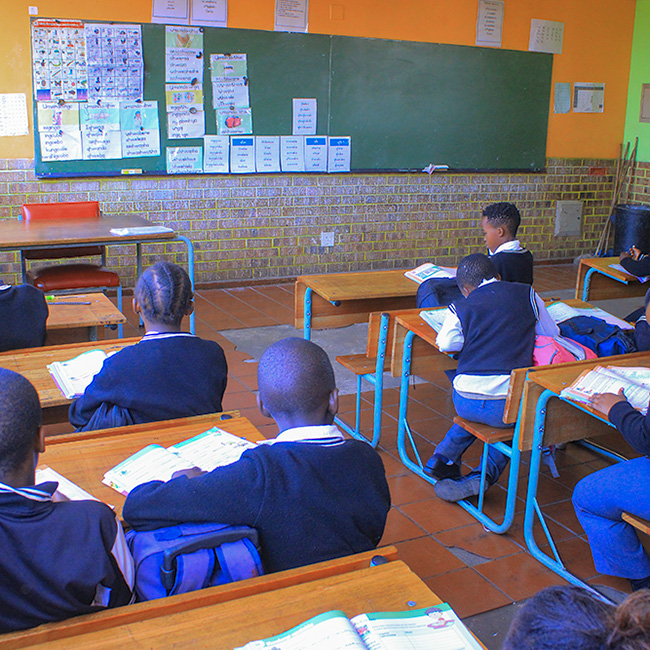
A tussle among parents over the language of learning at a no-fee primary school in Delmas, Mpumalanga, has parents asking: whose language counts most? The tussle unfolded ahead of the milestone release of literacy benchmarks this week that cast light on the country’s challenges in meeting its goal of ensuring that by 2030, all learners by Grade 4 can read for meaning.

Mother tongue Wednesdays: A backyard library reclaims language and learning
BY ORANGE FARM NEWS
12-11-2025
The chatter of children’s voices rises from behind a corrugated gate on a Wednesday afternoon in Drieziek 3, Orange Farm. Inside a small backyard building that was once a storeroom, rows of plastic chairs and low desks fill the space. Here, Abantu Literacy League hosts its weekly ritual: Mother Tongue Wednesdays, a day when English gives way to the languages of home – isiZulu, Sesotho, and to a lesser extent Sepedi, Tshivenda and Xitsonga.

When every kitchen, garden or bedtime story becomes a lesson
BY ORANGE FARM NEWS
07-11-2025
The extension of Mother Tongue-based Bilingual Education (MTbBE) promises inclusion and understanding, but parents on the ground in Orange Farm and Lenasia South, are divided about how language impacts their children’s learning, revealing the tension between preserving identity and preparing for opportunity. Children may learn better in their home language, but English is their passport to a wider world. So how do our schools balance these tensions?

Diesploot literacy projects gives unemployed young people a leg-up
BY ANNA COX AND CECILIA RUSSEL
23-06-2025
A project that uses jobless youth as reading tutors is producing results that speak for themselves. Second in a three-part series on child literacy.

Lessons from champions — turning young rural KZN pupils into literacy superstars
BY CECILIA RUSSELL AND ANNA COX
16-06-2025
In the first of a three-part series on our reading crisis, Anna Cox and Cecilia Russell went in search of civil society organisations tackling the shocking child literacy figures with the ‘each one teach one’ tenet.

A wake up call for education
BY LAURA GRANT AND RO MANOIM
05-06-2025
In our series on child literacy problems, the data wranglers from The Outlier take a two-part deep dive into what lies behind this country’s children’s poor results in literacy tests.
Part 2: Children say they love to read despite dismal reading test results

The Link provides cost-effective literacy to inner city schools
BY ANNA COX AND CECILIA RUSSEL
27-06-2025
Our reporters visit a project that has shown credible results in meeting the challenge of shocking child literacy numbers. The final in a three-part series.

Turning the Page – A deep dive into literacy in SA
BY ARENA JOURNALISTS
02-06-2025
Journalists at the Daily Dispatch, The Herald and The Sowetan worked together to produce this multi-story multi-media probe into the state of children’s reading. Part of our childhood literacy focus, supported by the Binding Constraints Lab / Allan Gray Orbis Foundation
Reproducing Our Stories: We welcome the reproduction and republication of our stories in the interest of wider public access to quality journalism. If you are interested in republishing any of our work, please contact us in advance to request permission and discuss the appropriate terms of use.
Disclaimer: While we support the journalism that appears here, the authors take full responsibility for the content. Any views expressed do not necessarily represent those of the Henry Nxumalo Foundation or its partners.