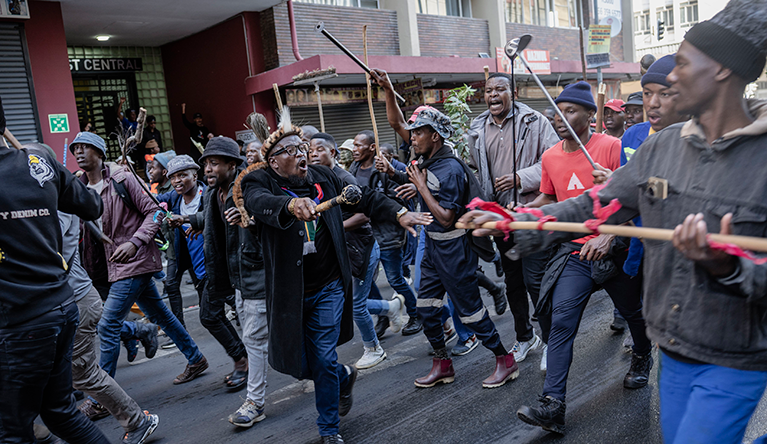
March and March supporters demonstrate in Johannesburg on 30 June 2026. (Photo: Ihsaan Haffejee, GroundUp)
In the weeks since March and March announced a 30 June deadline for undocumented migrants to leave South Africa, tens of thousands of foreign nationals have self-deported from the country. By early September, 129,000 Zimbabweans had voluntarily repatriated, according to Chronicle, a state-owned newspaper. By early August, Malawian news media reported that more than 56,000 migrants had returned to that country.
Around the same time, the South African Police Service (SAPS) reported to Parliament that it had arrested, detained and, in some cases, deported thousands of others.
Still, many foreign nationals – documented and undocumented – have opted to stay and weather an increasingly insecure future in South Africa.
XenoBarometer is a new reporting project that will be published weekly. It seeks to track the anti-immigrant movement, and its impact on politics and migrant communities in the country.
For this first edition, Viewfinder spoke to 13 activists and community leaders representing some of those who have remained. We asked them all the same question: how has life changed for you and your community since 30 June?
Their responses were wide-ranging. But, almost all of them reported a growing sense of insecurity and fear, coupled with shrinking access to services and opportunities to make a living.
In Johannesburg, Claude Kayitare, of the Southern Africa Network for Immigrants and Refugees (SANIR), said that immigrants were still being stopped on the streets of Marshalltown and asked for documents from citizens who associate with the anti-immigrant movement. Sometimes, vigilantes were also extorting these immigrants for money, he said.
In Durban, Gaby Bikombo, of the organisation Refugee Social Services, said documented immigrants driven from informal trading sites remained unable to return to work. Bikombo said immigrants were still being refused access to public healthcare facilities, which had been happening since June last year.
Olorunfemi Adeleke, of the Nigerian community in Tshwane, said many migrants were keeping a low profile because they feared attracting the attention of authorities.
Crispin Kassarombo, of Voice of Africans for Change (VAC) in Bellville, said many had lost jobs and businesses, leaving some struggling to afford rent and basic living costs.
Perhaps the most striking feature of these interviews, however, were accounts of government departments taking actions that appeared to align with, and in some cases advance, the anti-immigrant movement’s agenda. Three cases in particular stood out.
Home Affairs accused of freezing migrants’ bank accounts
Asylum seekers who decide to voluntarily repatriate to their countries of origin cannot simply exit across South Africa’s land borders. The Border Management Authority (BMA) is likely to refuse exit to any asylum seekers who do not first “cancel their application for protection”.
Cancelling one’s asylum application requires presenting at the Department of Home Affairs, and obtaining paperwork to be presented to the authority to ensure passage.
But, according to Isaiaha Mombilo from the Congolese Civil Society of South Africa, some asylum seekers who have attempted to follow this requirement have found their bank accounts suddenly frozen – leaving them unable to access the money needed for their repatriation.
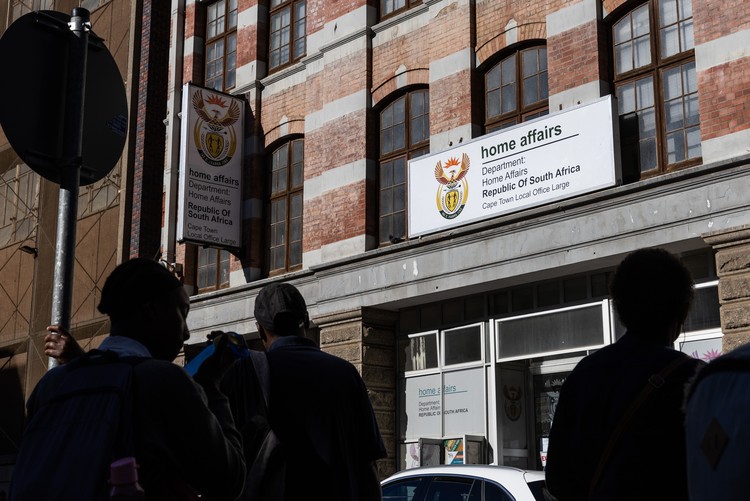
The Department of Home Affairs’ offices in Cape Town (Photo: Ashraf Hendricks, GroundUp)
Mombilo claimed that the Department of Home Affairs was responsible for freezing these asylum seekers’ bank accounts. He said that banks had told affected people that they needed permission from Home Affairs for the accounts to be reopened.
“Some people are still here but cannot access their money, while some people have traveled home without their money. This has only increased the suffering and number of people that need social assistance,” Mombilo said during an interview.
Lumumba Chia, of the South African Refugee-Led Network (SARLN), said he had also received reports of bank accounts being frozen when people’s asylum permits expired.
“People are afraid. Some want to return home, but their money is frozen,” said Chia.
Viewfinder reached out to the Department of Home Affairs for comment. Spokesperson David Hlabane acknowledged the queries and said the department was working on a response. None was forthcoming by the time of publication.
Court win for migrant shopkeepers
On 17 August, the KwaZulu-Natal Division of the High Court in Pietermaritzburg ordered Alfred Duma mayor Zama Sibisi to unlock migrant-owned businesses which were physically shuttered with padlocks during what the municipality had billed as bylaw enforcement operations in June. Alfred Duma Municipality includes the town of uMnambithi, formerly known as Ladysmith, KwaZulu-Natal.
The shopkeepers who took the mayor to court argued that they were documented and legally allowed to operate businesses in South Africa.
Despite having publicly joined March and March protests in the town, Sibisi had said that he was not “victimising” anyone and that the operation was about maintaining “proper standards, especially when it comes to public health and safety.”
Alfred Duma mayor Zama Sibisi at a March and March demonstration in uMnambithi, KwaZulu-Natal, on 2 June 2026. (Photo: Ladysmith Herald)
But, for the shopkeepers, the court’s reprieve was short-lived.
“After we got the court order, we tried to open our shops. They were only open for two days … (then) March and March came and closed down the whole town,” said a community leader representing Congolese, Ethiopian and Burundian shopkeepers.
He asked not to be named, fearing retaliation, owing to the volatile situation in Ladysmith where shops have been looted on several occasions too in recent weeks.
Winelands police detain migrants
The Western Cape Coalition Against Xenophobia reported that more than a hundred migrants in the Winelands area of the Western Cape have been arrested in sporadic raids and detained in overcrowded conditions since June 30.
The coalition alleged that the police have withheld critical information and documents to the detainees. The areas impacted include Robertson, Montagu, Bonnievale and McGregor.
“This is all being done on the pretext that these are undocumented people, despite the fact that many of them do have documents,” said the coalition, in a statement.
SAPS has rejected allegations of indiscriminate arrests and unlawful treatment of detainees.
“SAPS remains committed to ensuring that everyone in its custody is treated lawfully, fairly and with respect for their dignity and constitutional rights,” said Colonel André Traut, quoted in GroundUp which produced a report on the detentions.
This report has been produced by theSouthern Africa Accountability Journalism Project (SA | AJP), an initiative of theHenry Nxumalo Foundationworking withViewfinderand with the financial assistance of the European Union. It can under no circumstances be regarded as reflecting the position of the EU.
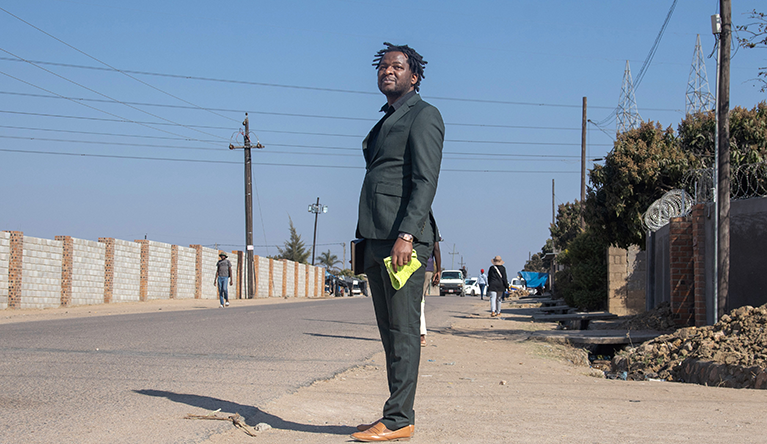
Ronald Madongwe waits for a taxi to take him to church in Bulawayo, Zimbabwe, 09 August 2026. Photo: Aaron Ufumeli/ SA|AJP
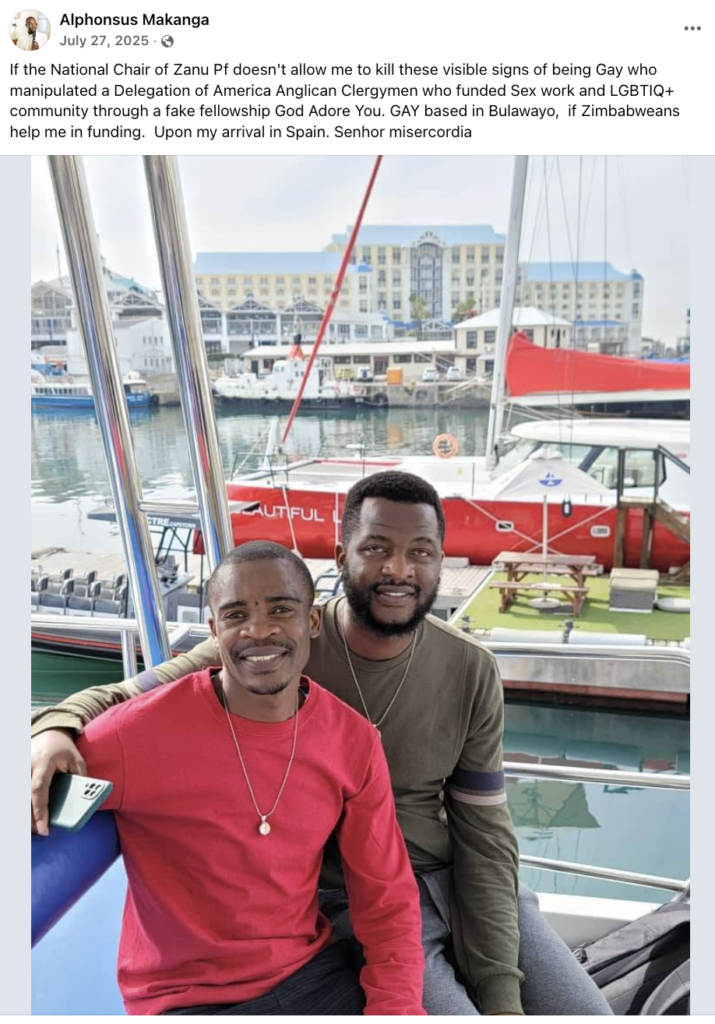
In 2022, Ronald Madongwe, an openly queer Zimbabwean pastor preaching for acceptance of the LGBTQI+ community in a country where homosexuality is outlawed, stumbled across a picture of himself on Facebook alongside a post appearing to call for his murder. The post appeared under the Facebook account of Alphonsus Makanga, a digital creator with about 5,000 followers.
Madongwe was shocked, but not unused to abuse and threats online. He reported the post to Meta’s Reporting Abuse function. Four years later the post still remains publicly visible on Facebook.
Madongwe leads God Adores You, a church-based organisation that works with LGBTQI+ Christians and seeks to challenge religious interpretations commonly used in Zimbabwe to justify discrimination against queer people.
He says online abuse, of the type he was subjected to by Makanga’s post, can easily spill into the real world.
“This harassment from online can result in loss of life, being arrested, and being bullied, and not having peace even when you go around because people know you. It kind of mobilises people against the work that I do or against myself,” said Madongwe in a recent interview.
A wider concern in Zimbabwe
The failure of Meta’s online moderation systems to remove Makanga’s post points to a wider concern that gay Zimbabweans have with homophobic and abusive content circulated on platforms such as Facebook and Instagram.
This reporter reviewed eleven cases of homophobic content posted on Meta’s platforms by users in Zimbabwe. In each of these cases, complaints were filed through Meta’s Reporting Abuse function. Five complaints were filed directly by the reporter during the course of this investigation. Six other complaints had previously been filed by other people, who shared their experiences.
In each of these cases Meta confirmed receipt of the complaints. In response to nine of the eleven complaints, Meta issued an automated response which said that the reported content had been reviewed. Meta’s response added that it had declined to remove it, because Facebook’s automated review had determined the content did not violate the platform’s Community Standards. While acknowledging the material “may be offensive or hurtful”, the company said it “only take[s] down content that goes against our standards” and invited the user to request a further review if they believed the decision was a mistake.
Instagram generated a similar message in response to users’ reports.
The posts and comments reported included death threats, doxing of gay individuals, calls for violence, AI-generated videos of assault and homophobic slurs in Shona and Ndebele. Based on Meta’s published Community Standards, all of those categories would likely fall within content that is prohibited or, at minimum, subject to enforcement.
The people affected
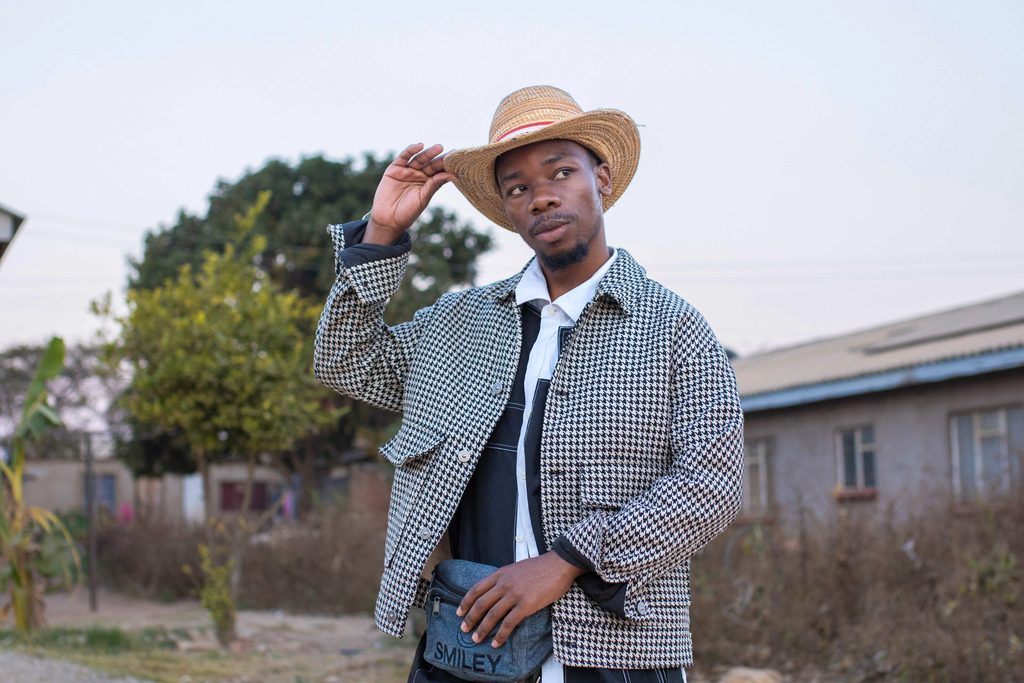
Tinashe Kurapa is a fashion designer based in Harare. Despite living and working in a country where being openly queer carries significant social and legal risk, he has still sought to build his career and brand in public view. He relies on social media to display his collections and connect with a client base. For Kurapa, Facebook and Instagram are essential business tools. But, it is also where much of the abuse he experiences as a queer professional begins.
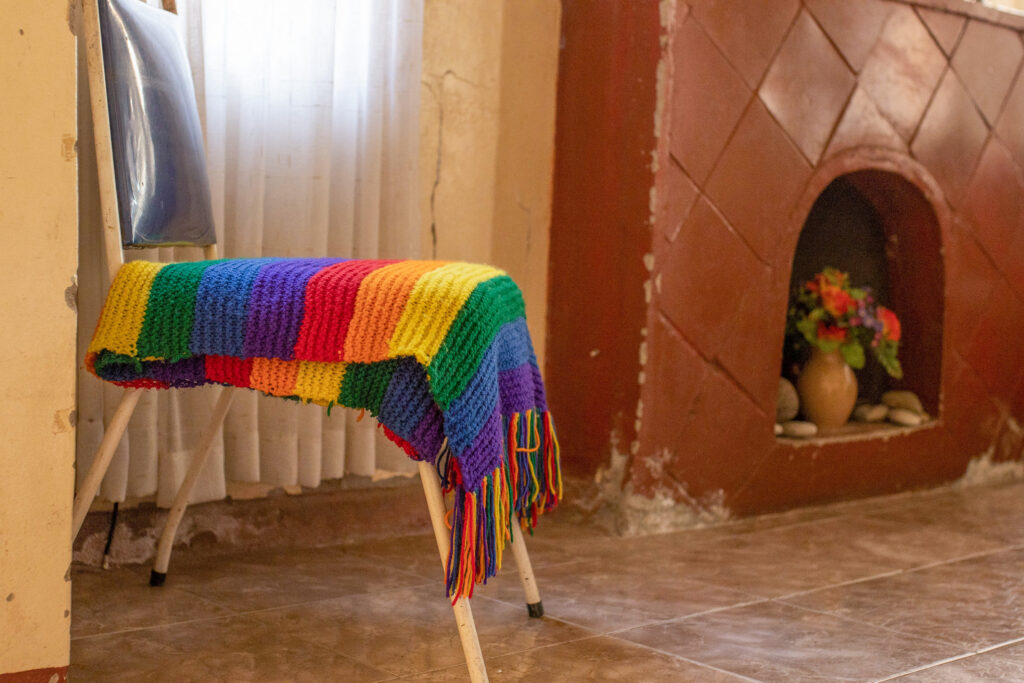
An LGBTQ+ pride flag and the Zimbabwean flag fly outside the offices of Gays and Lesbians of Zimbabwe (GALZ) in Harare. GALZ is a voluntary membership based organisation that advocates for and supports the rights and interests of LGBTQ+ people in Harare, Zimbabwe. 13 August 2026. Photo: Aaron Ufumeli/ SA|AJP
On 20 July 2025, Kurapa posted photographs from the Dream House Academy Awards in Harare on his Instagram page. Instead of celebrating Kurapa’s work, the comment section quickly turned hostile.
One user, under the username itz.meegah, wrote, “Ngochani iyo… dai akaenda kugehena.” (Translated: “That gay person… he should just go to hell.”)
Another user, under the username unclaytontravi, added: “Batai murove kani.” (Translated: “He needs a beating.”)
During an interview, Kurapa confirmed he reported the comments to Meta. In this instance, he said, he did not even receive a response. He eventually deleted the comments himself. For him, this was about protecting his business and brand, and his integrity.
“I’m not achieving my full potential as a professional fashion designer because of this online harm and suffering brand damage as a result,” he said.
“My livelihood is affected.”
The risk of real world violence emanating from the abuse he suffers online is also ever present, he believes.
In April 2025, a Zimbabwean comedian named Chamakuvanga, who has more than 58,000 Facebook followers, posted an AI-generated video depicting himself physically beating Kurapa and locking him in a jail cell, captioned “Ngobhi tinorova” Translated, “we beat up the gays.”
The AI video Facebook post collected 655 likes and 223 comments.
Kurapa reported it on 21 May 2026, shortly after being interviewed for this investigation. Meta responded on the same day with its stock standard response: “Our technology reviewed your report and, ultimately, we decided not to take the content down.”
When checked on 17 June 2026, a month after it was posted, the video was still active. But, it appears that the video has since been removed or the link has been otherwise corrupted.
On 1 March 2026, Zim Stories 24, a public Facebook group with 774,823 members, posted a photo of Kurapa in costume at an event.
“So muZim tatove nengochani dzisingahwande, inga times change umm,” read the accompanying post. (Translated Shona: “So in Zimbabwe we now have gays who don’t hide, times have really changed,”)
A comment posted by user Taurai Kandishaya said that anyone who organises events attended by LGBTQ+ people should be “punished for promoting” homosexuality.
This reporter filed a complaint on Kurapa’s behalf on 9 June 2026. Meta acknowledged it twice, on 9 and 14 June. But, as of time of publication, the post was still online.
Fashion designer Tinashe Kurape in Harare, Zimbabwe, 08 August 2026. Photo: Aaron Ufumeli/ SA|AJP
Enock “Nox” Guni, a multi-award-winning musician with a verified Facebook page and another massive 668,000 followers, posted in Shona calling for the arrest of LGBTQI+ people who had attended the NAMA Awards. The post drew 1,300 reactions and 381 comments.
In the comments, a user named Tinashe Mugwira escalated the call for arrests into explicit vigilante violence. Translated from Shona, his comment read in part: “Give us the strength to grab them when we meet them and beat them. And everyone caught should just go to jail.”
This reporter reported Guni’s post on 19 May 2026 and five days later, Meta issued its stock response, explaining that the post would not be removed. As of the date of publication, it remained online.
Similarly, Meta declined to act on several other reports submitted as part of this investigation, including a post by Harare podcaster prominent DJ Sparks ZW threatening to “expose” prominent gay Zimbabweans, which garnered comments that gay people “must be wiped out.”
This reporter flagged three more pieces of homophobic content with Meta: a video by the creator K. Loopsy argued that gay people should be imprisoned for life because of their “troublesome spirit”; a Pachopisa TV video post purporting to show a gay person being assaulted and encouraging followers to “tag someone”; and homophobic comments on an Instagram reel featuring an LGBTQI+ charity from the outlet Openly.
As of the date of publication, these posts and comments remained online.
Shona language slurs especially likely to remain online
Mkokeli Moyo is a Bulawayo community activist who uses Facebook to amplify the voices of gay and other marginalised people afraid to speak out, describing his work as filling a gap left by the formal media. But that visibility has also made him a daily target.
“My main challenge is that people flood my page with comments, and many of the slurs are in the vernacular Shona or Ndebele. I try to block them, but it is difficult to block (so many) people. If I keep blocking accounts, I could end up getting my own account banned.”
Meta has long faced criticism for failing to adequately moderate content in so-called “low-resource” languages, where its automated systems and human review capacity are less developed than for English and other widely spoken languages. In Zimbabwe, this appears to create an additional blind spot: homophobic abuse written in Shona and Ndebele can more easily evade Meta’s automated moderation, allowing slurs and harassment to remain online despite the platform’s rules against hate speech.
In one such apparent instance, Prince Ryanne Chidzvondo was photographed at the 2023 NAMA Awards by zimcelebs_official, which used the derogatory Shona term “ngochani” to mock him on Instagram. He reported the post to Meta on 2 March 2023 but says he never received a response.
“People have figured out that Shona gives them cover. You can say things in Shona that would (otherwise) be removed. So they use Shona deliberately, not just out of habit, but because they know they will get away with it,” he said during an interview.
Meta fails to respond
Between April and July 2026, this reporter made repeated attempts to obtain Meta’s response to the investigation, sending multiple enquiries to the company’s press offices, communications staff and other official media contacts. The queries detailed evidence that Meta had failed to remove reported homophobic content targeting LGBTQ+ Zimbabweans, particularly abusive posts in Shona and Ndebele.
As of publication, Meta had not substantively responded to any of the enquiries.
An LGBTQ+ pride flag and the Zimbabwean flag fly outside the offices of Gays and Lesbians of Zimbabwe (GALZ) in Harare. GALZ is a voluntary membership based organisation that advocates for and supports the rights and interests of LGBTQ+ people in Harare, Zimbabwe. 13 August 2026. Photo: Aaron Ufumeli/ SA|AJP
Meanwhile, a number of people interviewed for this article say they live in constant fear for the day that online threats spill over into real world violence.
Mkokeli Moyo, the activist in Bulawayo whose account is regularly inundated with hate and threats, said that the hate he has suffered online has put a target on his back.
“I am not free to move around in Bulawayo,” he said.
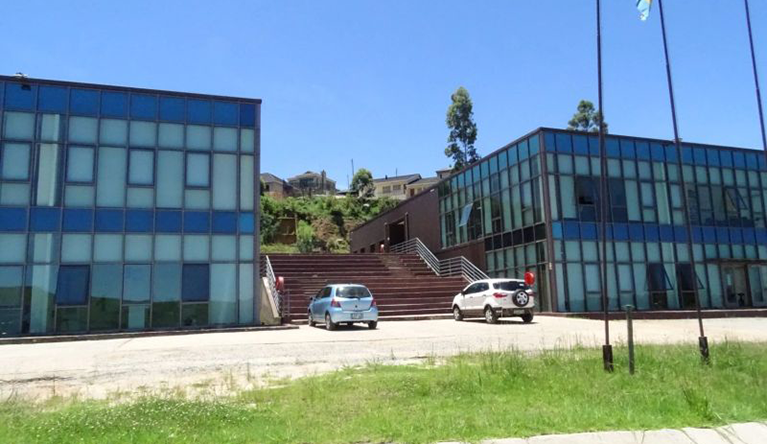
Eswatini Medical Christian University, under investigation for corruption and lapses in governance. Photo: Eswatini Observer
Five of seven Eswatini Members of Parliament appointed to investigate the Eswatini Medical Christian University (EMCU) accepted payments authorised by the very office whose conduct they had been tasked with scrutinising.
The EMCU Council is challenging Prime Minister Russell Mmiso Dlamini’s commission of inquiry into the university as conflicted and legally flawed, but our investigation has revealed that the EMCU Bursar made payments amounting to E99 000 to the MPs while they were part of Parliament’s special investigative committee inquiring into allegations of corruption, governance failures, bribery and financial mismanagement at the university.
The university council’s legal challenge against the PM’s established commission rests partly on the argument that Parliament had already established a legitimate investigation into the same issues.
Financial records we have obtained show that five members of that parliamentary committee accepted EMCU-funded payments before completing their work or tabling their report before the House of Assembly.
Established in October 2025, the parliamentary committee comprises seven members.
Among other things, it is investigating whether payments made by the university to Minister of Education and Training Owen Nxumalo and Principal Secretary Naniki Mnisi were attempts to buy favour from the officials, as the EMCU bursar, Ngwenya, approved these payments.
When offered an all-expenses-paid “teambuilding” trip to Cape Town, two of the committee’s seven members refused, including the committee’s chairperson, Masiphula Mamba.
Mamba later explained that he wanted to avoid a potential conflict of interest.
Yet five other MPs accepted the invitation. They were Mancoba Sihlongonyane, Sithobela MP; Shawnette Henwood, Shiselweni 1 MP; Thulani Nsingwane, Timphisini MP; Futhie Ngcamphalala, Lubombo Regional MP; and Thandeka Mavuso, Manzini Regional MP.
These MPs subsequently travelled to Cape Town at the university’s expense while the inquiry was still underway. The trip took place from November 9 to 12, 2025.
Why Parliament Intervened to Investigate EMCU
EMCU was established in 2007 as a partnership between government and the Africa Continent Mission (ACM), a South Korean missionary organisation.
In October, Parliament established a special investigative committee into EMCU’s finances and governance following months of instability at the university.
There had been repeated staff and student protests over what demonstrators described as management’s failure to address core academic and welfare concerns while continuing to incur significant expenses.
Education And Training Principal Secretary Nanikie Mnisi and EMCU Bursar Alex Ngwenya, who both took money from the university while sitting on an inquiry into allegations of corruption at the university. Photo: Sibusiso Dlamini, Eswatini Observer.
However, EMCU’s management is split into two rival camps, each claiming to legitimately represent the university’s interests.
One faction is led by the university council and Bursar Alex Ngwenya. The opposing faction is led by Vice-Chancellor Professor Paul Seung Hun Yang and staff members aligned with ACM founder Pastor Chong Yang Kim.
At the heart of the dispute between the two groups is the status of more than E50 million in reserves accumulated from government subventions.
The Ngwenya faction argues that the money belongs to the university as a public enterprise. They contend that the funds cannot legally be used for capital projects such as building infrastructure. Such projects, this faction argues, should instead be financed by the ACM.
The ACM faction, on the other hand, believes that the council is trying to cut it out of decision-making processes pertaining to how the E50 million is to be spent.
Yang argues that Ngwenya’s office has amassed disproportionate influence within government by cultivating support among politicians and senior government officials responsible for resolving the dispute.
“Once people visit the resorts, most of them return siding with the bursar,” Yang wrote in a letter to the Parliamentary Investigative Committee Chairperson Masiphula Mamba dated May 5, 2026.
It is this dispute that underpins the wider governance crisis, which ultimately prompted Parliament’s investigation into EMCU.
Payments to Politicians
Apart from the E99,000 paid to the five members of Parliament’s Special Investigative Committee, EMCU records show that the university made a series of other payments to politicians and senior government officials while Parliament’s investigation was underway.
For instance, on January 15, 2026, EMCU paid E216,000 in allowances to 12 other MPs. While these MPs were not on the investigative committee, they would ultimately have power over the impact of the committee’s report when it is considered and debated in the House.
Two senior officials from the Ministry of Education and Training, Nxumalo and Mnisi, have been among the most regular recipients of such payments from EMCU.
Between May 2025 and January 2026, Minister Nxumalo received three payments into his bank account totalling E16,158, E32,400 and E16,200. Over the same period, Mnisi received E8,066 and E18,000.
Accommodation, travel and allowances paid directly to MPs and other officials for two trips to Cape Town and Badplaas, Mpumalanga, cost EMCU a total of E1.43 million.
Conflict of Interest
While the Cape Town trip was still underway, Vice-Chancellor Yang formally warned that it risked compromising Parliament’s investigation.
In a letter dated November 12, 2025, to EMCU Council Chairperson Dr Boy Dlamini, Yang said the trip carried a “high possibility of being perceived as a conflict of interest or even bribery” because Parliament was actively investigating the university.
Such concerns were shared by Committee Chairperson Masiphula Mamba, who, together with MP Lomalanga Dlamini, refused invitations to attend both the Cape Town and Badplaas engagements.
Mamba said he declined the invitations because accepting EMCU-funded trips while leading Parliament’s investigation would have created a conflict of interest.
“I personally did not think it was the right thing to attend those trips,” Mamba said.
Rather than attempting to overrule fellow committee members, he said he referred the matter to the Prime Minister’s Office because he feared the committee would become divided.
Right of Reply Offered to MPs
We asked each of the five committee members who accepted EMCU-funded allowances to respond to the perception that the payments compromised the committee’s independence.
None addressed the question directly.
Instead, Henwood, Mavuso, Ngcamphalala, Sihlongonyane and Nsingwane each referred this newspaper to Mamba, saying only he was authorised to speak on behalf of the committee.
Even after they were informed that Mamba had declined the trips because he believed they created a conflict of interest, they maintained the same position.
EMCU and Civil Society Respond
EMCU does not accept that there was any impropriety.
Registrar Sebenta Menon said the trips were routine workshops intended to brief MPs on the university’s mission, progress and challenges.
He argued that there was no conflict of interest, saying the Speaker of the House would not have permitted the engagements had they been improper.
Civil society organisations disagree.
Coordinating Assembly of Non-Governmental Organisations (CANGO) Executive Director Thembinkhosi Dlamini said the issue was not whether the trips had been authorised, but whether they compromised Parliament’s independence while it was conducting an active investigation.
“What we are seeing compromises the legislative process and widens the democratic deficit in the country because clearly, you can’t give benefits to someone investigating you and then claim they are independent in judgment,” he said.
He called on Speaker Jabulani Mabuza and Senate President Lindiwe Dlamini to intervene.
Minister, PS Exercise Right of Reply
Principal Secretary Naniki Mnisi strongly denied that the payments from EMCU created a conflict of interest.
Although she was the ministry official who communicated the invitation for the Cape Town trip, Mnisi said she played no role in organising the engagements, arguing that such decisions rested with the university council rather than the bursar’s office.
She further maintained that, as the ministry’s controlling officer, she was duty-bound to attend activities organised by institutions under her portfolio, particularly where the use of public funds was concerned.
She also urged that the parliamentary inquiry be allowed to conclude its work before any inferences were drawn.
Minister Nxumalo, on the other hand, did not respond to the questions sent to him via WhatsApp on both his cellphone numbers.
However, when this newspaper questioned him in November 2025 about the controversial EMCU-funded Cape Town trip, he described the participation of members of the special investigative committee as “untidy” and acknowledged concerns that it created the perception of a conflict of interest.
He said he had not been informed of the trip. Nevertheless, financial records reviewed by this newspaper show that less than two months later, in January 2026, Nxumalo was among the politicians who received EMCU-funded allowances.
PM’s Probe Challenged
Before Parliament’s Select Committee concluded its work or tabled its findings before the House of Assembly, the PM established a separate commission of inquiry into EMCU.
Announced on June 18, 2026, the commission is chaired by Mbuso Simelane, deputised by Setsabile Matsebula-Khumalo, with Mangaliso Magagula and Lunga Dlamini serving as commissioners and Hlobsile Ndzimandze as secretary.
The commission was given four weeks to investigate allegations of impropriety, maladministration, misconduct and fraud, abuse of authority, conflicts of interest, governance failures and non-compliance with applicable policies.
The university council, however, opposed the inquiry and successfully obtained an interim High Court order preventing it from commencing while the legality of its establishment is challenged.
In court papers, the council argues that the commission unnecessarily duplicates investigations already being undertaken by Parliament, the Anti-Corruption Commission and the Auditor General.
It also questions the commission’s independence, alleging that Chairperson Mbuso Simelane previously chaired the EMCU Foundation and maintains close ties with university founder Pastor Chong Yang Kim.
The council further alleges that Commissioner Mangaliso Magagula is representing Vice-Chancellor Professor Paul Seung Hun Yang in ongoing litigation involving the university council and the Ministry of Education and Training.
The PM’s Office opposed the application, arguing that the commission had been lawfully established and that the council’s challenge was based on inaccurate facts.
Justice Sabelo Masuku nevertheless granted interim relief, finding that the council had demonstrated the possibility of irreparable harm should the commission proceed before the legality of its establishment had been determined.
The legal challenge therefore leaves the commission on hold while simultaneously leaving Parliament’s own investigation incomplete, with its report still not tabled before the House of Assembly more than eight months after the committee was appointed.
What the Committee’s Terms of Reference Say
Section 7 of the committee’s terms of reference requires members to observe the highest ethical standards and avoid conflicts of interest.
EMCU maintains there was nothing improper about funding the trips and paying the allowances, and this investigation does not establish that the payments influenced Parliament’s work.
What it does establish is that the very parliamentary inquiry now relied upon by the university council as a reason to oppose the PM’s commission of inquiry was conducted by a committee in which five of its seven members accepted payments authorised through the offices they had been appointed to investigate.
A worker pours chicken feed for one-week-old chicks at a poultry farm just outside Harare, Zimbabwe. Photography by Aaron Ufumeli/SAAJP
In a drive to maximise profits, Zimbabwean chicken farmers regularly buy antiretroviral drugs (ARVs), intended for HIV patients in the country, on the black market to mix into chicken feed. Farmers believe that the drugs protect their stock from diseases and act as growth stimulants. This means fewer deaths and quicker turnaround of chickens for slaughter. But, the practice is unlawful and harmful to the health of unsuspecting human consumers of the meat.
The Southern Africa Accountability Journalism Project (SA AJP) interviewed two people operating on the frontlines of broiler chicken farming in the Harare area, both of whom illuminated the practice.
Zimbabwe is a country with a high incidence of HIV. Experts say there are concerns that repeated exposure to antiretroviral residues could interfere with HIV treatment or contribute to drug resistance, although direct evidence for this in humans is limited.
The use of ARVs in chicken feed has been documented in other African countries, notably in studies conducted in Tanzania and Uganda. But, the practice as it occurs in Zimbabwean chicken farms has not been widely known or exposed.
A farmer’s admission
Jane, which is not her real name, is a broiler chicken farmer operating in the Waterfalls neighbourhood of Harare. She agreed to be interviewed at her farm only on condition of anonymity, because she was admitting to doing something illegal. She admitted that she covertly mixed ARVs – illegally purchased from a health worker at a local hospital – into the feed for her chickens.
Jane’s operation sits hidden in a backyard, disguised as an ordinary residential property. From the street, nothing suggests poultry. The main house fronts the property, while a high wall shields what lies behind. At the centre of her property, the chicken houses are out of sight, accessible only through a narrow gate. Staff cottages line the rear, another rear gate leads directly into the pens, and CCTV cameras watch over the compound.
“I get my monthly supply from the health official who has a network of peddlers who handle the business on his behalf,” she said. She held up a small, empty, blue bottle which once had contained the ARVs bought from the official.
A woman holds an empty bottle of ARVs that came from a poultry farm in Harare, Zimbabwe. Some poultry farmers are mixing ARV’s with chicken feed to feed their chickens. Photography by Aaron Ufumeli/SAAJP
“My first interaction with the official was when a fellow farmer introduced me to him. I paid a deposit to show that I was serious about making a purchase from him,” she added.
“He then directed me to his peddler found at Copa-Cabana, a local bus terminus in the Harare CBD, who requested a code which I supplied, and I was given my stash of ARVs.”
Drug peddlers often use coded words or phrases when communicating with their buyers, she explained. These codes can be random names, letters or numbers which are relayed at drug collection points and they are frequently changed to avoid detection.
Jane explained that it was not, at first, the desire to stimulate unnatural growth in her chickens that led her to consider ARVs. She merely wanted to bring down the rate at which her stock was dying from common poultry diseases.
“Mortality was eating my profits”, she said.
“Newcastle disease would sweep through, and I was losing half my birds in some cycles. There was no money left for school fees.”
After hearing about her challenges at a poultry workshop held in Harare, a fellow poultry farmer came to her farm in Waterfalls. For a fee – 100USD paid in two installments – this confidant offered to help.
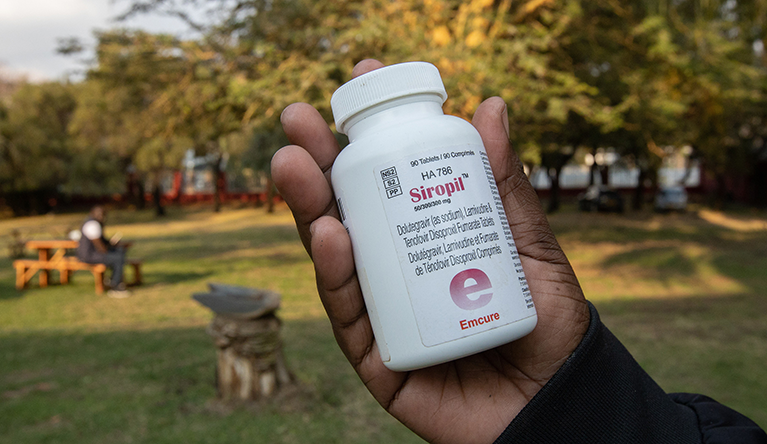
What she offered was TLD, a combination of antiretroviral drugs consisting of Tenofovir Disoproxil Fumarate, Lamivudine and Dolutegravir. It is a once-daily fixed-dose tablet recommended for adults and adolescents, according to Zvandiri. In Zimbabwe, this triple-therapy regimen is the preferred first-line treatment for adults and adolescents living with HIV.
She began mixing the crushed tablets into her chicken’s feed and water.
“The mortality rate plummeted, and my broiler chickens grew faster. I have since expanded my operation from 200 to 10,000 birds per cycle (over a period of about two years). And, instead of waiting six weeks, I could sell them (for slaughter) at just four weeks,” she added.
Unauthorised ARV use in chickens farming is prohibited and harmful to human consumers
According to Zimbabwe’s Medicines and Allied Substances Control Act, medicines intended for human use are regulated separately from veterinary medicines, and using human medicines in food-producing animals without appropriate authorisation is prohibited.
Daniel Zulu is the former Head of the Toxicology and Clinical Department at the Government Analyst Laboratory in Zimbabwe and now runs his own pharmacy business. He said that feeding ARVs to broiler chickens is harmful to human consumers who purchase and consume the meat. Repeated exposure to antiretroviral drug residues, he explained, could pose risks for people living with HIV.
Although the extent of those risks has not been well studied, he was of the strong opinion that HIV-positive patients, who consume poultry exposed to ARVs could potentially see a reduction in the effectiveness of antiretroviral treatment.
Zimbabwe currently has 1.3 million people living with HIV, with 1.2 million of them currently on ARVs, according to statistics from the Zimbabwean Ministry of Health and Child Care.
The loss of USAID funding disrupted HIV service delivery in Zimbabwe, affecting medicine distribution, patient management and clinic staffing. Although the government and other donors have sought to maintain access to antiretroviral treatment, the diversion of ARVs by corrupt officials into the black market could further impact the availability of the drug for those most critically in need.
Other consumers who don’t have HIV may also be exposed to these drugs through contaminated meat. Zulu said this raises concerns about potential long-term health effects, including possible toxicity and other risks that warrant further research.
Farmers believe ARVs stimulate growth and drive profits
Commercial broiler chickens normally follow a 5 – 6 week growth cycle, reaching 2 – 2.5 kg by market age under standard management.
In a 2019 study, Ugandan farmers told researchers they fed antiretroviral drugs to broiler chickens because they believed the drugs promoted rapid weight gain. Researchers confirmed the presence of ARV residues in feed and poultry. (In spite of this widespread belief, no controlled study has demonstrated that ARVs themselves accelerate broiler growth.)
Farmers reported obtaining ARVs within their communities, either for cash or in‑kind payment. Laboratory screening confirmed ARV residues across chicken and pig feed samples.
A Tanzanian study found residues of the antiretroviral drug lamivudine in broiler chicken muscle and blood, pig muscle and blood, and animal feed, providing evidence that human-designated ARVs were being used in animal production.
Still, little research has been done on the practice in Zimbabwe.
An agricultural business advisory officer’s account
Jane’s accounts of feeding her chickens ARVs were confirmed by experiences of an Agricultural Business Advisory officer who works at the Ministry of Lands, Agriculture, Fisheries, Water and Rural Development in Harare. His job entails working directly with farmers to improve productivity, profitability, and resilience in the sector. He also agreed to be interviewed on condition of anonymity, because he is a government official and did not have clearance to speak to the media.
“I have been on site visits to different farms across the country,” he explained, adding that he regularly interacted with farmers who used ARVs as medication and growth hormones for their stock. The practice appeared to be widespread, he said.
“The farmers admitted that they were using ARVs mixed with their chicken feed to accelerate broiler growth for financial gain.”
On these site visits, the officer said he often sought to educate poultry farmers on the dangers of using unprescribed human medication when feeding and treating their broiler chickens.
In his account, the advisory officer described what he considered to be unusual characteristics in the meat of broiler chickens fed with ARVs.
“When slaughtered, the chickens have a reddish abnormal colour that is not found in free-range broiler chicken,” he said.
“The taste of the chicken when cooked is bland and differs from the natural flavour of free-range broiler chickens.”
Other medicines used in cocktail
In Zimbabwe, ARVs are actually just one ingredient in a cocktail of human medications mixed into chicken feed by farmers, said Brian Fungai Chikodze, a registrar for the Council of Veterinary Surgeons of Zimbabwe. ARVs are most often mixed with other antimicrobial agents.
Antimicrobial agents are medicines used to prevent and treat infectious diseases. They include antibiotics, antivirals, antifungals and antiparasitic drugs.
According to the World Health Organization (WHO), the misuse and overuse of antimicrobials in humans and animals, including poultry, accelerates the development of antimicrobial resistance, in which bacteria and other microorganisms evolve and no longer respond to medicines that would normally kill or inhibit them. This makes infections harder to treat in both people and animals.
Antimicrobial resistance (AMR) is one of the world’s leading public health threats.
In February 2026, the Food and Agriculture Organization of the United Nations (FAO) said antibiotic-resistant bacteria are becoming a growing challenge in Zimbabwe’s poultry sector as the country works to reduce antimicrobial use in poultry and dairy production.
“In Zimbabwe, easy access to medicine through informal markets, limited laboratory facilities for testing, and misuse of antibiotics contribute to the growing risk of antibiotic resistance in humans,” the report stated.
The FAO says antimicrobial resistance (AMR) is a global health threat that disproportionately affects sub-Saharan Africa and South Asia. More than 1.2 million deaths were directly attributable to bacterial AMR in 2019, with children under the age of five among the most affected.
In Zimbabwe, the FAO has identified the broiler production value chain as a considerable user of antimicrobials, driven in part by production practices and demand for affordable poultry products.
“Whatever antimicrobial is used in the animals is going to be passed to the human consumers and simple infections become harder to treat, and people will be sicker for longer and in cases die from infections that were previously curable,” Chikodze added.
Jane, the poultry farmer in Waterfalls understands this risk.
“I don’t eat the ARV fed chickens,” Jane said.
“I have my own coop behind my house where I raise free-range chickens for me and my children.”
Government does not respond
Media queries were submitted to the Ministry of Health and Child Care about the likely health implications associated with the allegations that the practice is widespread in Zimbabwe. Spokesperson Donald Mujiri acknowledged receipt of the query, and committed to respond. At time of publication, no such response was forthcoming.
The Department of Veterinary Services, which falls under the Ministry of Lands, Agriculture, Fisheries, Water and Rural Development, did not respond to emails or follow up calls.
Residents of Ethekwini Ward 105 wash clothes in the stream where the surrounding community get their drinking water. Photograph Rogan Ward / SA I AJP
For residents in eThekwini Metro Municipality’s ward 105, every sunrise begins with the same painful routine. Instead of turning on a tap, they pick up buckets and walk long distances to collect water from streams shared with cattle, goats, and dogs. The community says it has not had a reliable supply of municipal water since 2020, with families seemingly waiting endlessly for promises from the municipality to materialise.
Ward 105 is a predominantly rural area on the southern outskirts of eThekwini. Communities live in small pockets of settlements such as Mfume and Odidini which all face high levels of poverty, unemployment and limited access to basic services. Despite falling within the boundaries of a metropolitan municipality, the ward retains a distinctly rural character, with traditional leadership playing an important role in community life.
A resident carries water from a borehole to his home as service delivery issues persist in Ehtekwini Ward 105. Photograph Rogan Ward / SA I AJP
Over the last few weeks, Inkundla Newspaper has visited this area a number of times to see and hear the community’s struggles first hand. Residents described years of suffering and frustration. They accused the eThekwini Municipality and their ward councillor of neglecting them. In this area, they said, there used to be wide access to piped running water. It was flowing well until a series of projects took place which disrupted that access. First, water meter installations in households caused interruptions. Then, in early 2020 a road construction project damaged a main pipe providing water to the community.
A former construction worker on that project, Shadreck Mzulwini, told Inkundla recalled how the pipeline burst during roadworks in March 2020.
“The pipe burst while we were working. We immediately reported it to our manager, who informed the head of construction. We repaired what we could, but the remaining section was left for the Municipality to repair,” he said.
Six years later, residents say that repair has never happened. Furthermore, the water system that once served parts of Ward 105 relied on a borehole pump that fed water to the community’s taps. When the pipeline burst, the pump was also damaged, according to residents. Since then, neither pipe nor pump has been repaired. Resident Ezekiel Nkosi questioned why the Municipality has failed to repair this common infrastrastructure for so long.
“Every year we hear another excuse. First it was the pipe, then the pump. Are we expected to believe a broken pump can take five years to repair? A pump that costs less than R1 million cannot take five years to fix. A broken pipe cannot take seven years. It is clear they do not care. They are good at empty promises,” he lamented.
Daily reality: we “don’t have a choice”
During our visit to Ward 105, we found Siyanda Malunga, a young man washing his clothes beside one of the streams that now serves as the community’s main water source. The stream, known locally as Kwanjapha esihosheni, is located in KwaMpule, about two kilometres from the residential area, and flows through the valley below the community.
“I don’t have a choice. This is where we wash our clothes, collect water, and sometimes even drink. The same stream is used by cows and dogs.”
Nearby, elderly residents waited with buckets while women and children queued for water, then carried heavy containers back to their homes – some balancing them on their heads, others dragging them across the dust. The daily ritual is repeated by hundreds of families. The water crisis is also stealing valuable learning time from children. Grade 11 learner Fanele Njwara says every school day ends with another exhausting journey to fetch water.
“We go to school, come back home, and then spend hours fetching water. By the time we finish, we are exhausted. How are we expected to compete with learners who have running water at home?”
He added that despite years of suffering, he has never seen the current ward councillor Ayanda Ndlovu, meeting residents to discuss their concerns. Residents say they have attended meetings, submitted complaints, and waited patiently for answers. They claim the ward councillor repeatedly promised that the problem would be resolved.
“The ward councillor Ayanda Ndlovu, even sent our school principal to take notes on his behalf so our complaints could be recorded. We believed something would finally happen, but nothing changed,” said a resident who asked to remain anonymous for fear of being victimised by local leaders. Ntombenhle Makhanya, a ward committee member, said she spent years forwarding residents’ complaints to the councillor.
“He knows exactly how we live. I used to pass every complaint to him until he stopped taking my calls. Now the community believes I have betrayed them because nothing has changed.” She said the last time she spoke to the councillor was when he was celebrating his appointment as a regional ANC Treasurer.
“The community has become divided because people believe I am ignoring them and no one is fighting for them anymore,” she said.
In August last year, the eThekwini Municipality spokesperson Gugu Sisilana said that water services had been restored to parts of Ward 105. However, residents interviewed by Inkundla disputed this claim.
“Officials say water has been restored, but that is simply not true. No one from the Municipality has ever come here to check that or explain what is happening. They are neglecting us because we are a rural farming community and uneducated. They remember us when they need our votes, but after elections, they disappear.”
Basic services transfers cost burden to most vulnerable
The health risks continue to grow. Simphiwe and Thokozile Nkosi, elderly pensioners who live in the heart of Ward 105, say they now spend R600 from their monthly pension buying water because municipal water tankers rarely reach their home.
“We are old and cannot go to fetch water. When we ask tanker drivers for help, they tell us to phone the Municipality or the councillor. Nobody takes responsibility,” said Mrs Nkosi.
Former Ward 105 Councillor Simphiwe Kweyama, who served as the community’s elected representative and primary link to the eThekwini Municipality for several years, has watched his successor fail the community. He described the situation as unacceptable.
“These water schemes were built to assist the community. It is disappointing that after all these years, residents are still suffering with no solutions. I have myself reported this to the municipality, and that is how some of these structures were built. But it is sad that after so much work, nothing seems to work, and no one is willing to assist the community.”
The community’s Induna, Thulebone Mkhize, said the water crisis has reached a breaking point.
“Our people have suffered for too long. Water is a basic human right. The Municipality must stop making promises and come here with permanent solutions.”
Residents are now calling on the eThekwini Municipality to conduct an urgent site visit, meet directly with the community, and provide clear timelines for restoring water. Until that happens, Ward 105 residents will keep making the same lonely journey every morning walking to the stream with buckets in hand.
The municipality however disputes residents’ account that an unrepaired pipeline remains the primary cause of the crisis, saying the original pump was later decommissioned and that current shortages stem from ageing infrastructure, vandalism and growing demand.
EThekwini and councillor Ndlovu respond
Inkundla submitted queries to eThekwini Municipality, channeling the frustrations of Ward 105’s residents. Mduduzi Nkosi, head of the municipality’s water and sanitation committee, responded.
Asked whether Ward 105 has a reliable water supply, he acknowledged the ward is on intermittent supply, saying water is rationed between communities. He maintained that most areas receive water at least twice a week and that tankers cover the gaps in service.
He was asked about residents’ complaints that water tanker services are unreliable and rarely reach affected households.
“Water tankers are dispatched based on the number of tankers available to serve the various areas within the South Region. Several communities rely on tanker services, and deliveries are scheduled accordingly; the distribution is done through the relevant ward councillor,” Nkosi said.
He also denied that a long-reported damaged pipeline remains unrepaired, saying the vandalised pump had been decommissioned and supply reconfigured.
“The ongoing supply challenges are attributed to the repeated vandalism of critical infrastructure,” he said.
He added that any confirmed pipeline damage would be repaired, but gave no budget or timeline for upgrades.
Ward 105 Councillor Ayanda Ndlovu also responded to queries. He said the area’s longstanding water shortages stem from ageing infrastructure inherited from the former Ugu District, population growth and illegal connections that have overwhelmed the existing water system.
He said the municipal council had approved upgrades to key water infrastructure in the 2025/26 financial year, with projects including upgrades to the Mfume pump station and reservoir, the Umgodi pump station and the Vumelethu reservoir funded for 2026/27.
Ndlovu said the municipality has relied on water tankers and boreholes to supply affected communities while permanent infrastructure is developed, although tanker services were previously disrupted by procurement issues. He added that boreholes have so far been installed in six areas, with priority given to communities that have never had piped water infrastructure.
Volunteer of the Environmental Management Agency in a clean-up exercise in Harare’s central business district. Photograph Aaron Ufumeli / SA I AJP
In 2010 Zimbabwe’s plastic waste stood at 297,000 tonnes annually, according to a joint University of Zimbabwe and United Nations study. Today it stands at 342,000 tonnes. Of the estimated 1.6-billion plastic containers placed on Zimbabwe’s market every year, only 7.1% is formally recovered, according to Petrecozim, an industry-led post-consumer producer recovery initiative.
This crisis did not emerge overnight. A rapidly urbanising population, swelled by climate-induced migration from rural areas where livelihoods are collapsing, a consumer economy that has embedded plastic into the fabric of daily life, and local authorities too financially strained to sustain basic refuse collection have combined to produce a waste burden that has outpaced every regulatory intervention.
Against that backdrop, the laws were supposed to intervene. They have not. This investigation found two distinct regulatory failures: the non-enforcement of bans on thin plastics and polystyrene that have been law since 2010, and the absence of any legally binding framework compelling producers to recover the plastic waste they generate. At the centre of both failures sits the Environmental Management Agency, the country’s environmental regulatory body.
What the law says
Zimbabwe’s plastic regulatory framework rests on two statutory instruments, a form of secondary legislation used to bring an Act of Parliament into force or alter existing laws.
Statutory Instrument 98 of 2010 prohibited the manufacture, importation and distribution of plastic packaging with a wall thickness of less than 30 micrometres unless it was biodegradable.
To understand what that threshold means in practice: a standard supermarket carrier bag – the thin, crinkly kind that tears easily and goes translucent when held to light — typically measures between 20 and 25 micrometres. A heavier reusable bag or bin liner sits above 30 micrometres. If you can see your hand through a bag when you hold it to the light, it is almost certainly banned.
Statutory Instrument 84 of 2012 strengthened the framework. Section 3(1) re-asserted the ban on thin plastics. Section 3(2) prohibited polystyrene packaging outright — the white foam material used in takeaway containers, meat trays and disposable cups. Section 3(3) required polystyrene users to take responsibility for recycling the material they manufacture and sell.
Most significantly, Section 6 introduced a provision titled “Responsibility of Producers”. It states that any establishment producing, distributing, importing, transporting, recovering or generating plastic waste “must” take all available measures for prevention, reuse, recycling, recovery and disposal at EMA-registered facilities. Any responsible party who wilfully neglects those duties is guilty of an offence liable to a fine, imprisonment for up to one year, or both.
On paper, the regulations are robust. On the ground, they have been dead letters for 15 years.
Failure one: the ban that is not enforced
During visits to markets across Zimbabwe, this reporter found thin plastic bags and polystyrene food containers openly and commercially available despite their prohibition under Zimbabwean law.
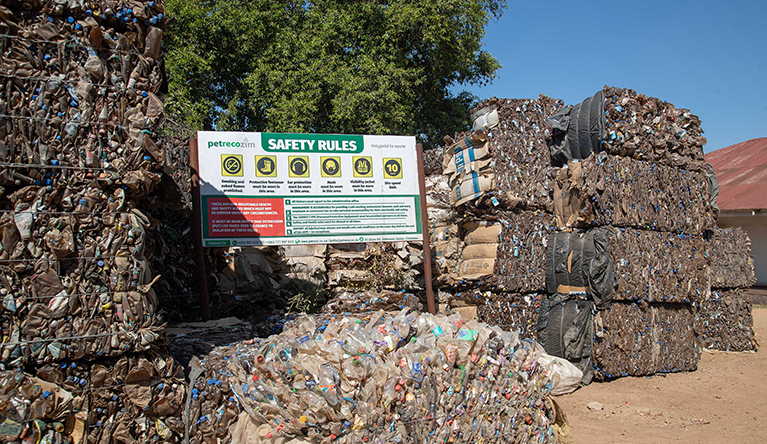
Stacks of used plastic bottles ready for recycling at a plant in Harare. Photograph Aaron Ufumeli / SA I AJP
The Environmental Management Agency is the designated enforcement authority. Under Section 37 of the Environmental Management Act, inspectors may enter premises without a warrant, seize prohibited materials, issue compliance orders and refer offenders for prosecution. Premises may be closed for up to three weeks for non-compliance.
When asked why banned products remain on sale, EMA’s environmental education and publicity manager Amkela Sidange did not address the question.
This reporter asked specifically: “EMA has powers under Section 37 to seize prohibited products and refer violations for prosecution. Why have there been zero manufacturer prosecutions for producing or distributing plastic packaging banned under SI 84 of 2012 or its predecessor?”
Sidange spoke instead about Extended Producer Responsibility — a post-consumer recovery framework entirely separate from the manufacturing ban. “Extended Producer Responsibility is currently a voluntary best practice rather than a statutory requirement,” she said.
Pressed specifically on prosecutions for banned thin plastics and polystyrene, she responded: “Zero prosecutions or fines have been executed specifically for PET recovery non-compliance, as post-consumer PET recovery targets are not yet codified into mandatory regulations.”
The ban on manufacturing and selling thin plastics and polystyrene has been law since 2010. Neither response addressed it.
EMA said seizures and fines had been conducted over the past 24 months, but provided no names, dates, locations, quantities or fine values. The agency also failed to confirm whether any producer has ever filed the waste prevention targets required under Section 6 of SI 84 of 2012 — a mandatory legal obligation. Follow-up questions submitted to the agency on June 15 2026 went unanswered.
The enforcement gap is sharpened by a direct contradiction in EMA’s own public record. In March 2021, EMA Director of Environmental Protection Christopher Mushava told an international meeting convened by the United Nations Environment Programme – attended by the Basel Convention secretariat and the Norwegian Retailers’ Environment Fund — that the plastic ban had achieved a reduction in thin plastic and polystyrene use of more than 95%.
Five years later, EMA confirmed in writing that zero manufacturers had been prosecuted. Markets across Zimbabwe carry the banned products openly. EMA did not reply when asked to reconcile these two figures.
Failure two: a recovery system the law never required
The second failure is distinct in nature but connected in cause. Unlike thin carrier bags and polystyrene, PET plastic is not the target of an outright ban. PET — polyethylene terephthalate — is the clear, rigid material used in water bottles, soft drink bottles and cooking oil containers. It is one of the most recyclable plastics in commercial use. It is also one of the most visibly accumulated in Zimbabwe’s waterways, roadsides and open dumpsites.
According to PetrecoZim — the industry-led producer responsibility organisation whose members include Delta Beverages, Dairibord Zimbabwe, Varun Beverages, Schweppes Zimbabwe and Coca-Cola Central Africa — approximately 5,500 tonnes of PET enter Zimbabwe’s market every quarter. Only 393 tonnes are recovered. That is 7.1%.
Both SI 98 of 2010 and SI 84 of 2012 carry the words “Plastic Bottles” in their formal titles. The body of those instruments tell a different story. The core prohibition applies a 30-micrometre thickness threshold to packaging. A standard PET bottle is rigid plastic typically between 200 and 500 micrometres thick — physically outside the scope of that threshold. Neither instrument contains any provision governing what happens to a bottle after a consumer finishes using it.
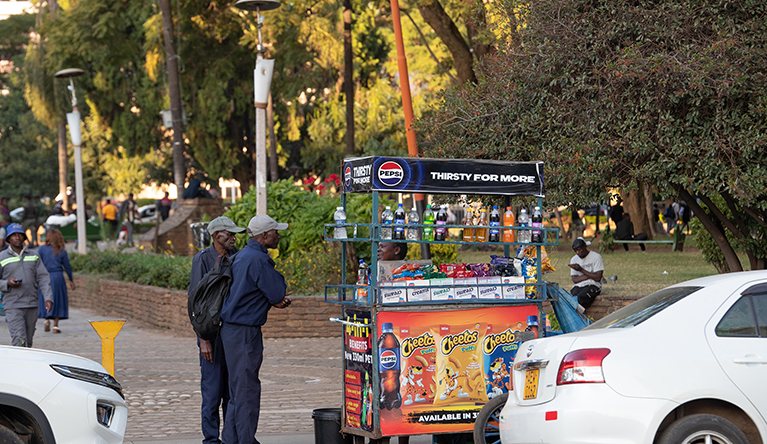
A soft drinks vendor in Harare’s central business district. Photograph Aaron Ufumeli / SA I AJP
“The title of a statutory instrument signals legislative intent,” said Emerge Masiya, an environmental law lecturer at Great Zimbabwe University. “But if the operative provisions do not reach PET bottles, the title cannot create an obligation the body of the law does not establish. The bottles are named. They are not regulated.”
This explains, with legal precision, why the recovery rate is 7.1%. There was never a law requiring anything different.
The voluntary trap
PetrecoZim acting general manager Tendai Nyawiri said the voluntary system has reached its structural limits.
“Benchmarking with regional peers and international systems, EPR cannot work if not legislated,” Nyawiri said. “Members are not obligated to provide reverse logistics. It’s a pro bono service subject to withdrawal and without contractual implications.”
EMA’s own written response confirmed the legal position plainly: “Operating outside of a voluntary EPR network does not make a company an illegal operator under current Zimbabwean law.” A producer placing millions of PET bottles on to the market and recovering none of them has broken no regulation.
Delta Beverages, one of Zimbabwe’s largest beverage producers and a founding member of PetrecoZim, illustrates the structural gap most starkly. On its website, Delta states it has taken “deliberate measures to maintain returnable packaging as the core of its offerings”, and that its approach is based on four principles: reducing packaging material, increasing recycled content, promoting recovery and reuse, and rethinking packaging models.
Yet Delta’s own data shows that more than 70% of its lager beer volume is in returnable packs — a positive step for glass and can formats. For PET bottles, the picture is different.
This reporter submitted written questions to Delta asking it to confirm its annual PET volume placed on the market, its financial contribution to recovery systems, and whether it had ever filed the waste prevention and recovery targets required under Section 6 of SI 84 of 2012. Delta did not respond by time of publication.
EMA confirmed it has never audited whether any producer has filed those targets. The provision has been law since 2012. Thirteen years, no confirmed compliance, no confirmed enforcement.
The law says ‘must’. EMA says ‘voluntary’.
This is where EMA’s shortfall becomes hardest to defend.
Section 6 of SI 84 of 2012 uses the word “must” and attaches criminal penalties for wilful neglect or failure to recover plastic. Yet EMA has consistently characterised producer responsibility as voluntary best practice throughout this investigation.
Masiya said that characterisation is not legally reconcilable with the statute: “The use of ‘must’ combined with criminal sanctions makes this a mandatory obligation, not a voluntary one,” she said. “Punitive measures are usually linked to mandatory obligations. EMA’s position that producer responsibility is voluntary best practice is inconsistent with the plain language of Section 6.”
She grounded her analysis in the plain meaning rule applied by Zimbabwean courts: where words are unambiguous, courts apply their ordinary meaning. There is nothing ambiguous about “must”.
Masiya added that 15 years without a single referral to the National Prosecuting Authority raises questions under the Administrative Justice Act, which requires authorities to act lawfully, reasonably and in good faith.
“Fifteen years of non-prosecution is not the same as choosing which cases to prioritise,” she said. “That is a blanket non-enforcement — and that is a completely different thing.”
A further problem sits inside the law itself. SI 84 of 2012 amended the core thickness prohibition to read “not less than 30 micrometres” — which as written permits packaging below the threshold and prohibits packaging above it: the precise opposite of the intended ban. This drafting error has stood uncorrected for 13 years.
Masiya said courts would apply purposive interpretation and read the provision as originally intended — but the uncorrected error, she said, “affects the credibility of the agency. If enforcement was really mandatory, why didn’t they fix it?” EMA did not respond to questions on this discrepancy.
Political urgency elsewhere, paralysis here
Against the documented failure of plastic regulation, Zimbabwe’s government has projected environmental urgency in other arenas.
President Emmerson Mnangagwa’s monthly national clean-up campaign — running since 2018 — has mobilised citizens to clear plastic waste from streets and rivers on the first Friday of every month. Cabinet approved the Environmental Management Amendment Bill of 2026, introducing tougher environmental penalties. In May 2026, government fast-tracked Statutory Instruments 91 and 92 of 2026, operationalising the polluter-pays principle for river and wetland protection — moving from Cabinet approval to gazetted law within days.
The political will, where rivers are concerned, is demonstrably real.
The Ministry drew a distinction in its formal response: plastic packaging waste, it said, “does not pose the same immediate, life-threatening risk” as alluvial mining pollution, allowing for “a more consultative, economically measured policy approach”.
That distinction is difficult to sustain against EMA’s own evidence. The same agency told international partners in 2021 that plastic waste kills 5,000 animals annually, including elephants, donkeys and cattle; blocks stormwater drains causing urban flash flooding; and releases toxic gases, including dioxins and furans through dumpsite burning.
National clean-up campaigns remove plastic from the environment. They do not stop it being produced or compel its recovery. The structural fault — a law that does not require producers to recover what they generate — remains unaddressed.
The government’s own admission
On June 19 2026, Secretary for Environment, Climate and Wildlife Simon Masanga signed a formal written response to questions submitted by this reporter — the most significant official document this investigation produced.
On the enforcement gap, it noted: “The Ministry acknowledges, without reservation, that the absence of a gazetted, comprehensive EPR framework creates an enforcement gap within Zimbabwe’s plastic packaging regulatory architecture. Statutory Instrument 98 of 2010 established a foundational, high-level obligation for producers to manage the end-of-life lifecycle of their packaging. However, it lacked the specific, mandatory mechanisms required to make that obligation strictly enforceable in practice.”
On EMA’s constraints, it said the Ministry “accepts the assessment that current enforcement actions are legally constrained by the narrow scope of outdated instruments, rather than an institutional lack of enforcement capacity at EMA, and is actively working to resolve this statutory limitation.”
On the reason for the three-year gazetting delay, it stated: “While the draft regulations have been finalised for some time, their formal gazetting is currently deferred pending the evaluation of critical macroeconomic and policy concerns. Specifically, the Government of Zimbabwe is executing an Ease of Doing Business initiative. Introducing a new regulatory levy on business owners introduces a high risk of cascading costs, as businesses are likely to pass these compliance expenditures onto consumers, thereby impacting inflation.”
Masanga also confirmed that standing executive directives currently freeze any pending legislation introducing new levies, taxes or regulatory fees, and that the draft EPR regulations must still clear the Attorney-General’s Office and the Cabinet Committee on Legislation before the Minister can gazette them.
South Africa gazetted mandatory EPR regulations in 2021. Kenya and Rwanda have binding producer responsibility frameworks. Zimbabwe has discussed EPR for more than a decade. The regulations are written, approved in draft, confirmed by the government to exist — and sitting on hold.
A familiar pattern
This is not the first time EMA’s enforcement record has attracted scrutiny. A 2022 Auditor General’s report found that EMA issued 109 wetland enforcement orders between 2014 and 2019 and enforced none of them. The National Environmental Council had not met since 2013. The Auditor General concluded that EMA was not adequately carrying out its statutory environmental protection mandate.
A 2022 peer-reviewed study by University of Johannesburg researchers, drawing in part on interviews with EMA officials, concluded that Zimbabwe’s plastic regulations “have not achieved their intended objectives” and face a systemic threat from “insufficient resources or political will to enforce legislation”.
The Ministry pointed to the Environmental Management Amendment Bill and tightened EIA compliance as evidence of reform. Those measures address development approvals and wetlands. They do not address plastic packaging enforcement.
Fifteen years, one question
This is not about one company. It is about whether Zimbabwe’s environmental laws are actually enforced.
The powers exist. The bans are clear. The mandatory language of Section 6 is unambiguous. The draft EPR regulations are finished and waiting. Banned products are everywhere. Recovery is stuck at 7.1%. The regulations that could change everything are being withheld by executive directive.
When asked why violations continue despite EMA’s extensive powers, Sidange said: “Our current enforcement is not limited by our capacity, but by the scope of the existing regulations.”
The Ministry has now confirmed, without reservation, that the scope of those regulations is insufficient.
What it has not explained is why the fix — finalised, confirmed, ready — continues to gather dust while Zimbabwe’s plastic burden grows, its cities fill with waste, and the question of who bears responsibility for the crisis remains, 15 years on, unanswered.
This report has been produced by the Southern Africa Accountability Journalism Project (SA | AJP), an initiative of the Henry Nxumalo Foundation, with the financial assistance of the European Union. It can under no circumstances be regarded as reflecting the position of the European Union
The numbers at a glance
297,000 tonnes: plastic waste generated annually in 2010 — University of Zimbabwe, 2011
342,000 tonnes: plastic waste generated annually today — EMA, 2021 — up 15% under regulation
1.6 billion: plastic containers placed on market annually — EMA published materials
5,500 tonnes: PET plastic entering market every quarter — PETRECOZIM Q2 2025
393 tonnes: PET recovered every quarter — PETRECOZIM Q2 2025
7.1%: national PET recovery rate — PETRECOZIM Q2 2025
Zero: manufacturer prosecutions in 15 years of plastic packaging regulation — EMA written response, 2026
Zero: companies confirmed to have filed waste prevention targets under Section 6, SI 84 of 2012 — EMA non-response, June 2026
13 years: since SI 84 of 2012 was gazetted without meaningful amendment
3+ years: draft EPR regulations finalised but withheld from gazetting — Ministry of Environment, June 2026
$1.9 billion: declared profit of Zimbabwe’s leading beverage manufacturer — ZSE filings
5,000: animals killed annually by plastic waste as of 2010 — EMA, UNEP presentation 2021
109: wetland enforcement orders issued by EMA 2014–2019 — none enforced — Auditor General, 2022
An artisanal small scale gold miner sieves for gold using mercury on the banks of the Mutare River, Penhalonga, Zimbabwe. Exposure to mercury can damage lungs, the kidneys and the skin Tatenda Chitagu/SAAJP
Despite the government of Zimbabwe’s on-paper commitment to reduce and regulate the use of mercury in mining, the toxic metal remains pervasive and unfettered in the country’s artisanal gold mining sector.
Zimbabwe is a signatory to the Minamata Convention.
The objective of the Convention is to protect human health and the environment from anthropogenic emissions of mercury and mercury compounds. It sets out a range of measures to meet that objective. These measures include controlling the supply and trade of mercury and the regulation of mercury-added products and manufacturing processes. It also commits signatories to reducing, and where feasible eliminating, mercury use in artisanal and small-scale gold mining.
But Zimbabwe’s conformity to the Minamata Convention – while good on paper – seems to be far off the mark, if observations on the ground are anything to go by.
Field notes from an artisanal mining site
In Penhalonga, a mining area 20 kilometres from Zimbabwe’s eastern border city of Mutare, small blue tents are haphazardly strewn across hills opposite a strip of shops.
Men and women of all ages make a beeline to and from the shops. Their bodies, clothes and faces are covered in red clay; often it is only their eyes and mouths that break through the mud.
These are artisanal, small scale miners. At the row of shops they meet vendors who sell all they need: foodstuffs, clothing, shoes, beer and deodorants. Know who to ask, and mercury can also easily be bought by at these shops. It is sold discreetly by vendors who want to cash-in, downstream from the gold boom that is happening in their midst.
The hills adorned with the blue tents house Redwing Mine, which has opened up to artisanal miners for a fee and for a commission from each miner’s takings.
Artisanal miners sieve for gold on the banks of Mutare River, Penhalonga, Zimbabwe. Photograph by Tatenda Chitagu/SAAJP
A muddied and polluted Mutare river runs adjacent to the hills-and scores of illegal alluvial miners are also scouring for gold.
But there is more than meets the eye at the riverbanks, where informal and illegal miners pan for gold.
Soaked knee-deep in the river and without protective clothing, the men and women with plastic dishes filled with mercury sieve for gold. The river feeds into the sole water source for Mutare City, home to 225,000 residents, according to the latest census.
“This is the easiest and cheapest way we can get the gold,” said one artisanal miner in the river. He asked for anonymity, because he is using mercury illegally.
“I do not know about the dangers (of mercury) to my health that you are talking about,” he said.
Mercury is a highly toxic heavy metal that can damage the lungs, skin, and eyes, and can cause severe neurological, cardiovascular, and kidney harm.
It is also particularly dangerous to developing foetuses. Exposure through inhalation of mercury vapour or consumption of contaminated fish can lead to symptoms including tremors, memory loss and sensory impairment.
Another female artisanal miner in the Mutare riverbed, Evelyn Makoni, said that she knew about the dangers of mercury use to both humans and the environment. But, she added that using it was still her only means of survival.
“For now, I am concerned about getting the gold, everything else is secondary,” said Makoni. She is a divorced mother of two who travelled all the way from Bocha District of Manicaland province in search of a livelihood as an artisanal miner.
“I have to fend for my two kids and pay fees for them. Their father is not supporting them, so I have no option but to turn to mercury use and do riverbed panning,” she said.
The lure for gold has been prompted by the high prices that gold is fetching locally and internationally. In Zimbabwe, a gram of gold is currently going for US$140, according to figures released by Fidelity Gold Refinery, the country’s sole gold buyer, refiner and exporter.
On the banks of the river, a second group of miners – ones who have agreements with Redwing Mine to mine legally – also admit to using mercury as an indispensable component to their operations.
“Despite damages to the lungs, eyes and skin, we have no option but to turn to mercury which is efficient and faster (than other less environmentally harmful processes, such as leaching) for gold extraction and detection,” one artisanal miner, who bought a claim in Redwing Mine, said.
The widespread use of mercury in alluvial and reef mining is not isolated to the Penhalonga area. Twenty kilometres away, along Odzi River, alluvial mining and the use of mercury is also rife, our investigation revealed, as artisanal miners snaked along the river, sieving for gold.
Government unlikely to police mercury use
Mercury has been used for centuries, by miners around the world, as an inexpensive and easy way to extract and collect gold from ore and riverbeds.
In 2025, Zimbabwe set a record-high for gold production of 46,7 tonnes, a 28 percent increase over the 36,48 tonnes that the country produced the previous year. Zimbabwe’s gold export earnings were projected at around US$4.5 billion for 2025, according to the Reserve Bank of Zimbabwe.
Artisanal and small-scale miners account for a significant share of Zimbabwe’s gold output, a dependence that experts say complicates enforcement of environmental regulations – including those which seek to police the widespread use of mercury.
In July last year, the United Nations Environmental Programme (UNEP) concluded that 96% of artisanal, small scale gold mining processing sites in Zimbabwe still use mercury. Miners, nearby communities, and ecosystems face chronic exposure to toxic pollution. Women and children engaged in or living near mining activities are greatly affected, UNEP added.
The objective of the Minamata Convention, which Zimbabwe ratified in 2017, is to protect human health and the environment from anthropogenic emissions and releases of mercury. To achieve this, the Convention sets out a range of measures, including controls on the supply and trade of mercury, the phase-out of mercury in existing mining, and the regulation of mercury-added products and manufacturing processes.
It also requires countries to reduce, and where feasible eliminate, mercury use in artisanal and small-scale gold mining.
However, implementation in Zimbabwe remains a challenge.
The thriving black market remains untouched because the dealers are “well connected individuals with links to powerful politicians” or “simply pay hush money to the police” whose camp is less than a kilometre from the shops where the mercury is being sold, according to several miners interviewed for this story.
Open, illegal mercury trade
At Penhalonga’s strip of shops, mercury is traded openly. The police, who have a station less than a kilometer from there, turn a blind eye.
This journalist posed as a gold dealer who wanted to buy mercury to use to sample gold. He was referred to a mercury dealer only identified as ‘Rasta’.
Rasta was found at the back of a Penhalonga shop. He said that a teaspoon goes for US$10, while a tablespoon costs US$20.
“Just come when you are ready, the mercury is here in abundance,” said Rasta.
Sources – one from the Environment Ministry and also a customs agent at the country’s border with Mozambique at Forbes Machipanda – said that smugglers use the porous borderlands to bring mercury into the country.
“The mercury finds its way through informal supply chains and import hubs that include South Africa, Dubai, and China as the main sources (of supply). As part of the process of buying gold, gold lords and their middlemen provide the mercury directly to miners,” the border agent said.
Government’s response
Contacted for comment, the Environmental Management Agency (EMA) admitted having challenges in regulating mercury use, especially in the artisanal small scale mining sector.
“While the controls (in mercury use) have been implemented and the importation is regulated, the Agency is aware of the continued clandestine illegal importation of mercury for downstream use in Artisanal and Small-Scale Gold Mining (ASGM),” said Amkela Sidange, the EMA’s spokesperson.
“The Agency acknowledges that, like any other illegal activity, the sale of mercury on the black market is a complex challenge requiring a multi stakeholder approach. However, Zimbabwe has moved in to strengthen existing interventions by increasing capacity at ports of entry focusing on detection of illegal consignments of mercury and their movement … Offenders found in possession or using mercury unlawfully are subject to penalties in accordance with environmental regulations.”
She added that EMA informs miners about the harmful effects of mercury and other hazardous substances on human health and the environment, through awareness campaigns. EMA also promotes safer, mercury-free alternative technologies for gold extraction, she said.
Zimbabwe’s artisanal small scale gold mining activities use more than 50 tonnes of mercury annually in gold processing, EMA reported. And it is such artisanal miners in Penhalonga, Odzi and many other places countrywide that add to the statistics.
Photo: Three learners outside the chemical toilets at Dzivhani Primary School in Thohoyandou, Limpopo. Photograph: Chris Gilili
Twelve years after the explosion of public outrage over pit latrines in schools, many Limpopo schools still have inadequate sanitation.
While most pit latrines have been demolished, hundreds of schools now depend on badly maintained, rented chemical toilets. Where toilet blocks have been constructed, these are often inadequate for the school’s needs.
Until fairly recently, many schools used pit latrines – unsafe, unhygienic and sometimes deadly. There was a nationwide outcry in 2014 after five-year-old Michael Komape drowned in a pit toilet at Mahlodumela Primary School in Chebeng village, Limpopo.
In 2018, following a legal battle led by NGO Section 27, a High Court landmark judgement declared that the failure to provide safe sanitation at schools violated learners’ constitutional rights to dignity, equality and basic education.
The court issued an order to compel the national and provincial basic education departments to urgently eradicate all pit toilets in Limpopo schools and to provide proper sanitation facilities.
Eight years on, more than 800 of the 3 800 schools in Limpopo still do not have sanitation blocks, , according to the Department of Education (DET). And among schools where toilets have been built there are many complaints of inadequate or unsafe facilities.
Pit latrines have largely been demolished – although there is evidence that they still exist in certain rural places, such as Ga Mashashane. Lukhanyo Vangqa, spokesperson for the national DBE, said that the eradication of pit latrines identified in the SAFE Initiative audit of 2018 is now 99% complete, though he said that some schools might have slipped through the net of the audit and might still be using pit toilets.
“Limpopo had one outstanding school on the SAFE Initiative List. This list is from the 2018 audit. It may not account for pit toilets that may have come up post the audit, or schools that may have got new toilets but decided not to break down the old pit toilets, or even schools that may have been missed by the audit,” said Vangqa.
He said the DBE has requested provinces to conduct their own infrastructure condition assessments, and that the funding for these assessments is “being released” to provincial authorities.
“Once that conditional assessment is done, it will indicate the extent to which pit toilets still exist.”
Where toilet blocks have been constructed, these are often inadequate for the school’s needs, and some schools have been renting mobile chemical toilets, also unsatisfactory, as an expensive stopgap for years.
Why the delays? Limpopo’s provincial education spokesperson Mike Maringa agreed that renting mobile chemical toilets is costly and should only be temporary, but said that the construction of proper toilets, although recommended, is “a process”.
Meanwhile, learners remain at risk. To take just one example, in the past year the department has spent R110 745 on the rental and maintenance of mobile toilets at Mabila primary school, in a village 60 kilometres from Thohoyandou.
Mabila Primary has 130 learners who for years have had to share four chemical toilets, two for girls and two for boys. Such facilities are supposed to be serviced and cleaned every few days, but in March this year the Mabila toilets remained unemptied for more than three weeks, when the service provider could not reach the school because heavy rains had made the road impassable.
Rotshidzwa Maluga, chairperson of the school’s governing body, said it was a dire situation. “The poor kids were suffering. They were sitting on top of faeces and urine for weeks.”
A toilet seat in a bad condition at Mbahela Primary School, Limpopo. Photograph: Chris Gilili
Things are about to get even worse. There are plans to merge Mabila Primary with nearby Ngalavhani Primary, which will result in more than 250 learners sharing four mobile toilets. The proposed merger perversely means that plans to build proper toilet blocks have been put on hold indefinitely
Maluga said he was informed by DBE officials that the decision whether and when to construct hygienic toilets will not be taken until after the two schools are combined.
“The matter is now with district education officials. All we can do is wait for instruction,” he said. “It is frustrating that there nothing we can do, while the kids suffer from the bad stench coming from these toilets. Also, the wind sometimes blows these toilets down and teachers have to try and lift them up again.”
The irony is that construction of toilet blocks at Mabila Primary was all set to commence. Tons of bricks were delivered to the school last year, with the promise that these were for the imminent building of new toilets. Nothing has since happened, and Maluga says the unused and unsecured piles of bricks now pose a safety threat to learners.
These bricks were allegedly donated by the Mvula Trust, a non-governmental organisation which aims to provide sustainable water solutions and dignified sanitation to rural and peri-urban communities. This organisation has been contracted by the DBE to run the Accelerated Schools Infrastructure Delivery Initiative (ASIDI), aimed at eliminating school infrastructure backlogs.
When Maluga contacted the Mvula Trust to ask why construction had not commenced at Mabila, he was told that the plan was on hold because “the person who authorised the building of our toilets passed away. We told them about the danger of all those bricks lying around and they said we can use them for anything.”
Dakalo Mudzielwana, chief financial officer for the Mvula Trust, said the planned construction of toilets at Mabila Primary had been abandoned because the DBE cancelled the contract.
“Please ask the DBE why they cancelled,” he said.
Speaking for the DBE on this matter, Maringa said that the pit latrines at Mabila Primary School were demolished in 2024, and the provincial department was instructed to rent mobile chemical toilets while waiting for budget approval for the construction of proper sanitation blocks.
He did not comment on the bricks already supplied by the Mvula Trust, saying only that the plans to merge the two primary schools had caused the delay.
“The consultations are ongoing. So the department will not build new toilets for the school until this process has been finalised,” said Maringa.
Mudzielwana said that the Mvula Trust is “contracted by the Department to construct a certain number of sanitation facilities per annum depending on budget availability. Since 2013, we have constructed toilets in more than 3 000 schools in Limpopo province. We plan to build sanitation facilities for 201 more schools during 2026/2027, and another 128 during 2027/2028.”
Another school still waiting for adequate sanitation is Dzivhani Primary, about 15 minutes outside Thohoyandou. In 2023, the Limpopo DBE ordered the demolition of 10 dangerous and unhygienic pit latrines at the school. Since this was carried out, the school’s almost 300 learners have had to queue constantly to use six rented mobile chemical toilets: three for girls and three for boys.
Todani Makhado, principal of Dzivhani Primary, said the DBE promised him that building of new toilets would commence within a few months after the pit latrines were demolished. “It has been three years and we are still waiting on that promise. Some schools have been told what their budget is and when they can expect construction to start. In my case, I remain in the dark while my learners are suffering every single day.”
Construction delays and insufficient temporary chemical toilets are not the only issues. In some cases, toilets built by the Mvula Trust – funded by the Department of Education – are inadequate and/or not repaired or maintained.
Frank Mukhaswakule Primary School in Mashau is a case in point. The dangerous and derelict old pit latrines were broken down and burnt by protesting residents in 2018. In 2021, new toilets were finally built, but, says school principal Elizabeth Mashau, eight toilets are not nearly enough for a school that has more than 500 learners. Some of these toilets are now broken and there is also no running water for learners to wash their hands.
Mashau said that apart from needing more toilets and for taps to be provided, her school needs funds for the cleaning, repair and maintenance of sanitation facilities.
Although on paper Limpopo schools have improved their track record in the area of sanitation, these examples show that in practice a lot more attention needs to be paid to the allocation, disbursement and overseeing of funds for the construction of sufficient and properly equipped school toilets. Until then, learners will continue to suffer the indignities and health hazards of poor alternatives.This report has been produced by the Southern Africa Accountability Journalism Project (SA | AJP), an initiative of the Henry Nxumalo Foundation with the financial assistance of the European Union. It can under no circumstances be regarded as reflecting the position of the EU.
An image supplied by Letšeng Diamond Mine shows a Caterpillar haul truck, one of the workhorses of large-scale open pit mining, at the mine Mokhotlong, Lesotho.
Lesotho’s government has given little clarity on why it has stalled and rolled back on projects intended to ensure more of the country’s diamond wealth is captured and retained domestically.
For much of the last decade, since the adoption of the Minerals and Mining Policy in 2015, the government’s official position has been to upend the traditional model of getting royalties from companies extracting and exporting raw diamonds. The policy sought to ensure that diamond mining spins off into sustainable socio-economic development domestically.
To achieve this, the policy proposed that local cutting, polishing, valuation, and trading industries be established in the country.
In practical terms, the government proposed to construct a number of facilities.
Firstly, it proposed to construct a diamond centre. This was envisaged as a centralised facility for handling diamonds domestically, including valuation and pricing, sorting and certification, and potentially also cutting and polishing. This would, in principle, have ensured that more of the value of Lesotho’s diamond wealth was retained in the country.
The construction of a geosciences lab was also planned for. This was to be a technical and scientific facility which could analyse the country’s natural resources. It would have had the ability to test geological samples, support geological research and mineral exploration, and save costs by reducing the country’s reliance on foreign labs and consultants.
A period of progress For a brief period between 2021 and 2022, the Lesotho government, under Prime Minister Moeketsi Majoro, made tangible moves to finally construct these facilities. Sites were inspected, budgets discussed, and commitments made to establish a diamond centre and a geoscience laboratory. In January 2021, Mining Minister Serialong Qoo pledged to deliver the promised diamond centre within the year.
In February 2022, Qoo inspected the proposed site, at an industrial area in Maseru, for a geoscience laboratory. He said that the design phase, costed at M2 million, was at an advanced stage and that construction was imminent pending final utility quotations.
Accompanying the minister at the inspection, Ngakane Ngakane, Lesotho’s Director of Geosciences, confirmed that approval for the lab had already been granted in 2016. Its construction had been delayed by bureaucracy and political instability, he said. Plans included a reported M84 million allocation for construction.
These developments suggested the policy and promised facilities were finally moving toward implementation. Then progress stalled, as Prime Minister Ntsokoane Matekane took office after the October 2022 elections.
As at 2026, more than a decade after the policy’s adoption and years after Qoo’s promise of imminent construction, Lesotho still has no diamond cutting or polishing industry, no geoscience laboratory, and no diamond centre.
Perplexing stall Former minister Qoo said, during a recent interview at his home in Mokhotlong, that the plans had been at an advanced stage in 2022 but were never carried forward. He attributed the halt to a lack of political will of his successors in the Matekane government.
This stall stands in contrast to other projects under the Matekane administration, such as upgrades to central Maseru, which demonstrate the government’s capacity to execute infrastructure projects when prioritised.
Current Natural Resources Minister Mohlomi Moleko has shifted focus away from domestic beneficiation, emphasising diversification, branding, and regional approaches. He has suggested Lesotho’s diamond output may be too small to sustain local processing—marking a departure from the 2015 policy’s vision. When he was asked about local beneficiation during an interview at the Mining Indaba 2025 in Cape Town, South Africa, he said: “With us, it is a bit difficult in the sense that our volumes are too small. We have high-quality stones, but the volumes are too small. I think we do five percent of what Botswana does.
“So, it becomes difficult, if we have four mines, to now start putting in laws which say a certain percentage of the production from these four mines should go for local beneficiation, because we need volumes even to set up those value chains.
“My feeling is that the only way it can be done is in collaboration with other countries. For instance, if Botswana, South Africa, and Lesotho were to say, we are harmonising our laws, aligning them to say that we beneficiate regionally.”
He suggested that Botswana, for example, could serve as an auction centre for the region’s diamonds. Efforts to get a comment from Moleko before publishing this story were unsuccessful. The Commissioner of Mines, Pheello Tjatja, said he was on two weeks’ leave and could not respond to the questions sent to him.
A decade of broken promises The Matekane administration’s quiet retreat from implementing key promises of the 2015 Minerals and Mining Policy is but the latest in a decade-long failure by successive governments.
On 22 May 2015, then Minister of Finance Mamphono Khaketla said in her budget speech that the final draft Minerals and Mining Policy was about to be tabled before the Cabinet for approval. It was adopted later that year.
In Khaketla’s budget speech in 2016, she gave parliament a glimpse of what implementation might look like. Her proposed M39.9 million budget for the Ministry of Mining included proposed amounts of M3.2 million for geochemical mapping, M4.5 million towards the construction of a geoscience laboratory, and of M5 million was proposed for a diamond centre.
“These efforts will enhance government revenue collection, as well as create employment in the future. A sum of M5 million is proposed for establishing a diamond centre. This facility will enable the ministry to value diamonds before they leave the country. It will also be utilised to introduce beneficiation in the diamond industry,” she said.
In 2026, nothing tangible has come from these promises. Lesotho still ships nearly all its high-quality diamonds, famous for exceptional size and price per carat, from mines like Letšeng in rough form to hubs such as Antwerp and Dubai. The country pockets royalties and taxes, but the lion’s share of value addition, jobs, and industrial spin-offs goes elsewhere.
A missed opportunity in contrast to Botswana’s success Lebohang Thotanyana, former Minister of Mining, believes Lesotho missed a historic opportunity to transform its mineral economy.
“The policy was meant to remove the mineral curse of having a rich country in minerals but having poor people. Its lack of implementation is a missed opportunity to say the least,” Thotanyana said, during an interview at his home in Berea in February.
He was Minister of Mining between 2015 and 2017 when Khaketla was minister of finance. He noted that the policy drew inspiration from the Africa Mining Vision, a continental strategy encouraging African countries to process minerals locally before export.
According to Thotanyana, Lesotho could have become a continental leader in beneficiation. Instead, other countries moved faster.
Lesotho stands in contrast to countries like Botswana, which committed to diamond beneficiation as early as the 2000s. The Diamond Trading Company Botswana, a 50/50 joint venture between the government and De Beers, was established in 2006. By 2013, De Beers had moved all its international trading activity, for Botswana operations, from London to Gaborone.
Botswana also continued to sharpen its legislative edge during the same period that Lesotho dithered. In 2015, as Lesotho adopted its policy, Botswana’s parliament was debating a motion calling for comprehensive beneficiation legislation.
By 2017, Botswana amended its Precious and Semi-Precious Stones Act to give the government first option to buy diamonds of exceptional size or quality, a move explicitly motivated by a desire to maximise the value of the country’s most precious diamonds domestically.
In 2022, Botswana adopted a new Minerals Policy explicitly aimed at “value addition activities along the value chain and effective participation by citizens”.
The economic consequences of Lesotho not following suit are profound. Take, for instance, the iconic Lesotho Promise diamond extracted in 2006. It was sold for about US$12 million; its polished value soared past US$50 million. Extrapolating from such examples, it is likely that Lesotho has forfeited hundreds of millions of dollars in potential revenue, with negative knock-on effects on employment and downstream industries, over the years.
Political instability caused implementation stall Political instability bears much of the blame for the country’s failure to implement the 2015 policy. Coalition governments have collapsed repeatedly since 2012 and derailed continuity on multi-year infrastructure projects.
“With all the plans we had in the works, there was a government change mid-term, and this means all the plans fell away when the new government took office, as they had a different idea of running the state affairs,” Thotanyana, Lesotho’s Minister of Mining from 2015 to 2017, said.
In 2017, a motion of no confidence toppled the Mosisili-led government and Thotanyana lost his job. Snap elections ushered in a new coalition led by Prime Minister Thomas Thabane, with Moeketsi Majoro as Minister of Finance. On paper, the mining policy survived the transition.
In his maiden budget speech that year, Majoro said that the Ministry of Mining was “spearheading the construction of a geoscience laboratory to diversify mineral extraction and attract investment.” Over the next two years, Majoro would repeatedly assure parliament that progress was underway. But the words were not matched by action.
The extent to which the old status quo remained untouched can be seen in the wording of lease renewals between the government and some of Lesotho’s largest diamond mines. In October 2019, the lease of Letšeng Diamonds was renewed for ten years. This lease agreement showed that the government’s royalty regime remained fully tied to rough exports, with no provisions to incentivise or mandate local processing.
In 2023, the pattern repeated at Liqhobong diamond mine. Its lease was renewed for another ten years in November 2023, again under unchanged conditions.
The missing framework Experts point to another critical reason for the failure of the 2015 Minerals and Mining Policy: the absence of a supporting legal and regulatory framework.
Mabusela Mabohla, a small-scale miner and outspoken advocate for beneficiation in Lesotho, said that the mining policy would have seen better progress had there been a supporting legal and regulatory framework to anchor it.
A Minerals and Mining Bill was drafted in 2017, he said, but never passed into law. “In order to turn the policy aspirations into reality, we needed to enact supporting legal and regulatory framework, so as to crystallise the national vision on how to exploit our mineral resources more equitably,” he said, during a recent interview.
What Basotho lost The contrast with Botswana grows starker by the year. By 2023, employment in Botswana’s diamond cutting and polishing sector had surged to over 4,200 people, up from 2,200 just a year earlier.
In August 2025, President Duma Boko visited Stargems Botswana, a diamond cutting and polishing company that has trained over 1,100 Batswana, with 76 percent local employment and a P380 million investment in local facilities. Botswana is now pursuing an “aggressive drive for mineral beneficiation” as a central pillar of its economic transformation.
Lesotho, by contrast, has nothing to show for a decade of promises. No cutting and polishing industry. No geoscience laboratory. No diamond centre. No jobs.
The Minerals and Mining Policy of 2015 remains a dead letter, a document of ambition without implementation, of vision without follow-through. And as successive governments come and go, the diamonds keep flowing out, and the opportunities keep flowing with them. This report first appeared in Newsday in Lesotho.
Letšeng Diamonds offices in Maseru, Lesotho. Photograph Khosi Matheka/SAAJP
Zanu-PF supporters checking their names in the Mozambican elections before voting at Rodger Howman Vocational College, Zimbabwe October 9, 2024. Nyasha Mariga/SAAJP
Official voter rolls from the 2024 Mozambican elections contain the names of two Zanu-PF activists and a number of Zimbabweans who do not hold Mozambican citizenship, and who had no legal right to vote in that country’s election.
Some of those Zimbabweans who registered actually went on to vote, fraudulently, in Mozambique’s 2024 elections.
Hundreds more names which appear on these Mozambican voter rolls are suspicious, because those names can be matched to Zimbabwean citizens residing in the same area where the registration of Mozambican diaspora voters on this roll took place: Zimbabwe’s Masvingo Province.
These findings build on a Southern Africa Accountability Journalism Project (SA AJP) exposé from May last year which showed that voter registration in Masvingo Urban and Nemanwa had likely been captured by Zanu PF operatives working to drum up support for Frelimo, Mozambique’s ruling party and long-time ally of Zanu PF.
The voter rolls, given to the SA AJP by the Pan-African Lawyers Union (PALU), contain the names of 2,475 people who were registered to vote in the elections from Masvingo Province.
PALU has formally challenged the outcomes of the 2024 Mozambican elections, in which Frelimo claimed victory, citing alleged human rights violations and electoral irregularities, including alleged fraudulent voting by Zimbabwean citizens. PALU has urged the African Union (AU) and the Southern Africa Development Community not to recognize the incoming government.
Voter rolls support previous findings of election fraud
In 2024, Mozambique allowed citizens who reside outside of the country to register and to vote. As such, there were several Mozambican voter registration stations set up in Zimbabwe and other neighbouring countries.
The exposé of last year outlined that Zanu PF activists had mobilised supporters to report at stations and to register as Mozambican voters. The two reporters working on that investigation had infiltrated this mobilisation drive. They registered along with Zanu PF supporters and later posed for a photograph with their fraudulently acquired Mozambican voter identity cards in hand. One of those journalists actually went on to vote in the election. Neither are Mozambican citizens.
That story cited testimony from a further twenty Zimbabweans who all said they had illegally registered to vote in Mozambique’s election. Their reasons ranged from party loyalty to economic opportunism. Many believed that Mozambican voter identity cards would allow them to cross the border freely for business and trade. Many of the people interviewed allowed us to photograph the voter identity cards issued to them. Each confirmed that they held no dual Mozambican citizenship.
The leaked voter rolls now give further impetus to the claims those people made in interviews last year. Of the people featured in the first report, eleven could be matched to names on the election’s official voters roll. Included were the names of the two reporters.
Zanu PF connection
In 2024, this investigation was triggered by reports that Zanu PF activists in Masvingo Province were mobilising supporters to register for Mozambique’s election. One name that consistently came up in these rumours was that of local party activist Tracey Musakaruka.
The Masvingo Mirror reported from the site of the Roger Howman Training Centre in Mucheke, Masvingo, on 9 October 2024. It was the day of the Mozambican elections, and reporters were interviewing Zimbabweans who were suspected of having registered and then voted fraudulently. While they were doing so, they were confronted by Musakaruka who threw rocks at them.
The voters roll confirmed that a person by the name of “Tracey R Musakaruka” registered in Masvingo to vote in the Mozambican elections. The middle name of Tracey Musakaruka, of Zanu PF, is Rambisayi.
When called for her right of reply, Musakaruka hung up the moment this reporter identified himself. Repeated follow-up calls went unanswered.
The voters’ roll contained another name associated with a Zanu PF leader in Masvingo, that of Mashingaidze Maguchu. Maguchu is the party’s district secretary for youth.
Maguchu was asked over the phone whether he participated in the elections.
“What I know (is that) it was our exercise. I registered because I just wanted to obtain a Mozambican national ID but I didn’t vote because I was not around at the time of voting. I know a lot of people voted,” he said, before declining further questions.
Another woman and Zanu PF supporter from Nemamwa admitted, during an interview, that she fraudulently registered and voted in the election.
Voter cards showing Zanu-PF supporters who are Zimbabweans but voted in the 2024, Mozambican elections.
“Yes, I voted. I am hearing for the first time that the cards issued to us are not national IDs. I am shocked about that because I was preparing to travel to Mozambique using that card,” said the woman. She asked not to be named for fear of reprisal.
Another Zanu PF supporter from Mashava, who also requested anonymity, said she was enticed by what she assumed to be benefits of obtaining a Mozambican voter identity card.
“All along, I was planning to travel to Mozambique, intending to use that card, so if you say it’s just a voter’s ID, I am disappointed. Those people lied to us. However, I am happy that I helped to defeat the opposition in Mozambique, even though I am not a Mozambican,” she said.
The misconception that a Mozambican voter identity card would endow the holder with citizenship rights and benefits – such as unencumbered travel across the border – was common among people interviewed for this and previous stories.
Matches with the Masvingo voters roll
Government insiders in Zimbabwe leaked a substantial portion of the Masvingo voters roll from Zimbabwe’s election in 2023. The databases received contained the names and details of more than 27,000 registered voters in Masvingo Province.
The SA AJP ran the 2,475 names on the Mozambican voters roll against this database for matches. Five hundred and seventy-nine names matched exactly with confirmed Zimbabwean citizens. While dual citizenship is not impossible, these matches still present a red flag. Our investigation has shown that Zimbabweans who do not hold dual citizenship easily registered and voted in Mozambique’s election.
The names of the two Zanu PF officials mentioned earlier in this story – Tracey Musakaruka and Mashingaidze Maguchu – were two names that appeared on both voters rolls.
One of the people interviewed for last year’s story appeared on both voter rolls.
We located and interviewed a further four individuals who appeared on both voter rolls. They all admitted to registering fraudulently for Mozambique’s election. They all spoke on condition of anonymity, because they feared backlash for admitting to a crime.
One said she was misled by people who recruited her.
“We were promised a lot of things by those who were registering people, and our peers who were telling us about a lot of benefits of registering. The registration was open to anyone who wanted to,” she said.
Another man, a second-hand clothes vendor, said he knew about the mobilization in the streets, and people were talking highly of the benefits of voting in the Mozambican election.
“You know, as vendors, we want anything that can benefit us. When I heard of the benefits, like being able to go and buy goods for resale, I fell for it. It was easy. No one asked inquisitive questions, and there was no strict vetting,” he said.
Zanu PF’s response
Approached previously for comment, Zanu-PF spokesperson Chris Mutsvangwa said all people who voted at polling stations in Zimbabwe were, in fact, Mozambicans who had acquired dual citizenship.
When pushed that evidence pointed to the contrary, he remained dismissive.
“The Mozambican election is over. President Chapo is now recognized by the international community,” he said.
“Why do you always look in the rear view mirror? Try to look in front of you.”
Mutsvangwa said that he would answer no further questions on this subject.
Zanu-PF Director of Information Farai Marapira denied any involvement in the fraud.
“I think the people you interviewed misunderstood your questions because there is no way a Zimbabwean can vote in a Mozambican election,” he said last year.
Attempts reaching Marapira on the phone to respond to the findings in this report were not successful, as he consistently dropped the call.
*This report first appeared on Hehandra Radio, Mozambique.