Why the clouds of secrecy over the impacts of SA data centre growth? (Part 4/5)

A typical interior view of a modern data centre. (Source: Switch)

‘Considering how much data is stored in data centres, it is ironic how little data there is available about how they operate.’ — former Imperial College London researcher David Mytton, February 2021.

Electricity and water are two of South Africa’s most vital – and increasingly scarce – public resources. For good reason, their use is subject to strict regulation in terms of the National Water Act and the Electricity Regulation Act.

So any potential threats to the country’s water and energy security need to be considered seriously and subjected to wide public scrutiny and transparency.

And yet, several municipalities, Eskom and some government departments appear reluctant to play open cards in releasing information about the volumes of power and water demanded by current and planned data centres at the heart of the digital and Artificial Intelligence revolution.

Security staff monitor operations inside a major data centre in Nevada, US. (Image: Switch) 

As we have shown in this investigation, data centres have become a significant consumer of both power and water at a global level (In parts of the United States, data centres suck away up to 25% of electricity at a state level. More than 20% of Ireland’s electricity and 7% of Singapore’s power are needed to fuel these energy-intensive data hubs).

Though current power and water demand from local data centres still appears to be low in comparison to bigger global players, no official statistics are readily available at a national or local level in South Africa – apart from the self-reported information provided by some (but not all) data centre companies in their annual sustainability reports.

Our Power Guzzlers series has also highlighted plans by at least two companies to significantly expand or build new data capacity in Johannesburg and Cape Town, cities that have both experienced the economic and social trauma of water stress and load shedding over recent years.

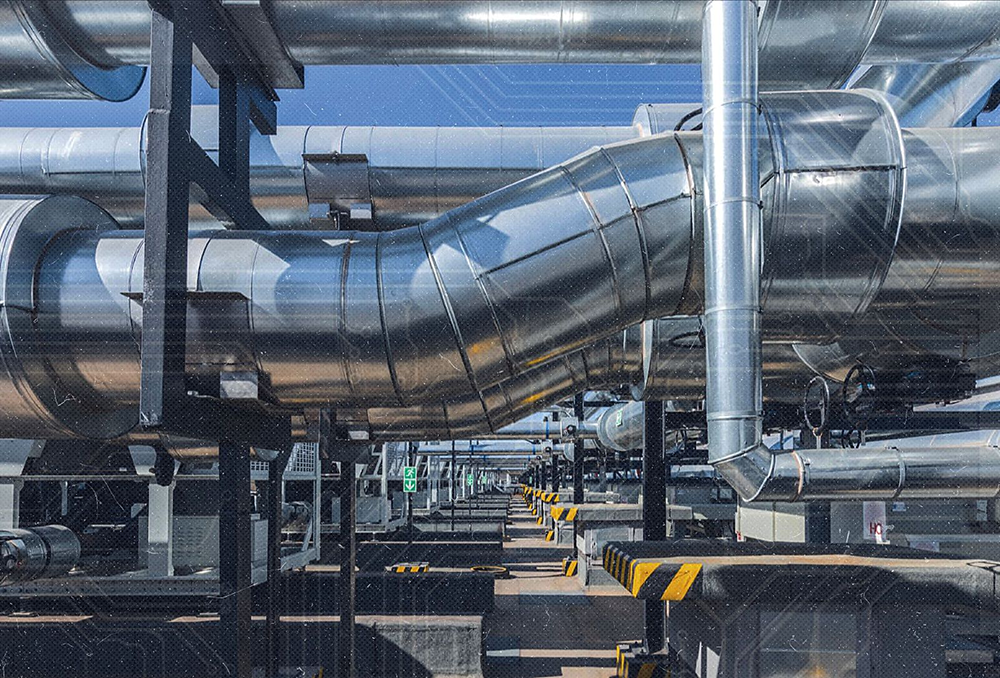
Part of the extensive network of water- and air-cooling pipes on the roof of the Teraco JB4 data centre campus in Isando, Johannesburg. (Image: Teraco) 

Hoping to get a better understanding about power and water consumption at a more local level, Daily Maverick journalists began sending questions to Eskom and several municipalities in July 2025.

Six months later, however, most of our questions remained unanswered – ignored, evaded or blocked on the basis that such information is “confidential” in terms of the Protection of Personal Information Act (Popia) – even though water and most electricity supplies are public resources.

Eskom did not provide us with any data on current and predicted electricity use by data centres, simply noting that it was “closely monitoring both global and local developments in the data centre industry, including the anticipated increase in energy demand driven by advancements in Artificial Intelligence”.

“While specific volumes cannot be quantified at this stage, these trends are being carefully considered and integrated into Eskom’s long-term system planning to ensure that the national grid remains reliable, flexible and well positioned to support future economic growth.”

Power demand from data centres was being accommodated from existing generation and network capacity, and the utility was “engaging with industry stakeholders to ensure this growth is effectively planned for and integrated into the broader electricity system”.

In response to follow-up questions, Eskom said it was “unable to provide any customer-specific information”

“In terms of the Protection of Personal Information Act, Eskom is legally obligated to protect the personal information of its customers and may not disclose identifiable data to third parties, including the media. While we remain committed to transparency, we cannot release information that may compromise customer privacy or the integrity and security of the electricity supply system.”
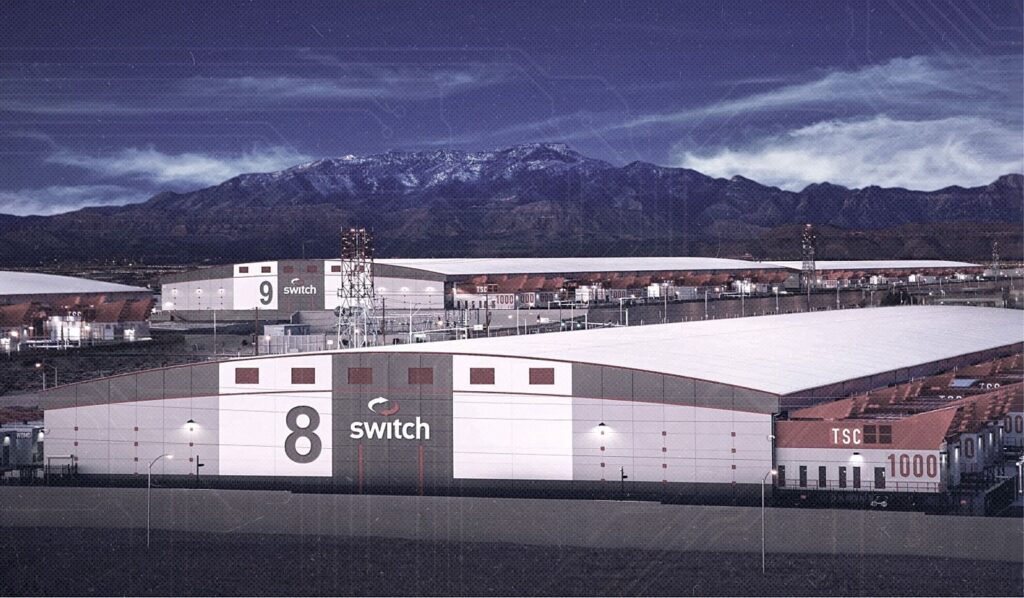
Part of the giant 650 MW ‘Citadel’ data centre in Nevada, US. (Image: Switch) 

At a municipal level, we received either no, or mostly incomplete answers.

The City of Johannesburg and the City of Ekurhuleni, while acknowledging our questions, have provided no responses whatsoever since 31 July and 18 November, respectively.

The City of Tshwane provided a 2025 spreadsheet of water meter readings for five (unnamed) commercial properties in the city, but refused to provide any data on electricity consumption on the basis that this was “private customer data”. Releasing this data without the explicit consent of the account holders would amount to a breach of their privacy, it believed.

“For each of the identified data centres, the city undertook the necessary network upgrades to support their connection needs. The most notable intervention was the upgrade of the Kosmosdal A Substation to accommodate the NTT Johannesburg 1 Data Centre in Centurion,” a spokesperson said.

“The city follows a comprehensive planning model that evaluates current capacity, analyses consumption trends, forecasts future growth, and increasingly incorporates the impact of alternative and embedded generation sources on the network.”

On water use, the city said: “Our review does not show unusual consumption patterns, although some accounts reflect high usage consistent with commercial activity.”
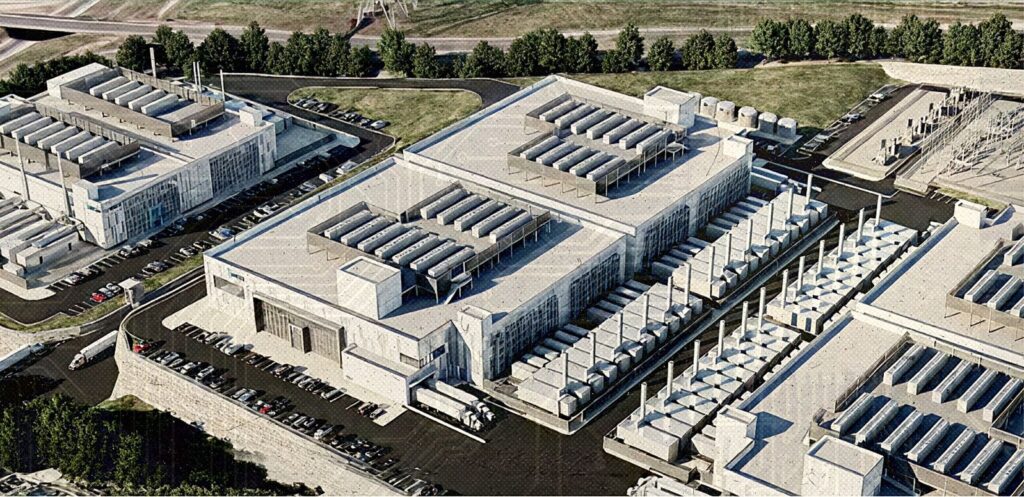
Several data centre operators, including the Vantage group, are planning expansion or new centres across South Africa. (Image: Vantage website) 

The City of Cape Town seems to be adopting a more cautious approach towards wooing more data centres.

Noting that the city’s energy directorate “may not comment on any customer information or business plans”, a spokesperson indicated that Cape Town was reviewing current investment incentive schemes for data centres.

“When the City’s Investment Facilitation Branch (IFB) and Energy teams meet with new prospective data centres, we encourage them to look for sites where there is sufficient electricity supply. This allows existing investments to be maximised, while ensuring the connection to the load can be done in the shortest possible time.

“Our Investment Incentives Policy is currently under review and going forward the revised policy does not provide any financial support specifically for data centres. However, our IFB remains ready to support businesses in bringing data centres to Cape Town while maintaining the highest sustainable standards.”

The Ethekwini municipality did not provide any information on the cumulative volumes of water or electricity used by data centres in Durban, even after Daily Maverick submitted a formal application in terms of the Promotion of Access to Information Act (Paia). That refusal is now under appeal.

The City said it was unable to provide answers because it did not keep records of data centres operating in the city and did not measure the collective consumption of these facilities.

However, the City acknowledged that “This is an area that requires further research, including understanding electricity demand and other potential impacts, to inform future policy development.”

Similar barriers to obtaining information on data centres have also emerged in the United States and elsewhere – including special incentive schemes and non-disclosure agreements between municipalities and data companies.

One example was the The Dalles city council in Oregon, which tried to sue a local newspaper to prevent the release of information on how much water was provided by the city to a large Google data centre. It argued that this was a “trade secret”.

However, The Dalles city council later agreed to release the data and abandon a 13-month legal fight to keep this information secret. The Oregonian newspaper said the affair raised questions about governments’ willingness to defer to large companies on matters of transparency and major public interest.
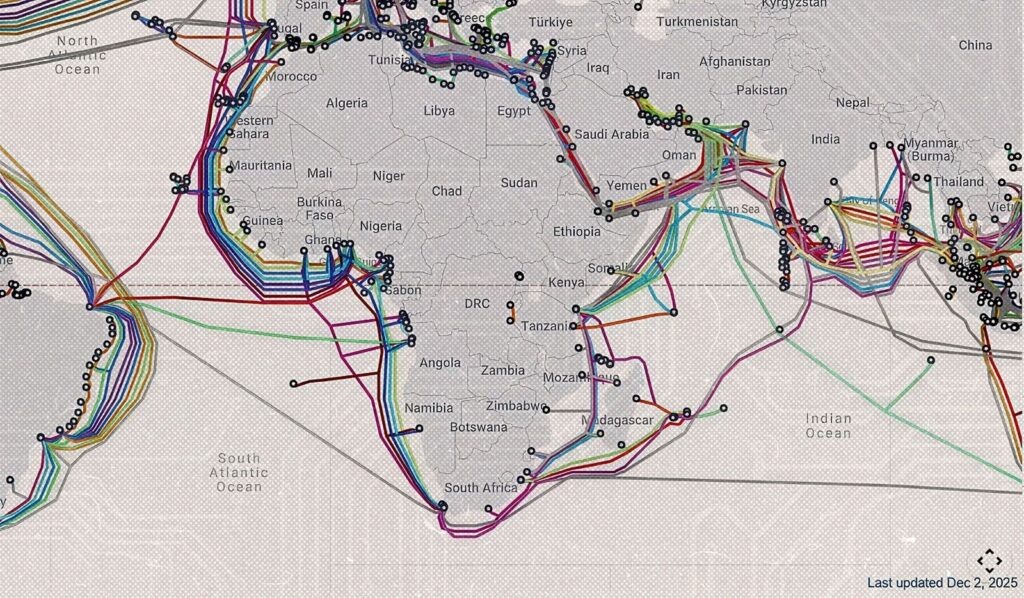

Apart from land-based data centres, the global flow of information is also supported by an extensive network of submarine data cables stretching across the world. (Source: submarinecablemap.com) 

Back in South Africa, the Department of Water and Sanitation said it could not provide any information on purified water use by data centres because municipalities were responsible for supplying potable water for domestic and industrial use.

However, data centres could also apply to the department for (raw) water use licenses.

“The Department has received two water use license applications, in the Western Cape and Johannesburg areas, for raw water for their cooling systems. Information from both applications indicate a combined demand of about 5,000 m3/annum.

“The water is sourced from groundwater resources (boreholes). Based on the information from the two applications, the conclusion we draw is that the demand for data centres is relatively small and it is authorised by way of a General Authorisation, which deals with low-risk economic activities. The applicants make use of highly efficient cooling systems, mindful of the fact that South Africa is a water-scarce country.”

“Based on the existing water demand, the Department is of the view that their increased water demand will be met without negatively impacting the existing groundwater resources.”

Electricity and Energy Minister Kgosientsho Ramokgopa was asked what specific plans were in place to ensure that further growth of data centres did not threaten power supply to the national grid. He said most data centres were embedded within the legal jurisdiction of licensed electricity distribution entities, which were responsible for such power supply.

“ Self-generation is also permissible in law and is subject to jurisdictional rules.”

Asked to provide data on cumulative power volumes supplied to data centres, a spokesperson said the national Electricity and Energy Department developed policies for the sector, but queries on “operational matters” should be directed to municipalities or Eskom.

On the risk of power price increases, the minister said affordability was an issue that affected all users and the government “has plans in place to ensure sufficient supply of electricity and to meet projected demand”. DM

* Additional reporting by Lindsey Scheepers, Julia Evans, Kristin Engel and Ethan van Diemen

This article was made possible in part through support from the Henry Nxumalo Foundation.
The hidden impacts of AI data centres on water, climate and futurepower costs (Part 3/5)

The hidden impacts of AI data centres on water, climate and future power costs

Data centres have a gargantuan appetite for electrical power. But many also consume large volumes of water and generate substantial carbon emissions. Are the full environmental and financial costs being adequately measured or controlled?

To protect computer chips and other sensitive equipment from overheating, large volumes of water and cold air are pumped through data centres across the world.

But the water used for cooling purposes is just one part of a bigger story.

Unless they are powered by low-carbon or renewable energy sources, data centres indirectly use even larger volumes of water during the process of coal mining and burning fossil fuels to generate power.

Yet, at both a global and South African level, there is still relatively little information available about the full impacts of the data centre explosion on the world’s diminishing freshwater resources or human-driven climate change.

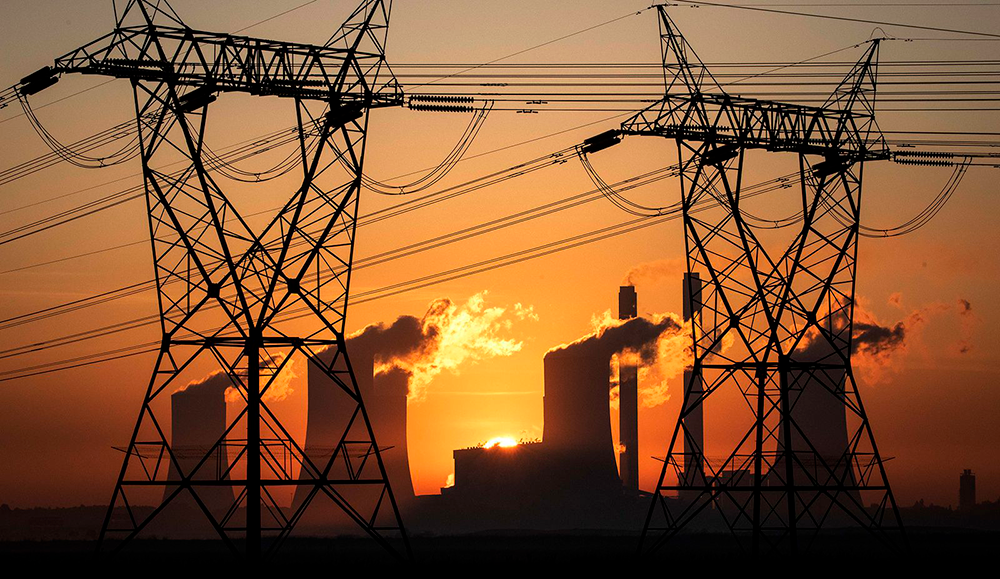
Powerlines lead from Eskom’s Lethabo coal-fired power station in the Free State on 13 April 2023. (Photo: EPA / Kim Ludbrook) 

Former Imperial College London researcher David Mytton reported in 2021 that data centres used relatively little water in the US compared with farming, power generation and other uses. However, less than a third of data centre operators were even measuring water consumption at that time, and the sector has since expanded rapidly.

More crucially, says Mytton, it is essential to measure and monitor the full water demand on a location-specific scale – especially with hyperscale projects such as the xAI “Colossus” data centre in Memphis.

A more recent report by the US-based Environmental and Energy Study Institute notes that the water consumption of about 5,426 data centres in the US is already affecting local communities.

Northern Virginia, considered the world capital for data centres, has more than 300 operational data centres, collectively consuming nearly 7.5 billion litres of water in 2023, a 63% increase from 2019.

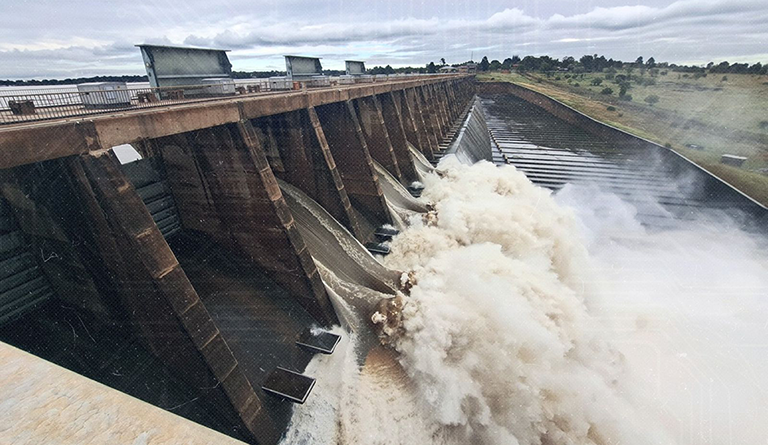
Water pours from the Vaal Dam in Gauteng during a controlled release in April 2025. Concern is growing about the impact of data centres on water security. (Image: Department of Water and Sanitation) 

The institute suggests that some of the larger data centres can consume up to 19 million litres per day, equivalent to the water use of a town of 10,000 to 50,000 people.

One example comes from the town of Bessemer in Alabama, site of a proposed hyperscale data centre. Inside Climate News reported last year that it could consume more than seven million litres of water per day – equivalent to a third of the available water supplied by the local water utility company.

Water use by a Google data centre in The Dalles, Oregon, has nearly tripled in the past five years, and the company’s data centres are now reported to consume more than a quarter of all the water used in this city.

Read more: Growth spurt of data centres could threaten SA’s electricity and water supply

Research by Dutch data scientist Alex de Vries-Gao suggests that global AI systems could have a carbon footprint comparable to a major city such as New York and consume as much water as all bottled water drunk worldwide in a year.

Officials at the International Monetary Fund believe electricity use by the global data centre sector already equals that of Germany or France (see graph), suggesting that indirect water use by the sector is even more substantial.

Electricity consumption by data centres in the United States is climbing rapidly. (Source: 2024 United States Data Center Energy Usage Report) 

Where does the water go?

The International Energy Agency (IEA) estimates that the total water consumption of data centres in 2023 was about 560 billion litres. Of this, roughly two-thirds (373 billion litres) was due to indirect water consumption (energy generation) and only a quarter (140 billion litres) from direct consumption (mainly for cooling data centres). The remainder of the water (about 8%) was used in the manufacture of computer chips and other hardware.

In his study – based on sustainability reports from major tech companies, scientific data on carbon emissions and water use per kilowatt-hour of electricity – De Vries-Gao concluded that previous water consumption estimates by the IEA significantly underestimate indirect water use by data centres and is probably a factor of three to four higher than the official estimate.

He also says that several major tech companies currently do not publish AI-specific figures on the energy and water use of their systems. Therefore, stricter reporting requirements are needed to ensure full transparency.

Similar concerns over transparency have been raised by Alyse Coakley, a policy research assistant at Tulane University in Louisiana. This was partly because water consumption within data centres is often reported using the Water Use Effectiveness metric, often excluding the much larger volumes from electricity generation.

Part of the extensive network of water- and air-cooling pipes on the roof of the Teraco JB4 data centre campus in Isando, Johannesburg. (Image: Teraco) 

Yet sections of the AI and data sector industry have sought to play down such impacts and also resist moves towards tougher monitoring and regulation.

Last year, OpenAI chief Sam Altman asserted that the average ChatGPT query uses the equivalent of one-fifteenth of a teaspoon of water – in sharp contrast to research cited in a Washington Post investigation that generating a 100-word email with GPT-4 required water equivalent to “a little more than one bottle”.

Responding to pressure from European Commission regulators to tighten control on data centres, a major industry group has also criticised plans for new minimum performance standards to conserve energy and water.

The Climate Neutral Data Centre Pact argues that the new standards would focus mainly on the largest operators, excluding smaller facilities. Another industry body, Cloud Infrastructure Service Providers in Europe, recently warned the commission that “burdensome” water use regulations might push operators into other regions.

Closer to home, several South African based data centres are also facing closer scrutiny over their increasing consumption of both water and electricity.

Read more: Major SA data centre expansion plans emerge, set to more than double current power demand

While coal mining and power generation consumed about 7% of water at a national level in 2013, the impacts are more pronounced at a local level. In 2018, power accounted for up to 37% of water use in the Upper Olifants catchment and the largest share of water in the coal-rich Waterberg region.

More nukes, price hikes and ‘beautiful’ coal

An International Monetary Fund working paper last year suggests that electricity prices in the US alone could rise by 8.6% if companies do not adopt renewable sources to power their data centres. Carbon emissions from AI-driven data centre growth could also lead to a 5.5% rise in US carbon emissions over the next five years.

However, any significant switch to renewable energy – in the US at any rate – seems unlikely given that President Donald Trump has signed an executive order titled “Reinvigorating America’s Beautiful Clean Coal Industry” and a second order to “streamline” permit approvals for big data centres.

When it comes to powering data centres, coal-burning is ‘beautiful’, according to Donald Trump. (Source: The White House) 

These pressures from corporate America and other developed nations are likely to ripple outwards into the Global South, according to Lydia Powell and Akhilesh Sati, researchers at the Observer Research Foundation in New Delhi.

Powell and Sati doubt that AI will create a utopian world that is wealthy, environmentally sustainable and equal – nor a converse scenario of a mostly poor, dirty and unequal world

However, they caution that developing nations should be cautious about passively consuming optimistic narratives about the data economy generated by the Global North.

“Companies, rather than countries, have a greater influence on locating data centres, as control of the data economy is almost entirely in private hands.”

Due to increasing pressure to reduce carbon emissions, they suggest data centre expansion could lead to a new form of “climatalogical imperialism” in which developing countries provide the Global North with more land, energy and greenhouse gas emission space to support the data economy.

Researchers from the International Monetary Fund and other groups project that electricity consumption by data centres could equal the current power use of large countries such as Russia by 2030. (Source: IMF) 

They note that the Paris Treaty climate goals require halving data centre emissions by 2030, implying a more aggressive shift to low-emission power.

But renewable energy supplies from wind and solar were intermittent and could not always match real-time peak demand of data centres. As a result, the growth of data centres could lead to a lock-in of fossil fuels – or the re-emergence of nuclear energy as a “clean” power source.

They further note that nearly 60% of the electricity supply in Virginia – home to the largest concentration of data centres in the world – is derived from natural gas, and 30% from nuclear power.

“The development of data centres and AI services is shifting influence on critical decision-making on issues such as the choice of energy source from countries to corporations,” they caution, noting that nuclear energy is emerging as a more dependable energy source for some data centres in the US.

“In the US alone, big tech companies have signed new contracts for more than 10GW of possible new nuclear capacity in 2024, and Goldman Sachs sees potential for three plants to be brought online by 2030.” DM

Next: Clouds of secrecy. Why such silence and evasion over the water and electricity impacts of SA data centre growth?

This article was made possible in part through support from the Henry Nxumalo Foundation.
Major data centre expansion plans set to more than double powerdemand (Part 2/5)

Major SA data centre expansion plans emerge, set to more than double current power demand

South Africa is on the cusp of a hyperscale data-centre boom that could add another 1,000 MW to national electricity demand, driven by massive expansion plans from Teraco and newcomer Cavaleros, alongside Microsoft’s growing cloud and AI footprint.

Just over the past few months, plans for significant “hyperscale” expansion projects in South Africa have emerged that would push current IT power load to well over 1,200 MW – which is equivalent to just over one stage of Eskom load shedding (1,000 MW).

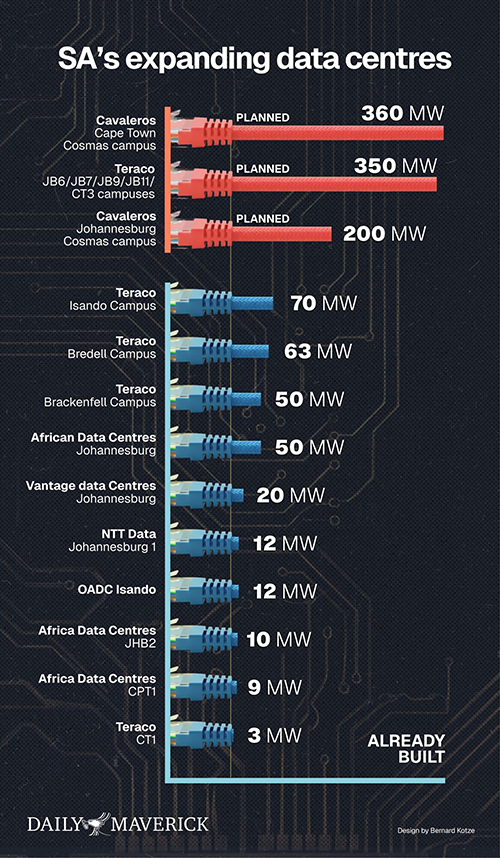
The two biggest expansion projects on the cards involve the Teraco Group (currently the largest data centre provider in SA with an IT load of nearly 190 MW) and the Johannesburg newcomer, the Cavaleros Group.

Shortly before Christmas, Cavaleros announced plans to build two new local data centres – a whopping 360 MW campus on a 100 hectare site in Cape Town and a 200 MW campus on a 40 hectare site in the Kosmosdal/Samrand area north of Johannesburg.

Whereas Teraco is a colocation operator (renting out data centre space to about 670 customers), the new Cosmas Data City project by Cavaleros is believed to be linked mainly to the Microsoft Corporation, which recently announced a multibillion-rand investment to expand its cloud and AI infrastructure in SA.

In a joint announcement by President Cyril Ramaphosa and Microsoft President Brad Smith, the US multinational confirmed a further investment of R5.4-billion (in addition to its previous investment of R20.4-billion over the past three years) to establish SA’s first “enterprise- grade” data centres in Johannesburg and Cape Town.

President Cyril Ramaphosa and Microsoft President Brad Smith announce a multi-billion investment AI and cloud expansion project in SA in March 2025. (Image: Microsoft) 

However, neither Cavaleros or Microsoft would confirm (or deny) whether they had entered a business relationship to develop the two Cosmas Data City developments – by far the biggest data centres in SA and Africa.

A spokesperson for Cavaleros said: “All information relating to occupiers or users is subject to strict non-disclosure agreements,” while Microsoft’s local PR consultants said: “Microsoft does not typically share details about its data centre suppliers and vendors and does not have any new updates to share at this stage.”

Cavaleros said the two new centres would be built in phases, but did not provide any timelines on commencement or completion schedules.

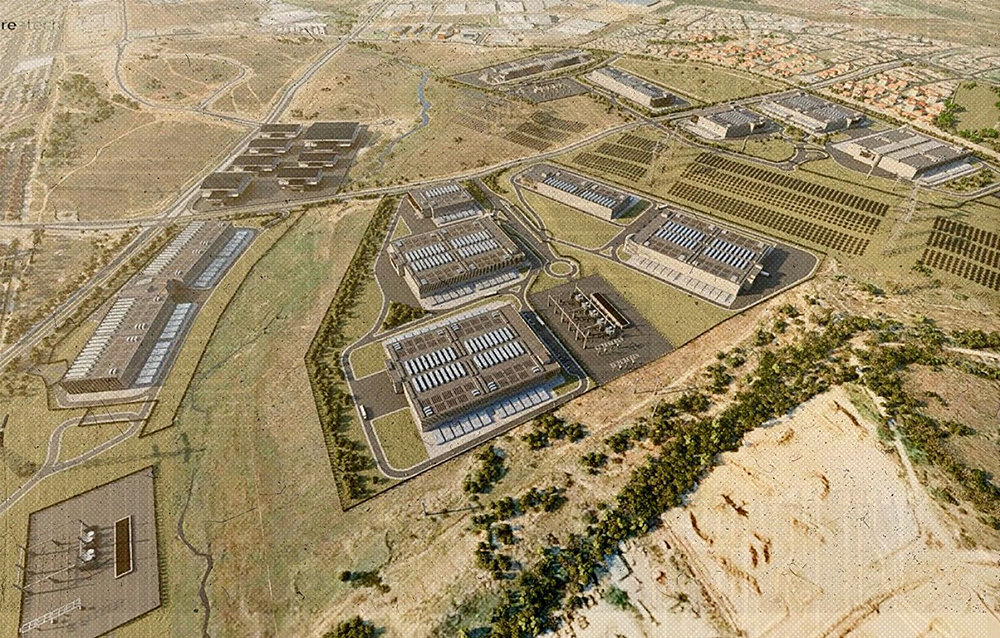
An artistic impression of the giant 200 MW Cosmas Data City project proposed to be built in the Samrand area north of Johannesburg by the Cavaleros property group. (Image: Cavaleros Group) 

Meanwhile, a Teraco document listing current capacities and future expansion plans suggests that the company is targeting 500 MW in total data centre capacity. This would include 290 MW of new capacity in Johannesburg and a further 60 MW in Cape Town, but no timelines have been given.

Other players hoping to expand include Vantage Data Centres, which aim to provide a 100 MW load at two data campuses in Johannesburg.

Whereas the current and future expansion plans in SA may seem like small beer when compared with mega projects like Elon Musk’s 2 000 MW “Colossus” AI data centre in Tennessee, US, local energy analyst Chris Yelland points out that they are “not insignificant” – given the risk of possible supply constraints outlined in a recent Eskom energy outlook report.

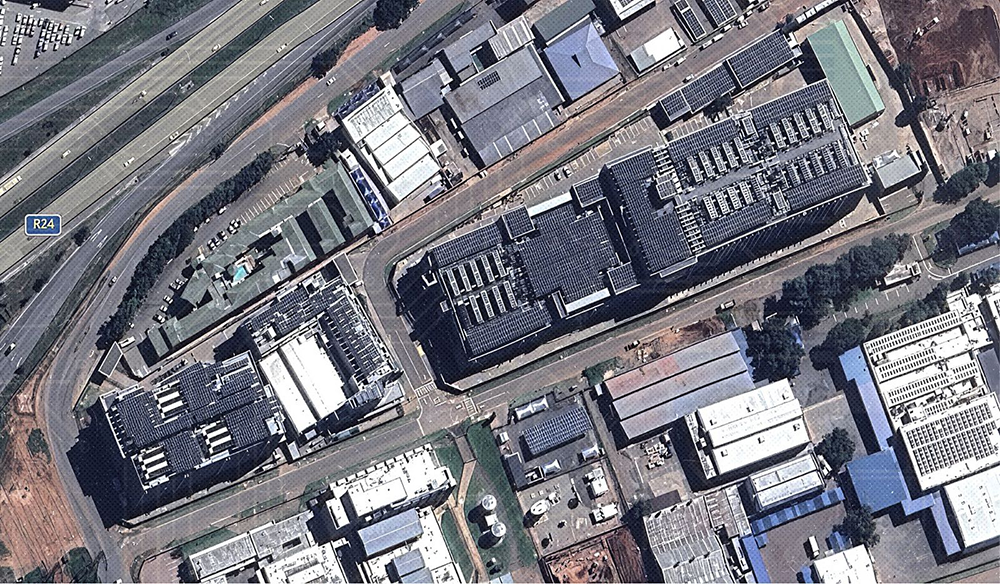
A satellite image of Teraco’s data centre campus near the OR Tambo Airport in Johannesburg, currently the largest cluster in South Africa. (Image: Google Earth) 

Yelland, managing director of EE Business Intelligence, told Daily Maverick that – based on Eskom’s latest risk analysis report – increasing power demand from new large data centres (combined with a possible rollout of electric vehicle charging stations and government subsidies for mothballed metal smelters) would probably lead to constrained electricity supplies by 2029 unless substantial generation capacity was added rapidly.

Read more: Growth spurt of data centres could threaten SA’s electricity and water supply

In a separate analysis piece in Daily Maverick late last year, Yelland said Eskom had also cautioned about a “looming base supply cliff” due to the retirement of certain coal-fired power stations and the expiry of power imports from the Cahora Bassa Scheme. The Eskom power fleet’s energy availability factor (EAF) also remained critical.

Daily Maverick has asked Eskom to provide statistics on current and projected data centre power consumption, without success.

So, in the absence of transparent Eskom statistics and other government sources, the IT peak loads advertised by some data centres gives some indication of their local power use.

A data centre in Ashburn, Virginia, US, where housing developments will soon be walled in by data centres, exemplify the tensions over their unfettered growth. (Photo: Charles A Fazio / Bloomberg via Getty Images) 

However, IT loads may not be an accurate yardstick to measure actual electricity consumption by data centres. Researchers at the Lawrence Berkeley National Laboratory in the US note that data centre servers rarely draw the full wattage for which they are rated on specification sheets.

In a report on US Data Center Energy Usage in 2024, Berkeley Lab scientist Dr Arman Shehabi and fellow laboratory researcher called for much greater transparency around data centres.

“Very few companies report actual data centre electricity use and virtually none report it in context of IT characteristics such as compute capacities, average system configurations and workload types. These details are often considered proprietary …”

The IT loads reported by some local data centres also do not appear to take into account the electricity consumed for cooling and other uses. Depending on cooling mechanisms used, this additional electricity use can eclipse the apparent IT load.

How are centres managing growing power and water demand?

In response to questions from Daily Maverick, Cavaleros marketing manager Mikaela Potgieter said electricity supply and detailed power procurement structures were “commercially sensitive and therefore cannot be publicly disclosed”.

On whether it would draw power from Eskom alone or generate its own power (including renewable energy) Potgieter said: “Any planned additional supply will be regulated, and detailed configurations are not publicly disclosed.”

On whether carbon emissions from the two new Cosmas data sites had been estimated, Cavaleros said: “Environmental considerations are addressed through standard regulatory approval processes.”

Regarding direct and indirect water consumption of the two new centres, the company said water systems would be “designed in line with applicable industry standards and regulatory requirements. Further details are subject to strict non-disclosure agreements.”

Teraco, currently the largest data centre operator in SA, appears to have adopted a much more transparent approach.

Teraco, currently the largest data centre operator in South Africa, has several campuses in Johannesburg, Cape Town and Durban. (Source: Teraco) 

For example, in its latest sustainability report, Teraco provides detailed statistics on total energy consumption over the past four years, along with estimated greenhouse gas emissions and the percentage of renewable or “clean” energy used to offset carbon emissions and power consumption from the national grid.

The company has begun construction of a 120 MW solar PV project in the Free State and also signed a power purchase agreement to source additional renewable wind energy supplies.

Teraco asserts that it is using “zero water” and closed loop cooling systems to reduce water consumption, but nevertheless reports using more than 34,000 kl during the 2025 reporting period (88% of which came from municipal supplies and the remainder from boreholes and rainwater).

“We are firmly on track to supply 50% of our total energy consumption from clean sources by 2027 and achieve 100% clean energy usage by 2035.

“By monitoring and tracking our water usage, our data centres maintain a low water usage effectiveness (WUE) ratio, using only 0.10 L/kWh in 2023, which is less than half a cup of water per IT kWh.

The company adds that: “We are investing massively to reach our targeted goal of 100% renewable energy by 2035 (considering that SA has a national utility that is largely 85% fossil-fuel-based).”

A satellite image of the Amazon Web Services (AWS) data centre in Atlantic Drive, near Dunoon, Cape Town. (Source: Google Maps) 

African Data Centres (which has centres in Johannesburg, Cape Town, Lagos and Nairobi) says it is “committed to achieving carbon neutrality/net zero by 2030 and maximising renewable energy for our pan-African data centre network”.

It has also signed a 12MW power purchase agreement that would increase renewable (wind) energy to over 33% of its South African energy mix through wheeling electricity to three of its local data centres. DM

*Additional reporting by Julia Evans.

Growth spurt of data centres could threaten SA’s electricity and watersupply (Part 1/5)

Growth spurt of data centres could threaten SA’s electricity and water supply

Hype and hope are running high with the spread of artificial intelligence. But is South Africa paying sufficient attention to the risk of a potentially explosive demand for electricity and water by the multitude of data centres at the heart of the AI behemoth?

There are roughly 12,000 data centres scattered around the world, quietly hoovering up huge volumes of electricity, water and mineral resources.

These data centres are the engine rooms of the global IT revolution — cavernous warehouses that house powerful computer servers and networking equipment that store and process the digital data torrent flowing through a multitude of banks, company offices, websites, email and social media platforms.

So far, they only consume around 1.5% of electricity at a global level. But the demand is growing rapidly across the world — an issue that has special relevance for a country still in recovery mode from the social and economic nightmare of load shedding (as well as frequent municipal water supply failures in Johannesburg, Durban and other areas).

Staff monitor data operations from a control room in the massive Citadel data centre in Reno, Nevada. (Image: Switch) 

In a recent report titled Energy and AI, the International Energy Agency (IEA) forecasts that data centres are likely to consume more than 4.4% of global electricity supply within the next decade.

That may not sound like a big deal — but viewing global-scale statistics in isolation dilutes the true impacts at a country, city or local dorpie level.

Look at Ireland, for example, where data centres already suck up 21% of that country’s metered electricity supplies (a five-fold increase over just eight years).

There are also six states in the US where data centres use more than 10% of the electricity supply, with Virginia leading at 25%. In Singapore, more than 7% of national electricity supplies are consumed by data centres.

A chart of global data centre distribution emphasises the dominance of the US. (Source: Visual Capitalist / World Economic Forum) 

One of the main reasons for this rapid increase in data centre power and water consumption is the global deployment of AI, which includes applications such as ChatGPT. The IEA says AI-focused data centres are getting much bigger to accommodate increasingly larger models and the growing public demand for AI services.

Whereas the power drawn from a conventional data centre may be around 10-25 megawatts (MW), the larger AI-focused data centres can draw 100MW or more. One example is The Citadel, a hyperscale facility in Nevada, US, that has been designed to draw up to 650MW of power — equivalent to more than 40% of Durban’s current electricity demand.

This Amazon Web Services data centre is one of more than 300 operational data centres in Virginia, US, that collectively consumed nearly 7.5 billion litres of water in 2023, a 63% increase from 2019. (Photo: Lexi Critchett / Bloomberg via Getty Images) 

An even bigger 2,000MW centre (aptly named Colossus) is under construction in Memphis, Tennessee, by Elon Musk’s xAI group.

The IEA notes that large data centres can consume as much electricity as 100,000 households.

“The largest currently under construction could consume as much as two million households,” says the IEA.

Little surprise then that some very senior power utility executives in the US and elsewhere are worried about meeting surging demand.

In December 2025, Exelon Corporation chief executive Calvin Butler warned that the US energy system warning lights were flashing and could no longer be ignored.

“It’s like you’re driving your car, the ‘check engine’ light is on, and you just don’t want to take it into the shop,” he told Fortune magazine. “I’m telling you on that hottest day or that coldest day, you might have a supply crunch, and people are going to suffer. I’m telling you, you have to fix it now.”

Currently, the largest data centres are in the US, Europe and China, but demand is also rising fast in the developing world. India’s total installed data centre capacity has doubled in only four years, now consuming electricity volumes equivalent to 6.5 million Indian households.

While the US state of Virginia is the global hub for data centres, these energy-hungry facilities are spreading fast across the world. (Source: IEA 2025) 

What about South Africa?

Though power consumption from South African-based data centres appears to be relatively low in comparison to the developed world, Eskom and several municipalities have refused to provide Daily Maverick with electricity consumption statistics by local data centres, asserting that the disclosure of such information is prohibited in terms of the Protection of Personal Information Act or that statistics are not available.

Nevertheless, five Teraco data centres in Johannesburg alone have a combined IT power load of more than 130MW (greater than the municipal power demand of a small city such as Mbombela or Kimberley).

Similar concerns about a potential South African resource crunch were raised in a recent opinion piece published by the National Science and Technology Forum. In the opinion piece, Legal Resources Centre attorney Saadiyah Kadwa and candidate attorney Aaron Tifflin note that the latest digital revolution may come with hidden costs.

“All the personal data we generate — every click, message and photo — is stored not in some abstract cloud, but in physical facilities. Despite its fluffy-sounding name, the cloud is not floating somewhere in the sky. It refers to a network of remote servers and infrastructure, maintained by tech giants, that allows data to be accessed over the internet.

“These cloud services are underpinned by physical data centres, which are massive facilities that house the servers, chips and networking equipment required to store and process digital information.”

A typical interior view of a data centre. Because electrical heat generation is so high, further large volumes of electricity and water are needed to keep them cool. (Image: Switch) 

And as data centres expand, the electrical demand and other environmental trade-offs remain ill-explored, say Kadwa and Tifflin.

“As the country positions itself as a player in the global AI economy, we must ask: at what cost? Technological advancement must go hand-in-hand with transparency, accountability, and responsible stewardship of our natural resources.” DM

>