
Six months after an explosion seriously injured workers at a Harare scrap metal recycling company, questions remain over whether Rungs Mining Products and the National Social Security Authority (NSSA) fulfilled their legal duties.
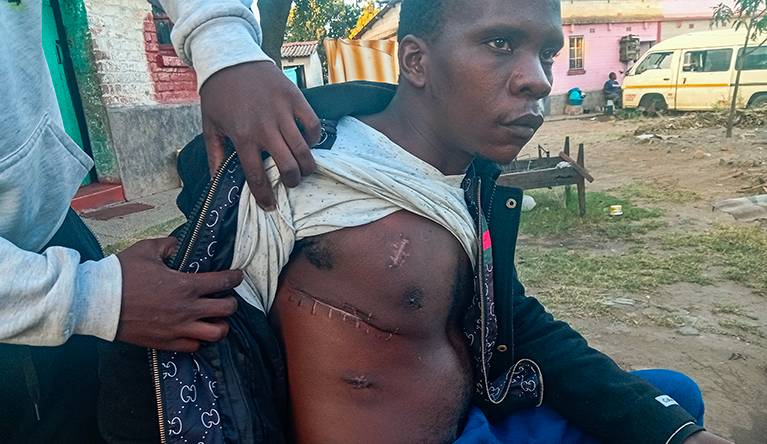
The blast occurred at the Chinese-owned firm’s scrap yard on Craig Road, Harare, on March 24, after employees found live explosives mixed with scrap metal they were unloading from a truck. Worker Rodric Tore was left fighting for his life in hospital, while another colleague suffered serious head injuries.
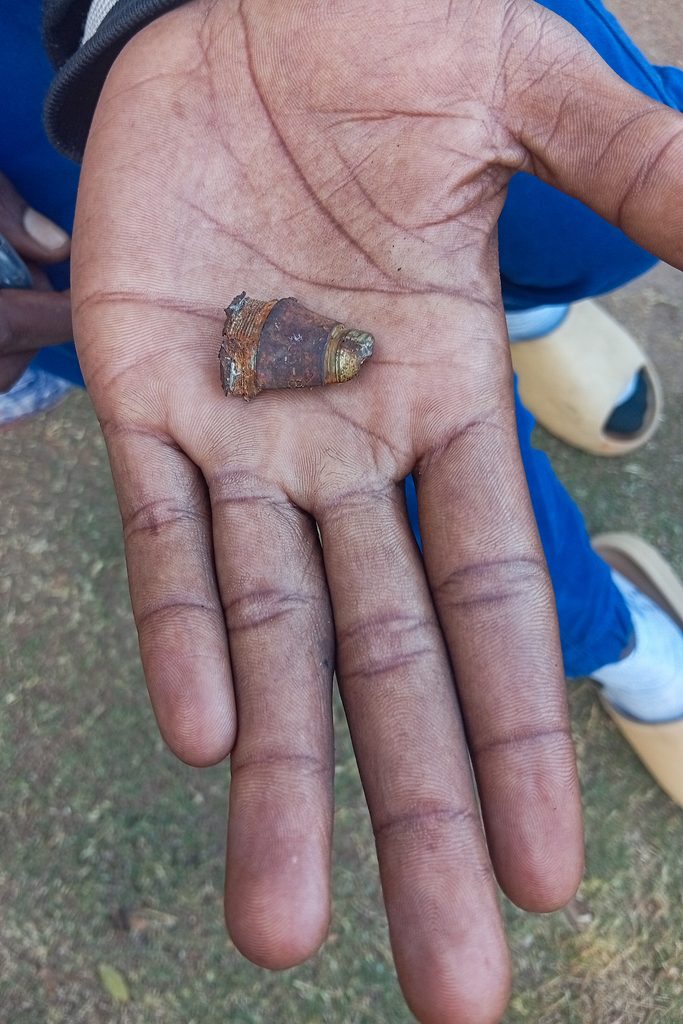
Nine workers, including Tore, told us that a supervisor instructed Tore and others to continue unloading scrap after explosives were discovered. They say that Tore was not given first aid and that Rungs managers ordered the accident scene cleared before authorities arrived, and later gave NSSA a different account of who instructed them to continue unloading. Tore has also said that his salary was stopped while he was medically unfit to work.
The company has disputed some of these claims and declined to respond to others. Workers also allege that, after the NSSA was alerted, it failed to investigate the accident timeously.
Workers say they were told to continue after explosives discovered
If it is true that the workers were instructed to continue unloading scrap after the explosives were found, the company likely breached Zimbabwe’s Factories and Works Regulations of 1976 which govern the handling of “dangerous substances and processes”. The country’s Labour Act also prohibits employers from compelling employees to work under dangerous conditions.
In a letter to the NSSA dated 4 August, and signed by Human Resources Manager Tinashe Kanyaura, the company said that it was a client who had instructed Tore and his colleagues to continue unloading.
Alleged failure to provide immediate first aid
After the explosion, Tore was bleeding profusely from his chest.
“Before they took me to hospital, I was not given any first aid at work. I lost a lot of blood. One co-worker had to tear my shirt to bandage my chest and try to stop the bleeding,” Tore said.
Under section 10 of Zimbabwe’s Factories and Works Regulations, employers are required to provide prescribed first-aid facilities, including a first-aid box with specified contents, at the workplace.
Company supervisor John Mutembai disputed that the company failed to assist Tore. He said the injury was beyond their ability to treat and that the priority was getting him to hospital.
Accident scene allegedly disturbed before authorities arrived
Eight Rungs workers told this reporter that, while Tore was being rushed to hospital, their managers instructed workers to clear the area where the explosion occurred. The workers alleged that scrap metal and material that appeared to be explosives were removed from the scene rather than being preserved for police or other authorities to examine.

“We were made to clean up the accident scene and remove everything that looked like explosives instead of calling the relevant government authorities,” one worker, who asked not to be named for fear of losing his job, said.
Moving or clearing the explosion site would appear to breach Zimbabwe’s Explosives Regulations of 1989, which provides that after an accident involving the accidental ignition or detonation of explosives that causes serious injury, the site must not be disturbed or altered before an inspector arrives or gives consent.
Rungs did not provide a substantive response to this allegation. Kanyaura said he could not comment.
Delay in reporting the accident to NSSA
Statutory requirements provide that employers must report serious or fatal workplace accidents to the nearest NSSA office and the police within 24 hours.
Workers interviewed said that Rungs did not notify authorities on the day of the explosion.
Mutembai was asked about this alleged delay.
“I work under instruction, so the delay was not from me because I had tabled all the processes needed to be followed at NSSA to my bosses,” he said.
Tore’s salary stopped while he was medically unfit to work
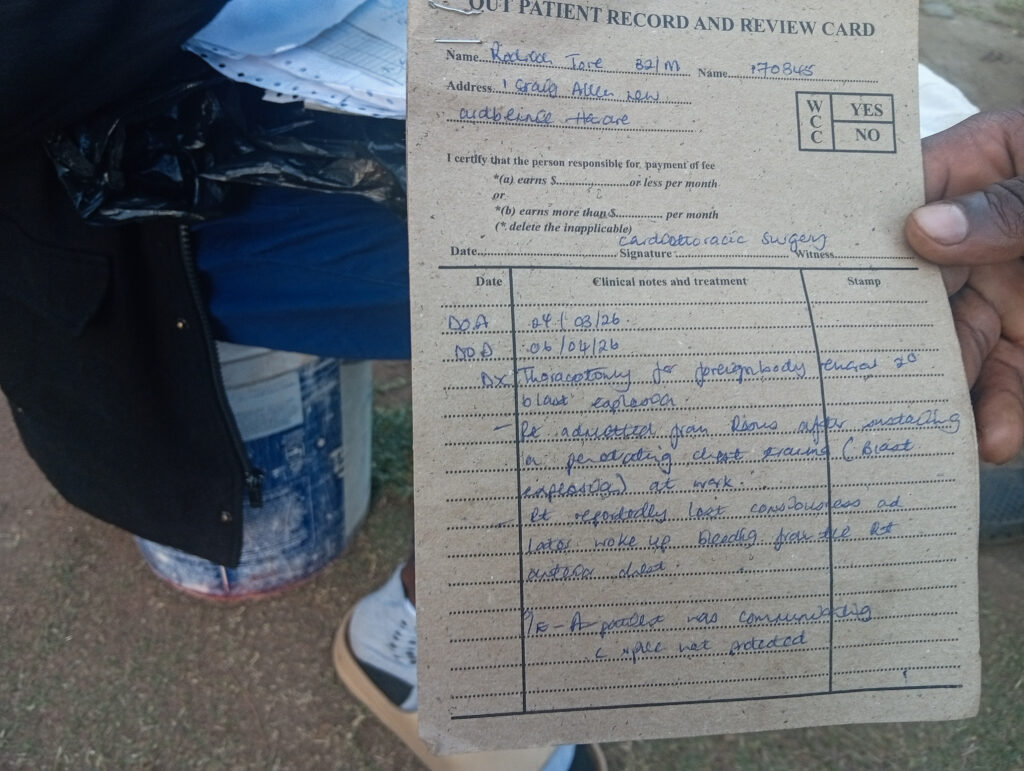
For Tore, the consequences of the explosion continued long after he was discharged from hospital. Medical records seen by this reporter show he required ongoing reviews, including seeing a doctor three times a month and undergoing X-rays.
“My last salary payment from Rungs was made at the end of March — days after the accident,’’ said Tore.
‘’Each X-ray cost around US$35 needed for each review and I have to go the doctor three times a month. This is an expense that I struggle to meet as I don’t have any source of income.”
No evidence found that NSSA investigated
Zimbabwe’s NSSA administers the country’s workers’ compensation scheme. In cases such as this, it is responsible for receiving workplace-accident reports, investigating serious cases, assessing compensation claims and overseeing workplace safety compliance.
The NSSA’s chief inspector of factories, Shingirai Marunza, said the authority only learned of the explosion several days later through social media. The authority has not responded to questions about whether it subsequently investigated the accident.
“NSSA never came here to our company for investigations till today,” Mutembai said.
Workers separately said they never saw NSSA officials at the site.
The NSSA did not respond to queries requesting a confirmation or an update on its handling of the case.
Worker says NSSA failed to process his claim
Tore said that the NSSA had not processed his compensation claim, despite him completing paperwork in May.
He was told in August that he should take the forms back to Rungs for a company stamp.
“This is not my fault. Rungs were supposed to stamp the forms before submitting them because the company submitted them. I am sick and in pain, but they still want me to take the papers back to the company,” he said.
A second blast
In August, Rungs worker Macdonald Muchemwa contacted this journalist to report that another blast had occurred at the scrapyard, injuring worker Obey Kanyenze.
“I was injured in my face at work as I was cutting some scrap metal,” Kanyenze said during a subsequent interview.
“I heard a blast and only realised that my face had been seriously injured. They took me to hospital and my bosses bought me the medicines. I am recovering well at home.”
Right of reply
Before publication, detailed queries setting out the allegations and findings were submitted to Rungs management and the NSSA.
Kanyaura responded on 5 October, saying the matter had now been reported to NSSA, the National Employment Council and Southerton Police Station, and was under review. He said the company could not answer the questions because the matter was before the authorities, and directed further inquiries to the police and NSSA. His response did not address the specific allegations put to the company.
NSSA Public Relations Manager Agatha Kubvaruno also received the questions but had not responded by the time of publication.
- This report has been produced by the Southern Africa Accountability Journalism Project (SA | AJP), an initiative of the Henry Nxumalo Foundation with the financial assistance of the European Union. It can under no circumstances be regarded as reflecting the position of the EU.