
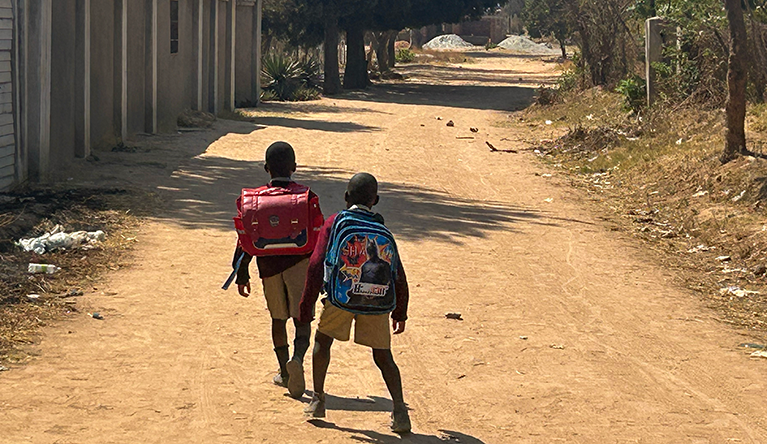
Eight months after Zimbabwe’s deadline for illegal and unregistered schools to regularise or close, schools operating without formal registration remain open in Epworth, Harare. This includes institutions that have also received closure or enforcement notices from the Epworth Local Board (ELB), local authority governing the settlement.
Many of these schools operate out of residential properties. Classes are conducted in tiny, overcrowded rooms.
“This is substandard but the majority of us don’t have options. Children must attend classes and learn,” said Martha Marange, a mother of two who works as a vendor, describing the conundrum that many people in Epworth face.
This is one of the city’s poorer and more overcrowded settlements. The shortage of access to public schools for their children forces parents to consider enrolling their children in unregistered private schools.
“The grace period announced in September 2025 (which ended in January) was intended to provide institutions operating outside the prescribed framework with an opportunity to regularise their operations, while ensuring that learners are not unnecessarily disadvantaged or deprived of access to education,” said Taungana Ndoro, the ministry’s spokesperson, in response to queries.
“Where institutions are found to be operating in violation of their registration conditions, the Ministry expects them to regularise their operations or cease activities.”
Local board also issued warnings
While these private schools are not registered as schools with the Ministry of Primary and Secondary Education (MOPSE), some operate through formally registered private companies.
The Southern Africa Accountability Journalism Project (SA AJP) visited three of these unregistered private schools – Shalom Future Academy, Vintage and Elisam schools – and found that the ELB had issued each with notices and warnings.
The board warned Shalom Future Academy in October 2025 that it had been operating “on land not zoned for such activities without a valid change of use permit.”
The notice warned that the school had to regularise their status or face “immediate enforcement action.”
Vintage and Elisam schools received similar notices in October 2024 and November 2025 respectively. Elisam is a registered infant school, yet it operates all grades.
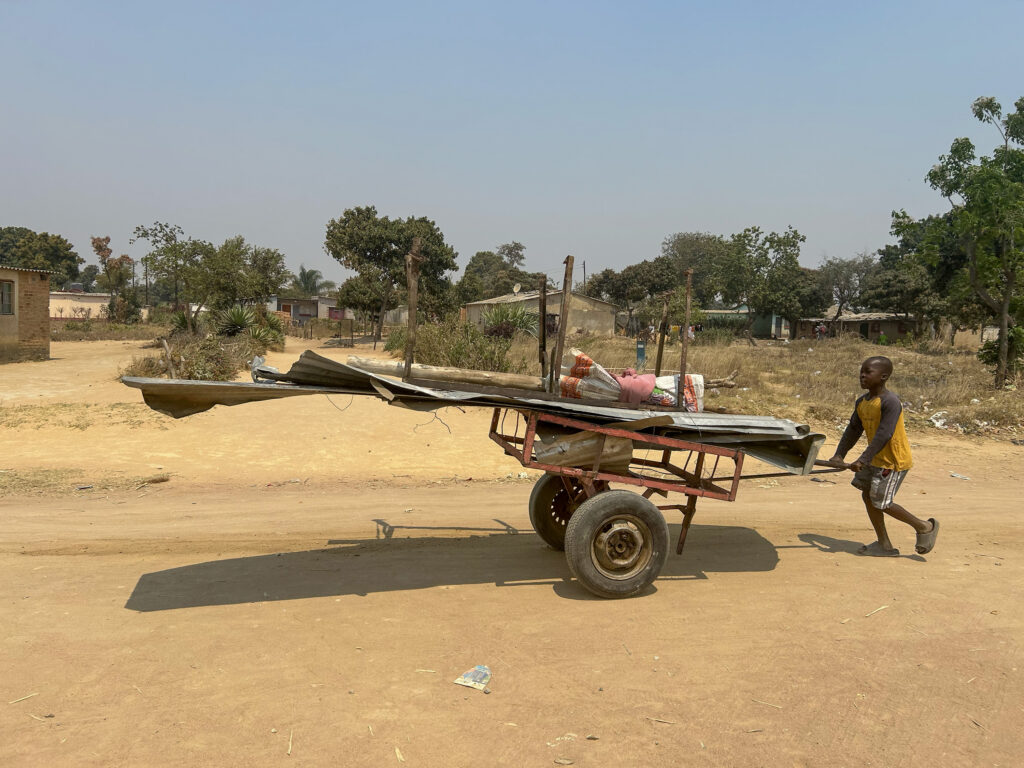
Vintage also was flagged for health and safety violations.
Despite these notices, all three schools continue to operate unchecked.
A fourth school, Eminence, opened this year after the government’s ultimatum and has also received a board notice for ‘unauthorised land use’.
Speaking anonymously, because he was not authorised, a senior ELB official said the authorities were aware that the schools were non-compliant. However, he said, the lack of adequate school facilities meant officials had allowed them to continue operating to ensure children could continue to access some form of education.
The local board and MOPSE had repeatedly extended grace periods and relaxed strict closure measures because of concerns about the impact on learners.
“(The conditions of these schools are) not acceptable, but immediate closures disadvantage innocent children who have already paid fees or are preparing to sit for critical national examinations,” he said.
Management at Shalom Future Academy and Eminence did not respond to queries.
Patience Mutowa, a teacher at Elisam, agreed to give a comment.
“It may have taken a long time to regularise, but we are working on it. With our current infrastructure we can not register with MOPSE or have a ZIMSEC exam centre until we comply with the council recommendations. So, we are working on that, and also to create a conducive environment for our kids,” she said.
Site visits expose strained conditions for learning
At Vintage, in Ward 3, more than 200 pupils were using six rooms and two wooden cabins, with four toilets serving the entire school. The school caters for Grade 0 to 7 and Form 1 to 6.
At Shalom Future Academy, in Ward 4, primary and secondary classes are taught on an approximately 800-square-metre residential property not designated for school use. The school has two toilets and some classrooms lack sufficient furniture.
Eminence Primary and Secondary, which opened late last year, operates from a residential property in Ward 4. About 350 to 400 learners attend classes in the limited space, with several grades sharing classrooms.
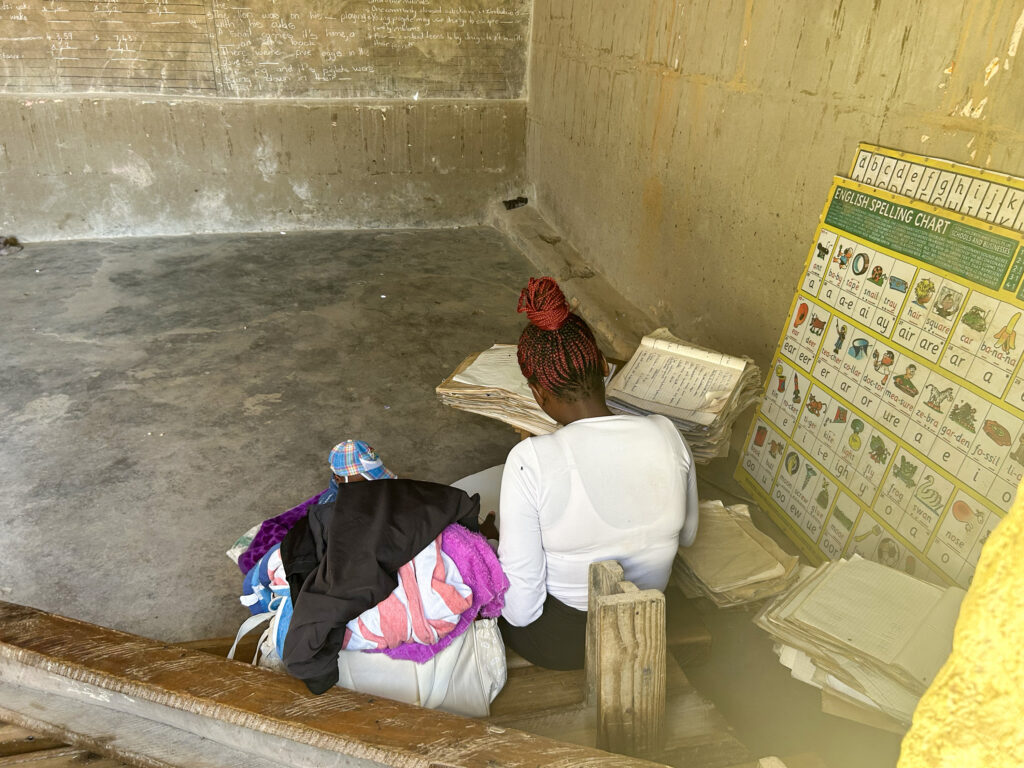
At Elisam, also in Ward 4, classes from Grade 0 to 7 are taught on about a 500-square-metre residential stand. During the visit, more than 38 children were observed in a single classroom. Across the schools visited, several grades shared cramped classrooms and learners had limited space during breaks.
Why parents choose these private schools
Last year, the ELB reported that Epworth only had nine public schools, serving a massive population which was estimated at 206,000 people by ZIMSTAT in 2022.
Epworth parents told this reporter they turn to the unregistered schools because the area’s public schools are oversubscribed and the upfront costs of attending them can be prohibitive for families living near the breadline.
Lorraine Mutasa, a parent, said she had estimated that the initial costs at Domboramwari public school — including uniforms, tracksuits, transport and other requirements — can reach nearly 500 USD. At schools such as Elisam and Vintage this figure is closer to 100 USD.
The unregistered schools also offer payment arrangements that suit low-income households, with some allowing parents to pay school fees monthly.
“Private schools, both registered and unregistered, at the end of the day are cheap, because they have arrangements that suit the people of Epworth. After all, public schools are few,” Mutasa said.
Pupils at unregistered schools struggle to write exams
Queries to ZIMSEC, the country’s official examinations board, confirmed that none of the schools visited during this investigation were examination centres. This means that pupils therefore use examination centres at other, registered schools.
Each school has a different “host”. Vintage uses Utsago Primary and Thornhill College. Elisam uses Maulana Primary. Eminence uses Chizungu Primary and Skygate College; Shalom uses Domboramwari Primary.
For pupils, parents and school administrators, this creates financial and practical complications. Unregistered schools have to make prior arrangements with their host centres. This often requires pupils to pay additional fees.
“Coordinating registration details between the unregistered school and the host ZIMSEC centre increases the risk of mix-ups, missed deadlines, or loss of paperwork. Many times, there is also late communication,” said Trynos Chanetsa, a retired teacher in Harare.
A difficult bind for education authorities
The burgeoning of Epworth’s unregistered schools is a symptom of a wider government failure to provide enough affordable public school places for the informal settlement’s growing population.
Yet allowing schools to continue operating outside the regulatory framework leaves learners in overcrowded and unsuitable facilities.
“Authorities should be accountable to the people of Epworth and any other community in a similar fix,” said children’s rights activist Onita Sibanda.
“When they can’t close them down or provide an option, they must intervene through quality control of education or help them regularize. Otherwise, parents continue spending their hard earned money and the outcome is substandard education.”
This report has been produced by the Southern Africa Accountability Journalism Project (SA | AJP), an initiative of the Henry Nxumalo Foundation with the financial assistance of the European Union. It can under no circumstances be regarded as reflecting the position of the European Union.